

Leucistic Turkey
My son Eddie spotted this leucistic Wild Turkey last week while our family was on vacation in the Great Smoky Mountains in Tennessee. Leucism is a general term for a condition in which animals lack some or all of the pigmentation typical for their species. The leucistic turkey has a frosted, gray appearance. Compare it to the more typical Wild Turkey in the photo below. We found the typical turkey just a few hundred feet down the path from the leucistic turkey.
Wild Turkey key facts
| Scientific name | Meleagris gallopavo |
|---|---|
| Family | Phasianidae (Pheasants, Grouse, and Allies) |
| Order | Galliformes |
| eBird species page | Wild Turkey on eBird (code wiltur) |
Wild Turkeys are common year-round across much of the United States and northern Mexico. A few are found as far north as southern Canada. Turkeys were rare in the eastern United States a century ago, due to both over-hunting and habitat destruction. Thankfully, their population bounced back due to reintroduction of turkeys from other parts of the country, restoration of forest habitat, and enforcement of hunting regulations.
Turkeys are omnivorous, but they’re primarily plant eaters, preferring nuts, berries, and seeds. They eat smaller quantities of animal prey, especially insects and snails. For such a large bird, Wild Turkeys have a surprisingly short average lifespan of only 3 to 5 years. They make up for their short lives with a high reproductive rate – a single turkey nest often includes 12 to 14 eggs.
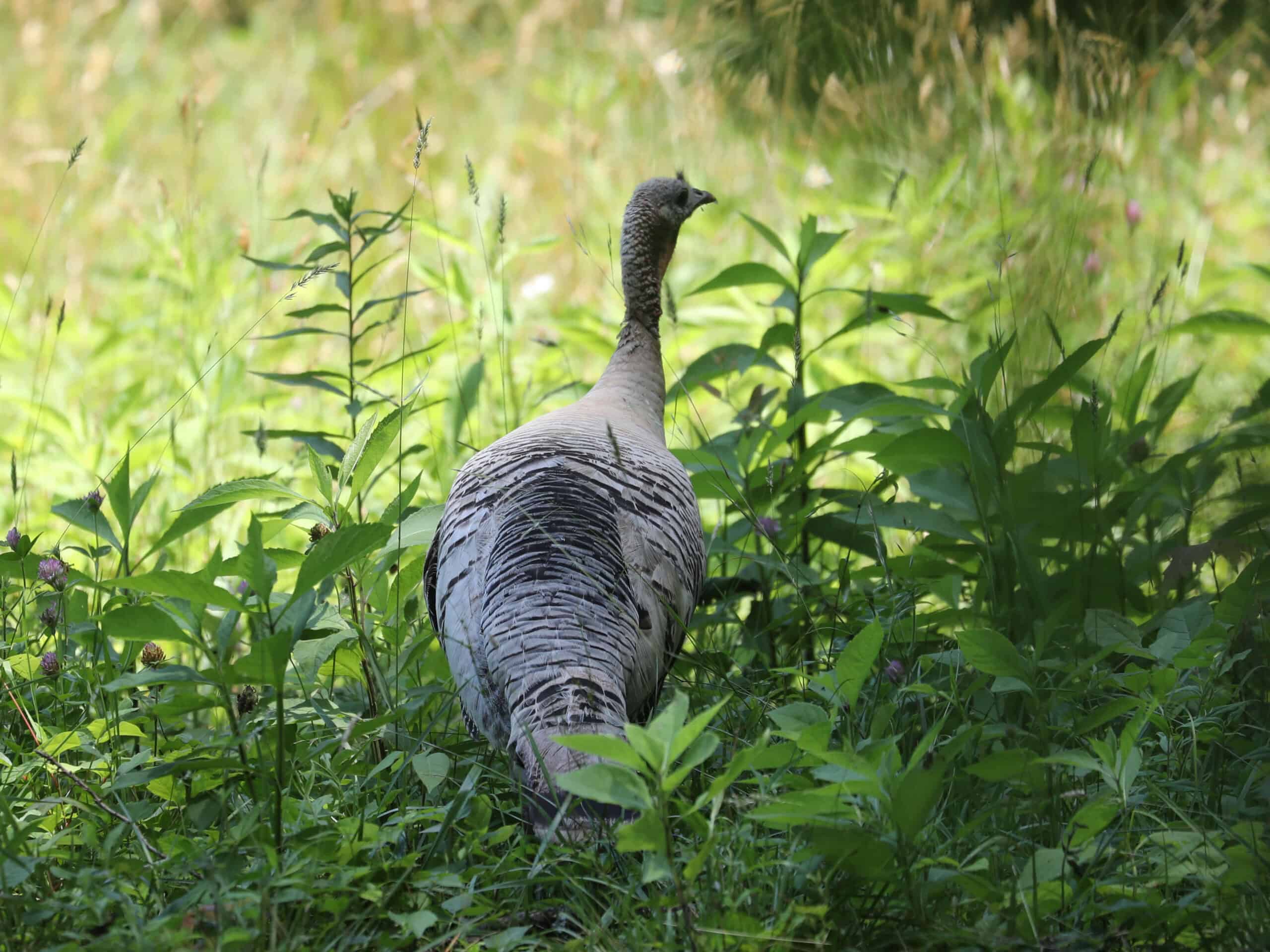
Wild Turkey (leucistic) in Tennessee (June 2024)
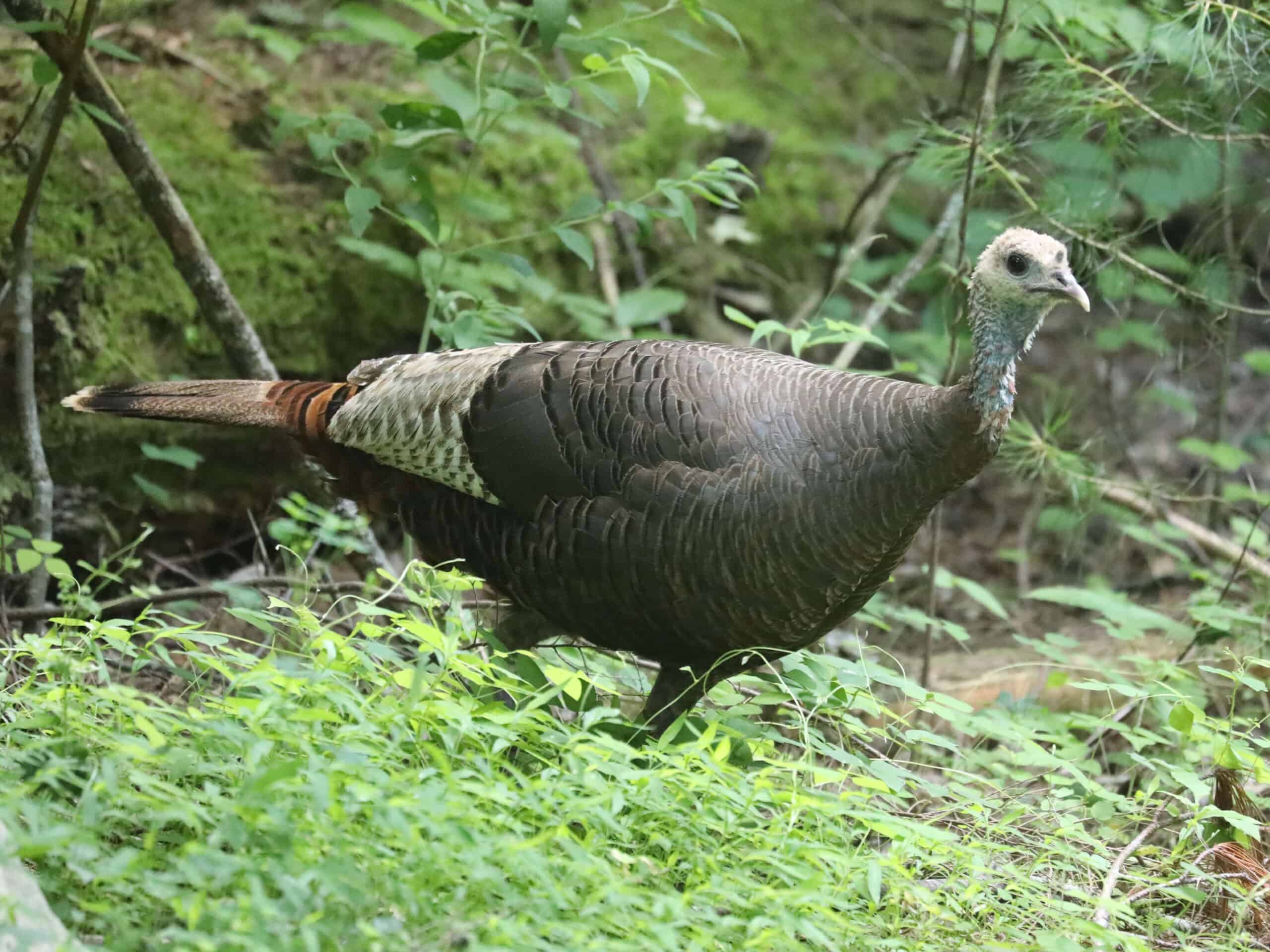
Wild Turkey in Blount County, Tennessee (June 2024)

Wild Turkey (leucistic) in Tennessee (June 2024)
Leucistic Turkey
My son Eddie spotted this leucistic Wild Turkey last week while our family was on vacation in the Great Smoky Mountains in Tennessee. Leucism is a general term for a condition in which animals lack some or all of the pigmentation typical for their species. The leucistic turkey has a frosted, gray appearance. Compare it to the more typical Wild Turkey in the photo below. We found the typical turkey just a few hundred feet down the path from the leucistic turkey.
Wild Turkey key facts
| Scientific name | Meleagris gallopavo |
|---|---|
| Family | Phasianidae (Pheasants, Grouse, and Allies) |
| Order | Galliformes |
| eBird species page | Wild Turkey on eBird (code wiltur) |
Wild Turkeys are common year-round across much of the United States and northern Mexico. A few are found as far north as southern Canada. Turkeys were rare in the eastern United States a century ago, due to both over-hunting and habitat destruction. Thankfully, their population bounced back due to reintroduction of turkeys from other parts of the country, restoration of forest habitat, and enforcement of hunting regulations.
Turkeys are omnivorous, but they’re primarily plant eaters, preferring nuts, berries, and seeds. They eat smaller quantities of animal prey, especially insects and snails. For such a large bird, Wild Turkeys have a surprisingly short average lifespan of only 3 to 5 years. They make up for their short lives with a high reproductive rate – a single turkey nest often includes 12 to 14 eggs.
Wild Turkey in Blount County, Tennessee (June 2024)


About The Author
Dan Hinnebusch is the Ornithologist for Wild Birds Unlimited. Learn more about Dan Hinnebusch.
