

Lesser Yellowlegs
Shorebird migration is one of the highlights of late summer. Several species of sandpipers and plovers pass through Pennsylvania each fall on their way south. One fairly common species is the Lesser Yellowlegs, a medium-sized sandpiper with distinctive long yellow legs. They stand tall on those legs, but they weigh only about as much as an American Robin.
Lesser Yellowlegs key facts
| Scientific name | Tringa flavipes |
|---|---|
| Family | Scolopacidae (Sandpipers and Allies) |
| Order | Charadriiformes |
| eBird species page | Lesser Yellowlegs on eBird (code lesyel) |
Fun fact: Their long legs allow them to wade deeper into the water to access foods unavailable to smaller shorebirds.
Like other sandpipers, Lesser Yellowlegs spend much of their time looking for food. They use their bill to probe for a wide variety of insects, crustaceans, and other arthropods. Their long legs allow them to wade deeper into the water to access foods unavailable to smaller shorebirds. You usually find Lesser Yellowlegs walking in water half as deep as their legs are long. Occasionally, they’ll wade in belly-deep, or even swim when their legs can’t reach the bottom.
Lesser Yellowlegs breed across northern Canada and Alaska during the summer. During the winter they live along the Atlantic Coast, in the southern United States, and in wet habitats across Central and South America. In Pennsylvania, watch for them on spring migration in April and early May. They’re easier to find in fall migration, between July and October. You can find them along the shallow edges of ponds, on exposed wet muddy areas, and in flooded fields with short vegetation.
It may seem odd for such a small bird, but Lesser Yellowlegs were once hunted for food. So many were shot in the early 20th century that scientists at the time commented on a dramatic drop in their population. Hunting sandpipers became illegal in the United States in 1927, and the population rebounded. Although Lesser Yellowlegs are fairly common today, their population has been dropping again – down more than 50 percent over the last 50 years. Causes of the decline include habitat loss, exposure to pesticides, and hunting (thousands are still shot each year on several Caribbean islands and in northern South America).
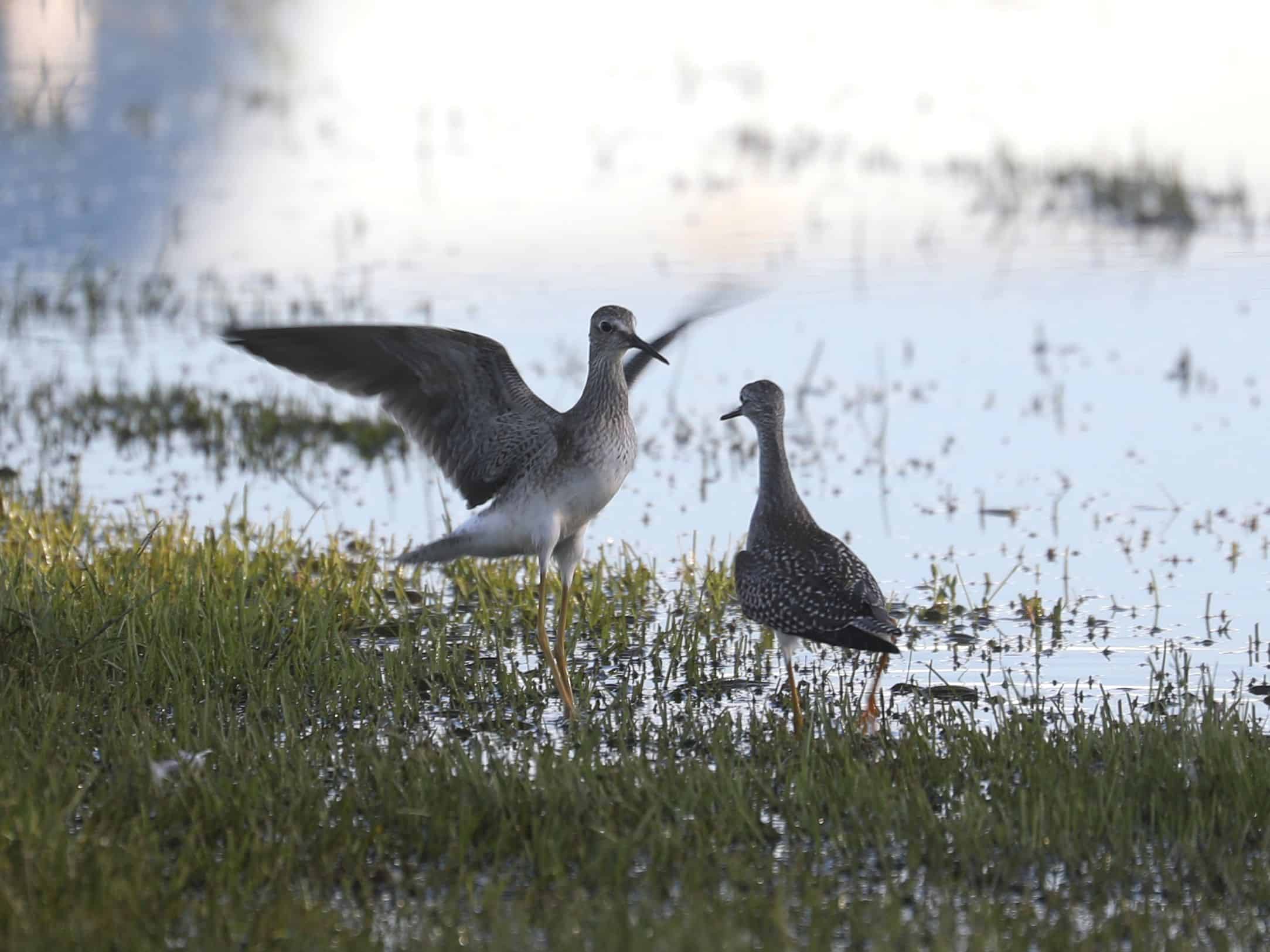
Lesser Yellowlegs in Lancaster County (August 2026).

Lesser Yellowlegs in Lancaster County (August 2026).
Lesser Yellowlegs
Shorebird migration is one of the highlights of late summer. Several species of sandpipers and plovers pass through Pennsylvania each fall on their way south. One fairly common species is the Lesser Yellowlegs, a medium-sized sandpiper with distinctive long yellow legs. They stand tall on those legs, but they weigh only about as much as an American Robin.
Lesser Yellowlegs key facts
| Scientific name | Tringa flavipes |
|---|---|
| Family | Scolopacidae (Sandpipers and Allies) |
| Order | Charadriiformes |
| eBird species page | Lesser Yellowlegs on eBird (code lesyel) |
Fun fact: Their long legs allow them to wade deeper into the water to access foods unavailable to smaller shorebirds.
Like other sandpipers, Lesser Yellowlegs spend much of their time looking for food. They use their bill to probe for a wide variety of insects, crustaceans, and other arthropods. Their long legs allow them to wade deeper into the water to access foods unavailable to smaller shorebirds. You usually find Lesser Yellowlegs walking in water half as deep as their legs are long. Occasionally, they’ll wade in belly-deep, or even swim when their legs can’t reach the bottom.
Lesser Yellowlegs breed across northern Canada and Alaska during the summer. During the winter they live along the Atlantic Coast, in the southern United States, and in wet habitats across Central and South America. In Pennsylvania, watch for them on spring migration in April and early May. They’re easier to find in fall migration, between July and October. You can find them along the shallow edges of ponds, on exposed wet muddy areas, and in flooded fields with short vegetation.
It may seem odd for such a small bird, but Lesser Yellowlegs were once hunted for food. So many were shot in the early 20th century that scientists at the time commented on a dramatic drop in their population. Hunting sandpipers became illegal in the United States in 1927, and the population rebounded. Although Lesser Yellowlegs are fairly common today, their population has been dropping again – down more than 50 percent over the last 50 years. Causes of the decline include habitat loss, exposure to pesticides, and hunting (thousands are still shot each year on several Caribbean islands and in northern South America).


About The Author
Dan Hinnebusch is the Ornithologist for Wild Birds Unlimited. Learn more about Dan Hinnebusch.
