

Elegant (and Invasive): Mute Swan
Mute Swans have been one of the most popular birds in Europe and Asia for hundreds of years. In addition to being used as food, they were often kept as pets by the wealthy or nobility to show off to their neighbors. That practice continued in North America during European colonization. Mute Swans are not native to North America, but Europeans brought them. To this day, you often see Mute Swans swimming on ponds in office parks and golf courses.
Mute Swan key facts
| Scientific name | Cygnus olor |
|---|---|
| Family | Anatidae (Ducks, Geese, and Waterfowl) |
| Order | Anseriformes |
| eBird species page | Mute Swan on eBird (code mutswa) |
Fun fact: Each swan can eat more than five pounds of vegetation each day, damaging the habitat needed by native waterfowl like ducks and geese.
The Mute Swans you see here in the Susquehanna Valley are typically owned by someone or may be the offspring of someone’s pet. The species has not established a self-sustaining breeding population in this area. However, that’s not the case in the Great Lakes region. Mute Swans there have taken advantage of the extensive wetland habitats and their ability to live close to humans. There are now tens of thousands of swans nesting there each year, especially in Michigan and Ontario. They also benefited from the absence of native Trumpeter Swans, which were extirpated from the Great Lakes in the early 20th century due to overhunting.
Although Mute Swans are beautiful and fun to watch, they are causing significant harm to ecosystems in the Great Lakes. Each swan can eat more than five pounds of vegetation each day, damaging the habitat needed by native waterfowl like ducks and geese. Mute Swans are also competing with efforts to reintroduce the native Trumpeter Swan to the Great Lakes.
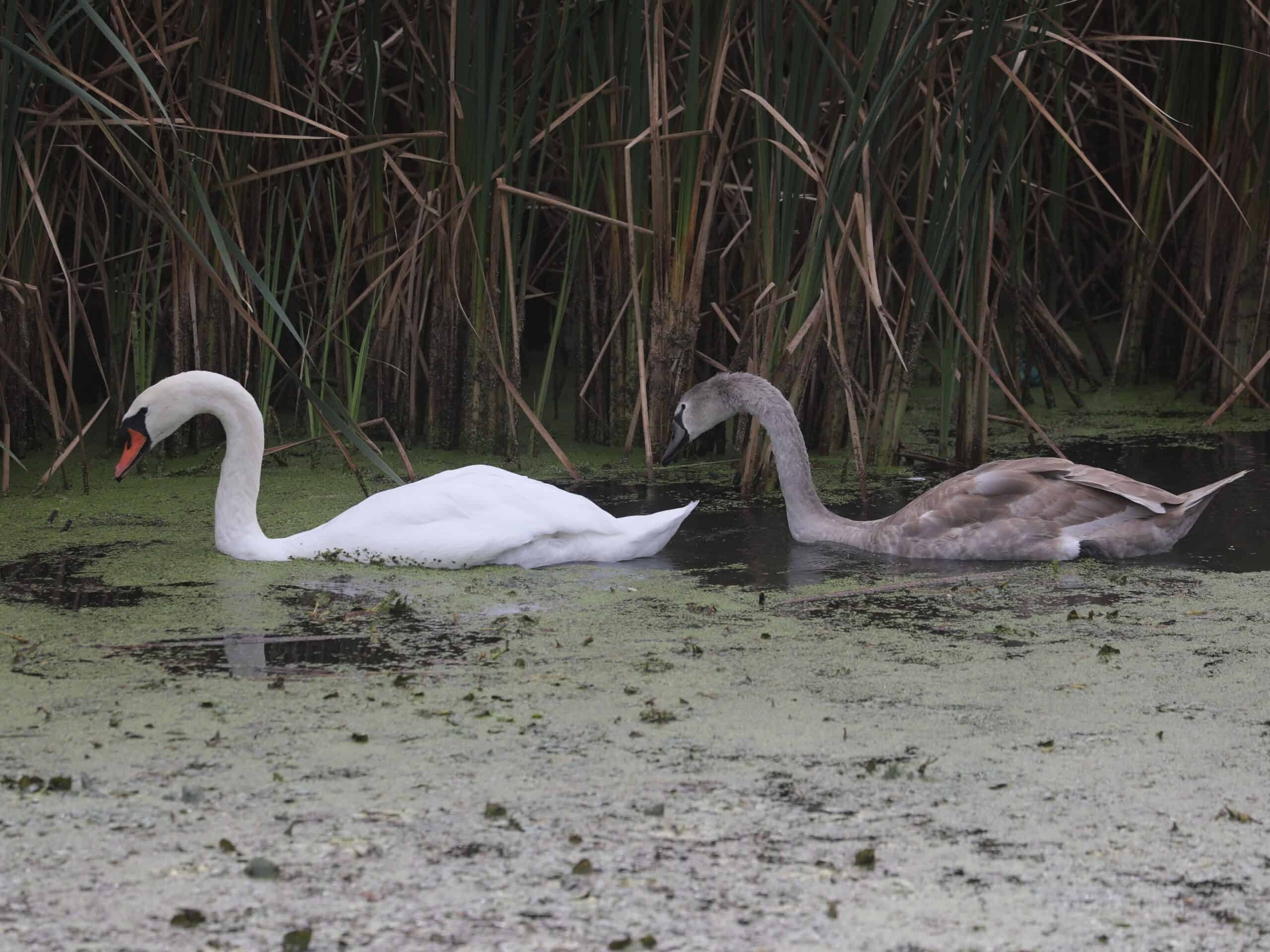
Mute Swans (adult and juvenile) near Lake Ontario in New York (September 2026).

Mute Swans (adult and juvenile) near Lake Ontario in New York (September 2026).
Elegant (and Invasive): Mute Swan
Mute Swans have been one of the most popular birds in Europe and Asia for hundreds of years. In addition to being used as food, they were often kept as pets by the wealthy or nobility to show off to their neighbors. That practice continued in North America during European colonization. Mute Swans are not native to North America, but Europeans brought them. To this day, you often see Mute Swans swimming on ponds in office parks and golf courses.
Mute Swan key facts
| Scientific name | Cygnus olor |
|---|---|
| Family | Anatidae (Ducks, Geese, and Waterfowl) |
| Order | Anseriformes |
| eBird species page | Mute Swan on eBird (code mutswa) |
Fun fact: Each swan can eat more than five pounds of vegetation each day, damaging the habitat needed by native waterfowl like ducks and geese.
The Mute Swans you see here in the Susquehanna Valley are typically owned by someone or may be the offspring of someone’s pet. The species has not established a self-sustaining breeding population in this area. However, that’s not the case in the Great Lakes region. Mute Swans there have taken advantage of the extensive wetland habitats and their ability to live close to humans. There are now tens of thousands of swans nesting there each year, especially in Michigan and Ontario. They also benefited from the absence of native Trumpeter Swans, which were extirpated from the Great Lakes in the early 20th century due to overhunting.
Although Mute Swans are beautiful and fun to watch, they are causing significant harm to ecosystems in the Great Lakes. Each swan can eat more than five pounds of vegetation each day, damaging the habitat needed by native waterfowl like ducks and geese. Mute Swans are also competing with efforts to reintroduce the native Trumpeter Swan to the Great Lakes.


About The Author
Dan Hinnebusch is the Ornithologist for Wild Birds Unlimited. Click to learn more.
