

Rare Herons: Yellow-crowned Night Heron
Of the seven species of herons that nest each year in Pennsylvania, the Yellow-crowned Night Heron is one of the least common. There are typically fewer than 20 nests in the state each year, and the Pennsylvania Game Commission classifies this species as Endangered. We’re lucky here in the Susquehanna Valley, because this fascinating bird is easier to find here than anywhere else in the state.
We are located along the northern edge of the breeding range for Yellow-crowned Night Herons. Globally, these herons are fairly abundant, especially in coastal areas. In eastern North America they nest from Massachusetts all the way to southern Brazil, including most Caribbean Islands. On the Pacific Coast they can be found from Mexico south to northern Peru.
Yellow-crowned Night Herons were more widespread in the Susquehanna Valley a few decades ago, with nesting colonies along the Conestoga and Little Conestoga rivers in Lancaster County, as well as on Conodoguinet Creek in Cumberland County and Yellow Breeches Creek on the border of Cumberland and York counties. Most of those nest colonies have now been abandoned, likely due to a decrease in water quality as a result of runoff pollution. Pollution leads to a decrease in the abundance of crayfish, the preferred prey of these herons in Pennsylvania (in coastal areas they specialize on crabs).
The only current nesting colony in the state is in an urban residential neighborhood within the city of Harrisburg. When I visited Harrisburg’s Yellow-crowned Night Heron colony a few weeks ago, it was interesting to talk to some of the residents and get their thoughts on having a few dozen herons perched in the trees above their road and homes. I got the sense that they were proud to share their neighborhood with such distinctive birds. The comments were mostly positive, but every single person mentioned how large the birds’ droppings are. They’re careful about where they park their cars.

Yellow-crowned Night Heron in Dauphin County (April 2026)
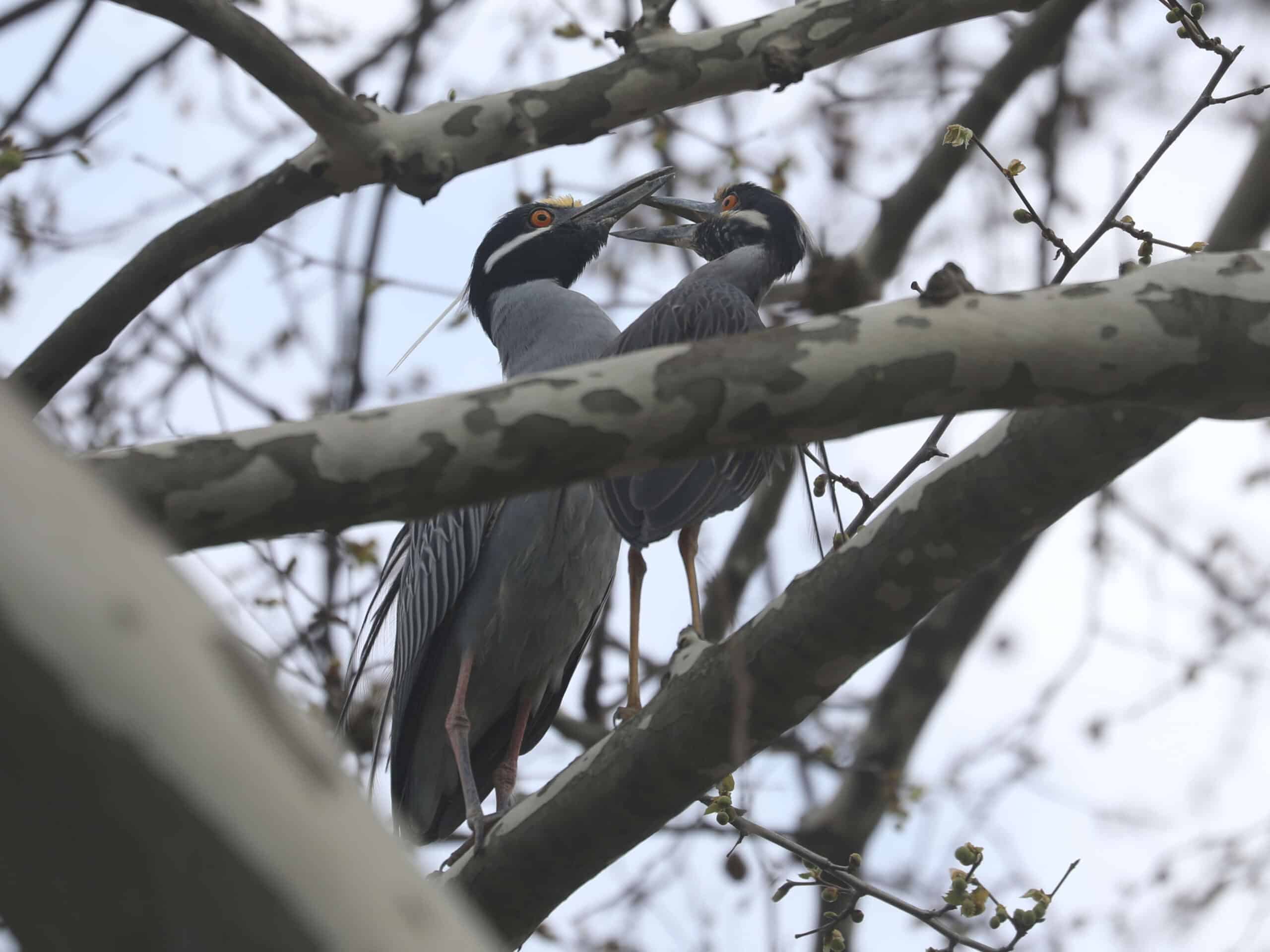
Male and female Yellow-crowned Night Herons interacting near their nest in Dauphin County (April 2026)

Yellow-crowned Night Heron in Dauphin County (April 2026)
Rare Herons: Yellow-crowned Night Heron
Of the seven species of herons that nest each year in Pennsylvania, the Yellow-crowned Night Heron is one of the least common. There are typically fewer than 20 nests in the state each year, and the Pennsylvania Game Commission classifies this species as Endangered. We’re lucky here in the Susquehanna Valley, because this fascinating bird is easier to find here than anywhere else in the state.
We are located along the northern edge of the breeding range for Yellow-crowned Night Herons. Globally, these herons are fairly abundant, especially in coastal areas. In eastern North America they nest from Massachusetts all the way to southern Brazil, including most Caribbean Islands. On the Pacific Coast they can be found from Mexico south to northern Peru.
Yellow-crowned Night Herons were more widespread in the Susquehanna Valley a few decades ago, with nesting colonies along the Conestoga and Little Conestoga rivers in Lancaster County, as well as on Conodoguinet Creek in Cumberland County and Yellow Breeches Creek on the border of Cumberland and York counties. Most of those nest colonies have now been abandoned, likely due to a decrease in water quality as a result of runoff pollution. Pollution leads to a decrease in the abundance of crayfish, the preferred prey of these herons in Pennsylvania (in coastal areas they specialize on crabs).
The only current nesting colony in the state is in an urban residential neighborhood within the city of Harrisburg. When I visited Harrisburg’s Yellow-crowned Night Heron colony a few weeks ago, it was interesting to talk to some of the residents and get their thoughts on having a few dozen herons perched in the trees above their road and homes. I got the sense that they were proud to share their neighborhood with such distinctive birds. The comments were mostly positive, but every single person mentioned how large the birds’ droppings are. They’re careful about where they park their cars.
Male and female Yellow-crowned Night Herons interacting near their nest in Dauphin County (April 2026)


About The Author
Dan Hinnebusch is the Ornithologist for Wild Birds Unlimited. Click to learn more.
