

Ross’s Goose vs Snow Goose
Each year in late winter and early spring, tens of thousands of Snow Geese pass through the Susquehanna Valley. They’ve left their winter range along the Atlantic Coast to travel to their nesting grounds in northern Canada, inside the Arctic Circle. A much smaller number of Ross’s Geese are undertaking a similar journey. Ross’s Geese look a lot like Snow Geese, almost entirely covered with white feathers, except for black flight feathers on their wings. Although the color is similar, Ross’s Geese are much smaller than Snow Geese and have shorter, stubbier bills. Most Ross’s Geese weigh about three pounds, while Snow Geese typically weigh over four pounds, with some over seven pounds.
In some parts of the country, you can find flocks of Ross’s Geese numbering in the thousands. The main reason Ross’s Geese are so much less abundant in the Susquehanna Valley is because we don’t live along one of the major flyways they use for migration. Relatively few Ross’s Geese winter along the Atlantic Coast. Those that do are mostly found in the Chesapeake or Delaware bays, or in the Outer Banks of North Carolina. Most Ross’s Geese winter in the southern Great Plains or in the Mississippi Valley from southern Illinois to the Gulf Coast of Louisiana and Texas. Another significant population winters in the Central Valley of California.
During the breeding season, Snow Geese nest across most of Arctic Canada. Ross’s Geese are more concentrated, with more than 90% of their population nesting within the Ahiak Migratory Bird Sanctuary in the Nunavut Territory. Ahiak is Canada’s largest federally owned natural area. At 15.5 million acres, it’s just over half the size of Pennsylvania. The populations of both Snow Geese and Ross’s Geese have been increasing in recent decades.

Ross’s Goose in Cumberland County (February 2026)
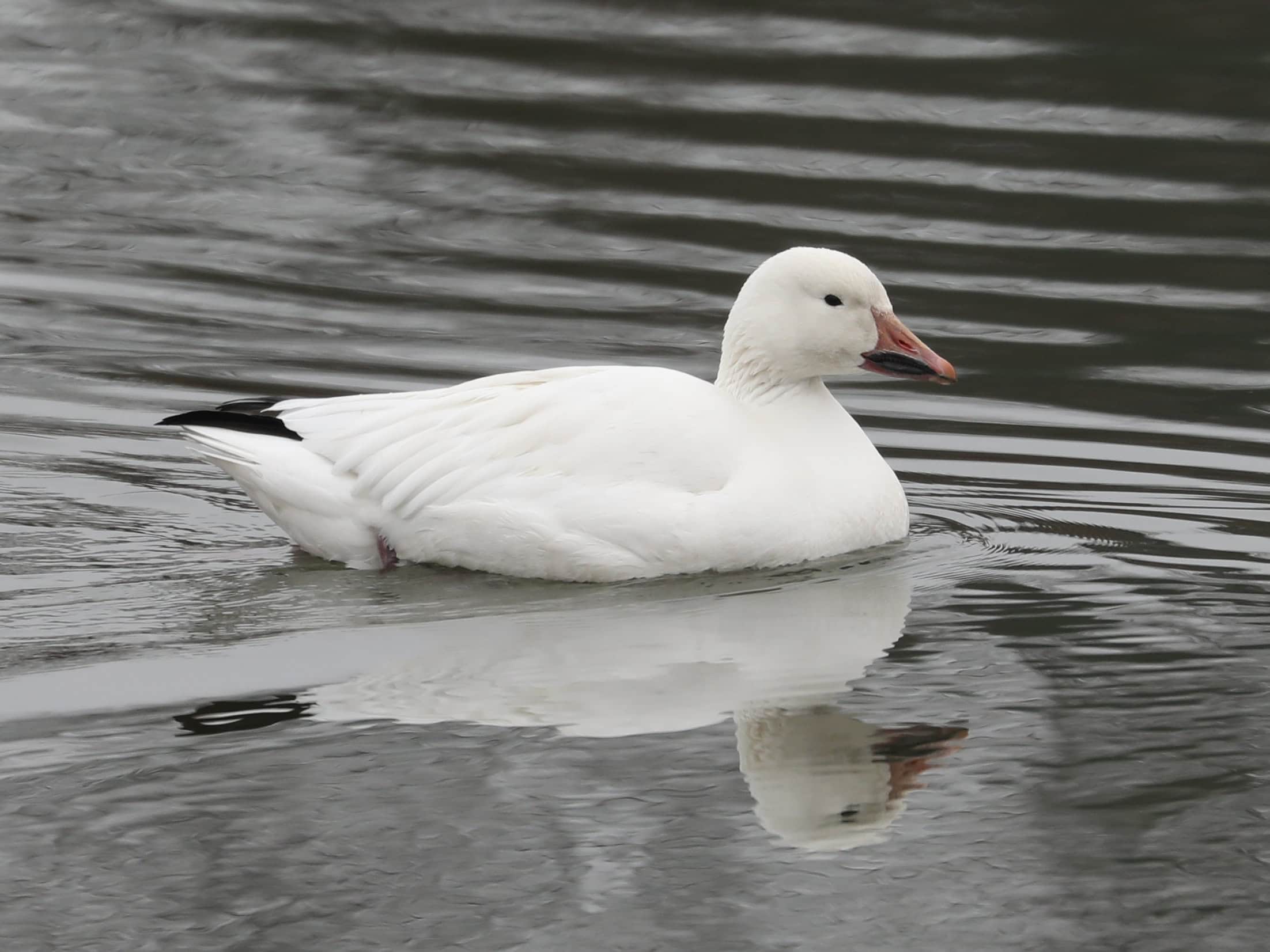
Snow Goose in Lebanon County (February 2023)

Ross’s Goose in Cumberland County (February 2026)
Ross’s Goose vs Snow Goose
Each year in late winter and early spring, tens of thousands of Snow Geese pass through the Susquehanna Valley. They’ve left their winter range along the Atlantic Coast to travel to their nesting grounds in northern Canada, inside the Arctic Circle. A much smaller number of Ross’s Geese are undertaking a similar journey. Ross’s Geese look a lot like Snow Geese, almost entirely covered with white feathers, except for black flight feathers on their wings. Although the color is similar, Ross’s Geese are much smaller than Snow Geese and have shorter, stubbier bills. Most Ross’s Geese weigh about three pounds, while Snow Geese typically weigh over four pounds, with some over seven pounds.
In some parts of the country, you can find flocks of Ross’s Geese numbering in the thousands. The main reason Ross’s Geese are so much less abundant in the Susquehanna Valley is because we don’t live along one of the major flyways they use for migration. Relatively few Ross’s Geese winter along the Atlantic Coast. Those that do are mostly found in the Chesapeake or Delaware bays, or in the Outer Banks of North Carolina. Most Ross’s Geese winter in the southern Great Plains or in the Mississippi Valley from southern Illinois to the Gulf Coast of Louisiana and Texas. Another significant population winters in the Central Valley of California.
During the breeding season, Snow Geese nest across most of Arctic Canada. Ross’s Geese are more concentrated, with more than 90% of their population nesting within the Ahiak Migratory Bird Sanctuary in the Nunavut Territory. Ahiak is Canada’s largest federally owned natural area. At 15.5 million acres, it’s just over half the size of Pennsylvania. The populations of both Snow Geese and Ross’s Geese have been increasing in recent decades.
Snow Goose in Lebanon County (February 2023)


About The Author
Dan Hinnebusch is the Ornithologist for Wild Birds Unlimited. Click to learn more.