

Cooper’s Hawk: A Backyard Predator
Few predators are more dangerous to your backyard birds than the Cooper’s Hawk. Their short, round wings and long, rudder-like tail give them great agility to chase down other birds in flight. Cooper’s Hawks’ favorite targets include doves, jays, and robins, but they’ll also capture smaller birds as well as a variety of mammals like squirrels and chipmunks. These hunters are usually silent, but listen for the alarm calls of songbirds as they warn each other that a hawk is nearby.
I’ve spoken to many people over the years who are concerned about the presence of a hawk in their yard. It’s certainly not a pleasant thought that the birds we love may get captured and eaten by a predator. However, it’s important to remember that Cooper’s Hawks themselves are fascinating, native birds. A hawk in your yard is a good sign that you’re providing high quality habitat to your birds. Provide native shrubs and other cover for your songbirds so they have a safe place to hide from hawks. Hawks may temporarily reduce activity at your bird feeders as the smaller birds in your yard hide elsewhere. Given time, the hawk will move on to search for prey in other areas.
Cooper’s Hawks represent a conservation success story. Historically, they were villified as pests and aggressively hunted prior to their protection under the Migratory Bird Treaty Act in 1918. Many states in the eastern United States had them listed as Threatened or Endangered through most of the 1900s. Since the 1970s, this species has expanded its range and adapted to live in suburban habitats. They’re now fairly common across the United States, southern Canada, Mexico, and parts of Central America. Cooper’s Hawks are year-round residents in the Susquehanna Valley.
The Cooper’s Hawk was named for naturalist William Cooper in the early 1820s. Cooper didn’t name the species himself. It was named in his honor by fellow naturalist Charles Lucien Bonaparte, a nephew of Emperor Napoleon Bonaparte. The American Ornithological Society announced in 2023 that it would rename all bird species with eponymous names (eponymous means it was named after a person). Due to its strong association with suburbs, one suggestion I’ve heard for a new name for Cooper’s Hawk is “Town Hawk.”

Cooper’s Hawk adult (January 2026)
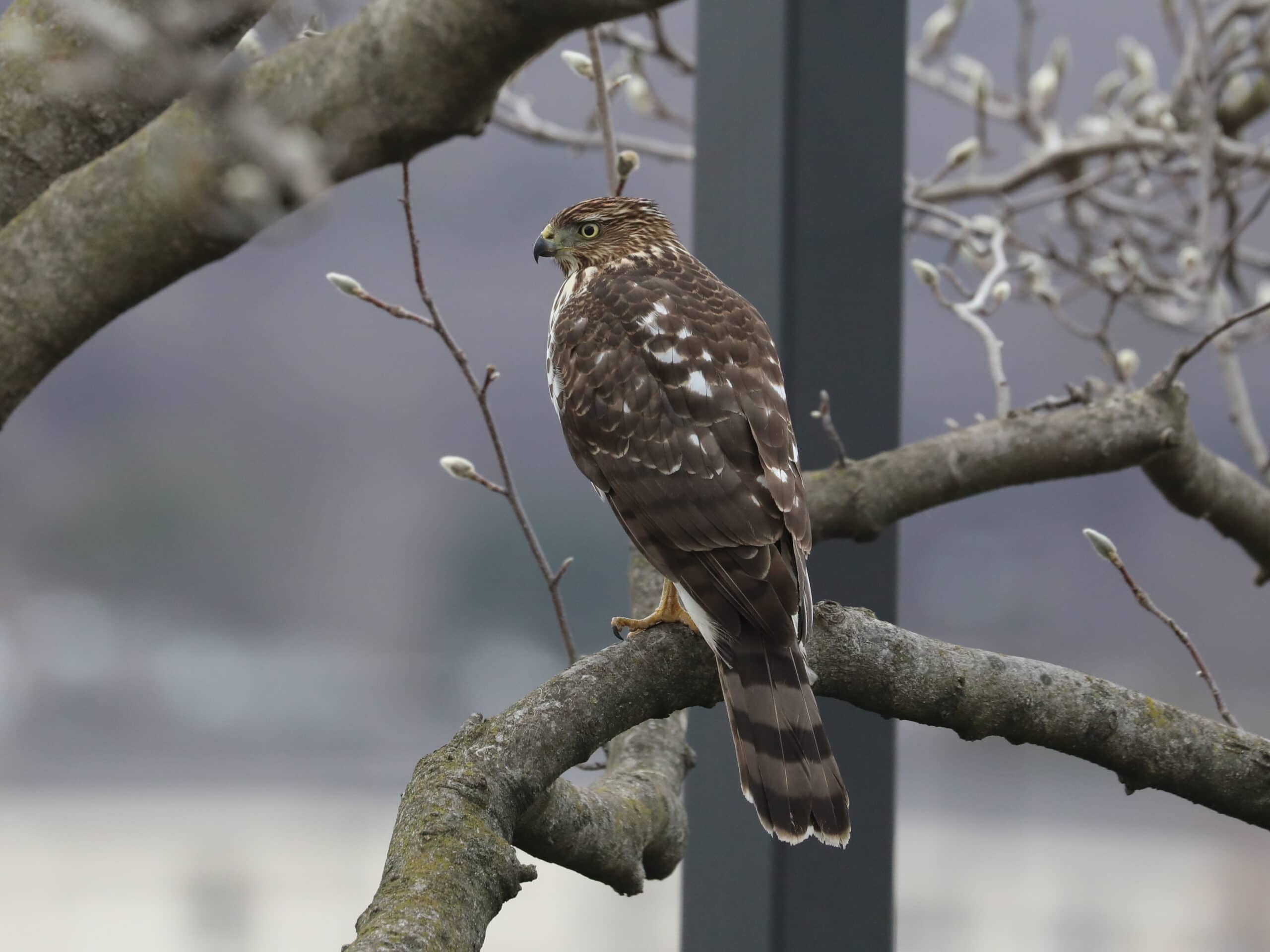
Coopers Hawk immature (January 2023)

Cooper’s Hawk adult (January 2026)
Cooper’s Hawk: A Backyard Predator
Few predators are more dangerous to your backyard birds than the Cooper’s Hawk. Their short, round wings and long, rudder-like tail give them great agility to chase down other birds in flight. Cooper’s Hawks’ favorite targets include doves, jays, and robins, but they’ll also capture smaller birds as well as a variety of mammals like squirrels and chipmunks. These hunters are usually silent, but listen for the alarm calls of songbirds as they warn each other that a hawk is nearby.
I’ve spoken to many people over the years who are concerned about the presence of a hawk in their yard. It’s certainly not a pleasant thought that the birds we love may get captured and eaten by a predator. However, it’s important to remember that Cooper’s Hawks themselves are fascinating, native birds. A hawk in your yard is a good sign that you’re providing high quality habitat to your birds. Provide native shrubs and other cover for your songbirds so they have a safe place to hide from hawks. Hawks may temporarily reduce activity at your bird feeders as the smaller birds in your yard hide elsewhere. Given time, the hawk will move on to search for prey in other areas.
Cooper’s Hawks represent a conservation success story. Historically, they were villified as pests and aggressively hunted prior to their protection under the Migratory Bird Treaty Act in 1918. Many states in the eastern United States had them listed as Threatened or Endangered through most of the 1900s. Since the 1970s, this species has expanded its range and adapted to live in suburban habitats. They’re now fairly common across the United States, southern Canada, Mexico, and parts of Central America. Cooper’s Hawks are year-round residents in the Susquehanna Valley.
The Cooper’s Hawk was named for naturalist William Cooper in the early 1820s. Cooper didn’t name the species himself. It was named in his honor by fellow naturalist Charles Lucien Bonaparte, a nephew of Emperor Napoleon Bonaparte. The American Ornithological Society announced in 2023 that it would rename all bird species with eponymous names (eponymous means it was named after a person). Due to its strong association with suburbs, one suggestion I’ve heard for a new name for Cooper’s Hawk is “Town Hawk.”
Coopers Hawk immature (January 2023)


About The Author
Dan Hinnebusch is the Ornithologist for Wild Birds Unlimited. Click to learn more.
