

Eastern Kingbird
Last week I came across several juvenile Eastern Kingbirds as I was leaving the Wild Birds Unlimited Nature Shop in York. There were at least three of them, perched on utility wires and a nearby tree. An adult kingbird was there as well, collecting fruit and visiting each juvenile to feed them.
Kingbirds are fairly common nesting birds in the Susquehanna Valley. A pair of kingbirds works together during the summer to raise their young. The female builds the nest, then lays three or four eggs (rarely two or five) in early June. For the next two weeks, the female incubates her eggs. Males don’t incubate the eggs, but they do keep watch at the nest site when the female needs to leave to find food. After the eggs hatch, both parents work hard to find enough food for the fast-growing nestlings. They mainly feed them insects, especially beetles, wasps, grasshoppers, and dragonflies. Later in the summer, they eat fewer insects and more fruit.
Adult kingbirds continue caring for their young for several weeks after they leave the nest. Eastern Kingbirds spend so much time caring for their young that they’re only able to nest once each year. By early September, kingbirds will leave Pennsylvania on fall migration. They move fairly quickly to western parts of the Amazon Basin in South America, where they form flocks and mostly eat fruit.
Next spring, they’ll take their time flying back north. Their spring migration is slower so they can take advantage of the abundant ripe fruit available in Central America during the spring dry season. Watch for them to return to the Susquehanna Valley next spring in late April. They often return to the same breeding territory to pair up with the same mate from the previous year.
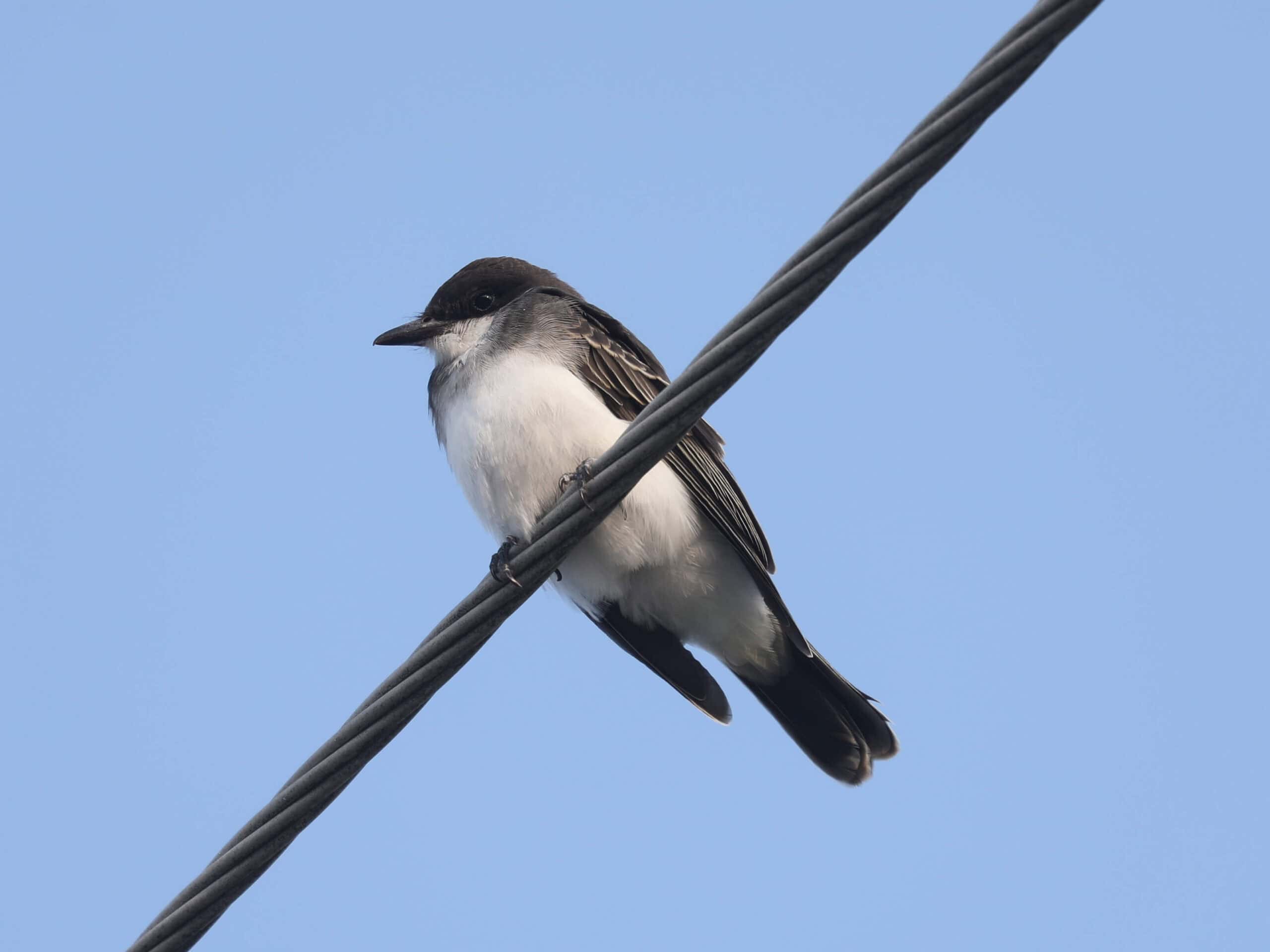
Eastern Kingbird (juvenile) outside the Wild Birds Unlimited Nature Shop in York (July 2026).
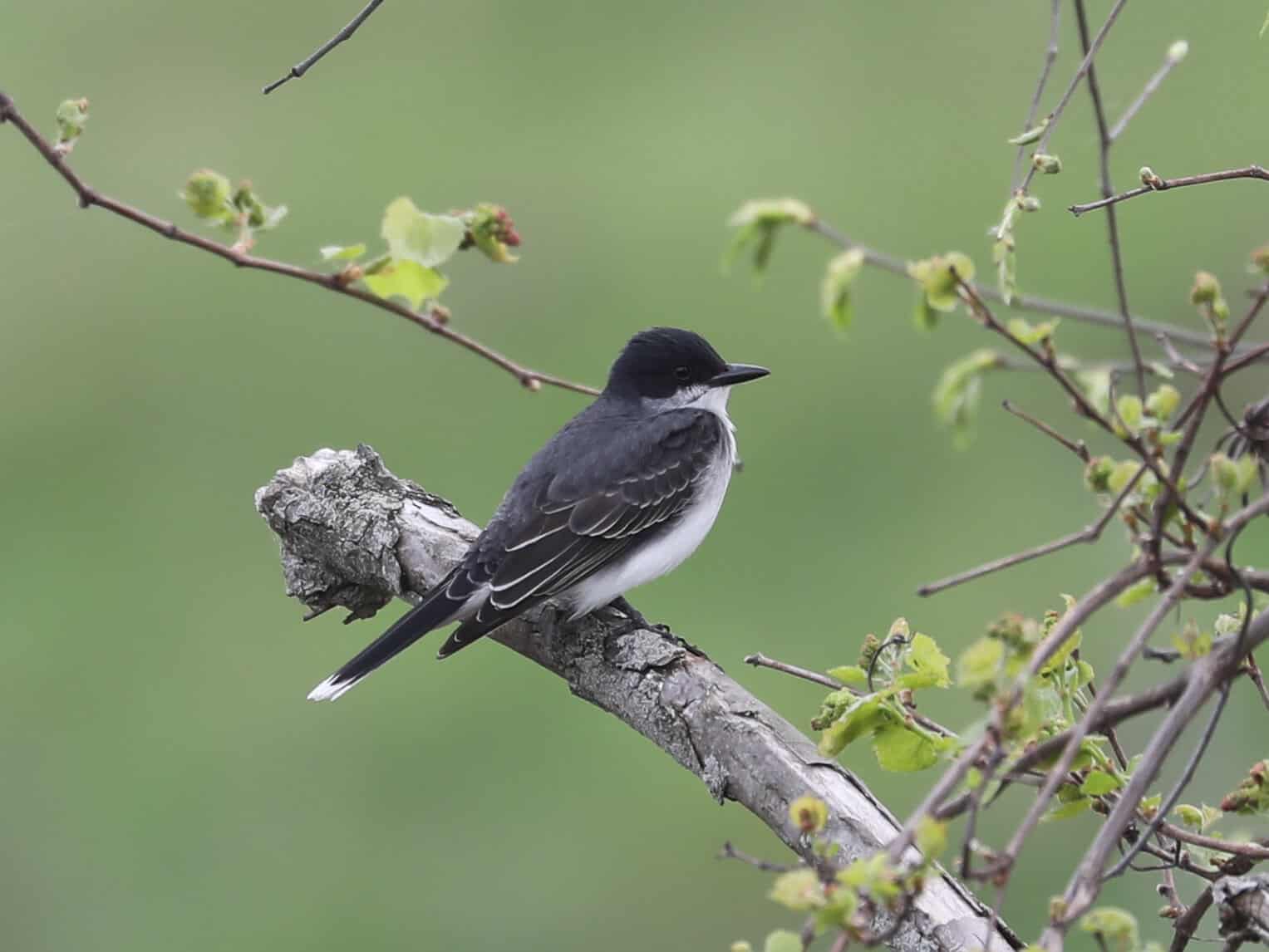
Eastern Kingbird (adult) in Mercer County (April 2024)

Eastern Kingbird (juvenile) outside the Wild Birds Unlimited Nature Shop in York (July 2026).
Eastern Kingbird
Last week I came across several juvenile Eastern Kingbirds as I was leaving the Wild Birds Unlimited Nature Shop in York. There were at least three of them, perched on utility wires and a nearby tree. An adult kingbird was there as well, collecting fruit and visiting each juvenile to feed them.
Kingbirds are fairly common nesting birds in the Susquehanna Valley. A pair of kingbirds works together during the summer to raise their young. The female builds the nest, then lays three or four eggs (rarely two or five) in early June. For the next two weeks, the female incubates her eggs. Males don’t incubate the eggs, but they do keep watch at the nest site when the female needs to leave to find food. After the eggs hatch, both parents work hard to find enough food for the fast-growing nestlings. They mainly feed them insects, especially beetles, wasps, grasshoppers, and dragonflies. Later in the summer, they eat fewer insects and more fruit.
Adult kingbirds continue caring for their young for several weeks after they leave the nest. Eastern Kingbirds spend so much time caring for their young that they’re only able to nest once each year. By early September, kingbirds will leave Pennsylvania on fall migration. They move fairly quickly to western parts of the Amazon Basin in South America, where they form flocks and mostly eat fruit.
Next spring, they’ll take their time flying back north. Their spring migration is slower so they can take advantage of the abundant ripe fruit available in Central America during the spring dry season. Watch for them to return to the Susquehanna Valley next spring in late April. They often return to the same breeding territory to pair up with the same mate from the previous year.
Eastern Kingbird (adult) in Mercer County (April 2024)


About The Author
Dan Hinnebusch is the Ornithologist for Wild Birds Unlimited. Click to learn more.
