

Louisiana Waterthrush
One of the Susquehanna Valley’s lesser known breeding birds can be found singing emphatically along forested streams. The slurred whistles of the Louisiana Waterthrush are quite loud so that other waterthrushes can hear them over the constant noise of water rushing over rocks. A pair of waterthrushes will defend a section of the stream, building a nest on the steep stream banks, often hidden under a fallen log or in the exposed roots of a fallen tree.
Louisiana Waterthrush key facts
| Scientific name | Parkesia motacilla |
|---|---|
| Family | Parulidae (New World Warblers) |
| Order | Passeriformes |
| eBird species page | Louisiana Waterthrush on eBird (code louwat) |
Fun fact: Nicknamed the feathered trout, the Louisiana Waterthrush eats stream insects and holds fewer territories along Pennsylvania streams damaged by acid mine drainage. Source
Waterthrushes are more often heard than seen, but if you find them they are a lot of fun to watch. They spend most of their time near the ground, often on exposed rocks within the stream itself. They’re in constant motion, running or leaping from rock to rock, or making short flights over wider parts of the stream as they search for insects to eat. Even when a waterthrush perches, it keeps moving, because they constantly move the whole back side of their body in an up-and-down motion, like a fidgety dance. In fact, their scientific name motacilla means “moving tail.”
There are two species of waterthrushes, which, despite the name, are members of the warbler family, not the thrush family. The Louisiana Waterthrush nests across most of the eastern United States, including the Susquehanna Valley. The Northern Waterthrush nests across Canada and a bit of the northeastern United States. It visits the Susquehanna Valley during spring and fall migration, but you’d need to go farther north or west to find them nesting in Pennsylvania. Both waterthrushes migrate and spend the winter in Mexico, Central America, northern South America, and on Caribbean Islands.
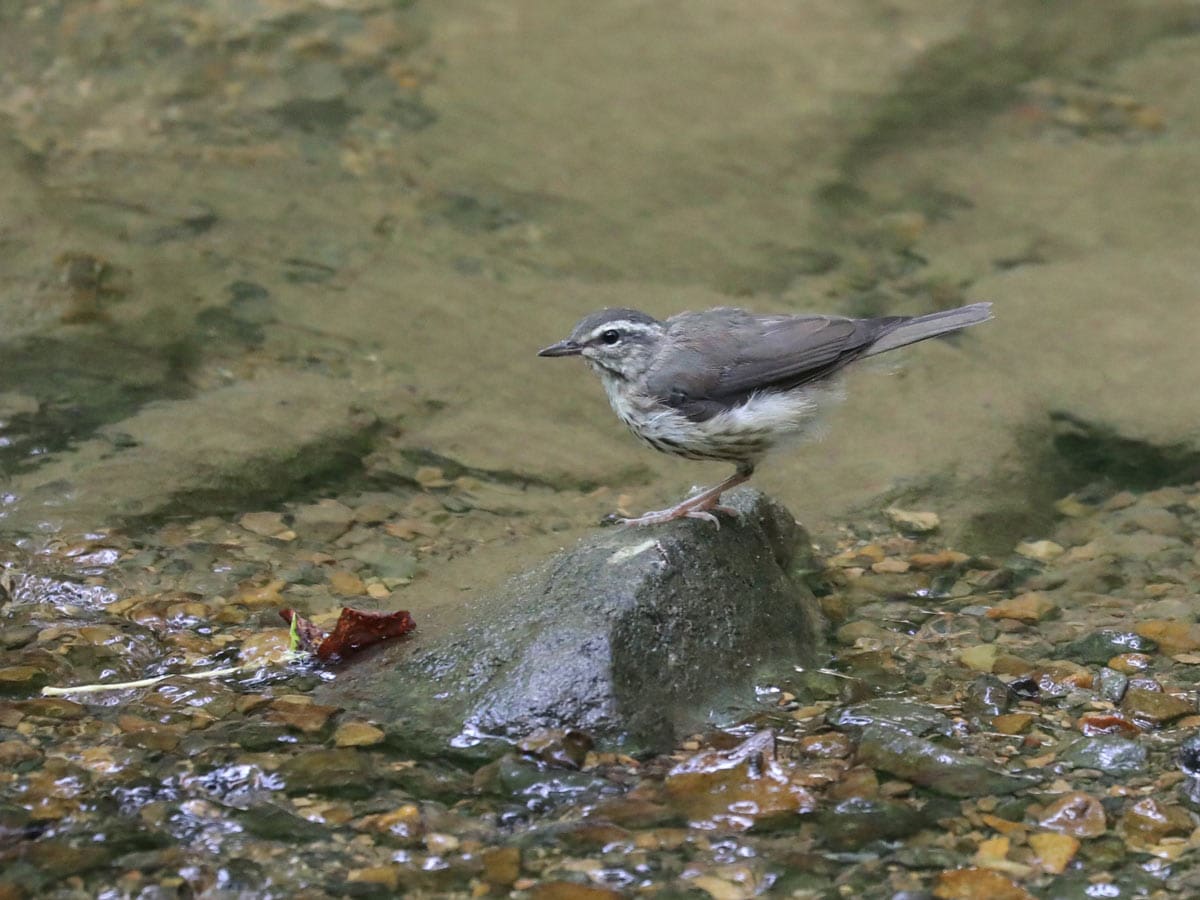
Louisiana Waterthrush in Virginia (June 2024)
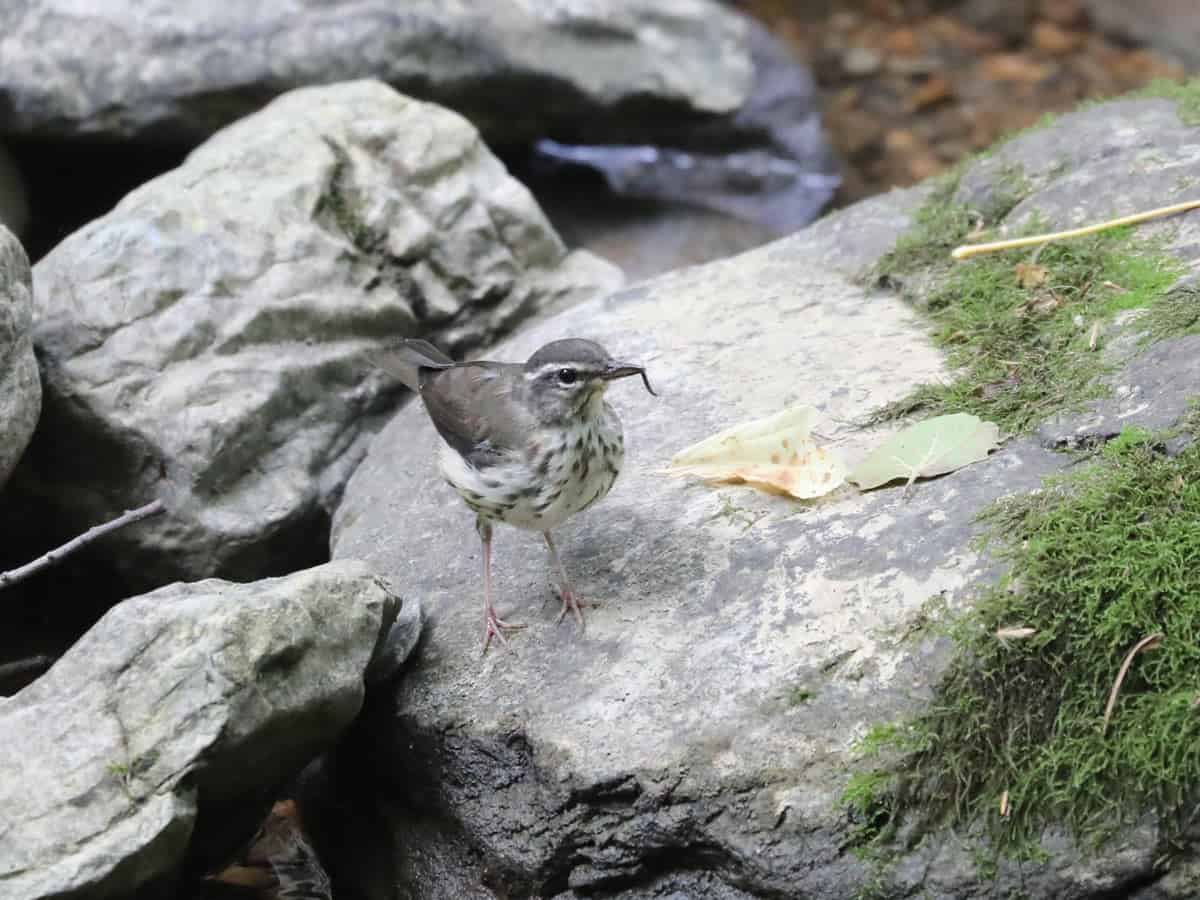
Louisiana Waterthrush with food in Virginia (June 2024)

Louisiana Waterthrush in Virginia (June 2024)
Louisiana Waterthrush
One of the Susquehanna Valley’s lesser known breeding birds can be found singing emphatically along forested streams. The slurred whistles of the Louisiana Waterthrush are quite loud so that other waterthrushes can hear them over the constant noise of water rushing over rocks. A pair of waterthrushes will defend a section of the stream, building a nest on the steep stream banks, often hidden under a fallen log or in the exposed roots of a fallen tree.
Louisiana Waterthrush key facts
| Scientific name | Parkesia motacilla |
|---|---|
| Family | Parulidae (New World Warblers) |
| Order | Passeriformes |
| eBird species page | Louisiana Waterthrush on eBird (code louwat) |
Fun fact: Nicknamed the feathered trout, the Louisiana Waterthrush eats stream insects and holds fewer territories along Pennsylvania streams damaged by acid mine drainage. Source
Waterthrushes are more often heard than seen, but if you find them they are a lot of fun to watch. They spend most of their time near the ground, often on exposed rocks within the stream itself. They’re in constant motion, running or leaping from rock to rock, or making short flights over wider parts of the stream as they search for insects to eat. Even when a waterthrush perches, it keeps moving, because they constantly move the whole back side of their body in an up-and-down motion, like a fidgety dance. In fact, their scientific name motacilla means “moving tail.”
There are two species of waterthrushes, which, despite the name, are members of the warbler family, not the thrush family. The Louisiana Waterthrush nests across most of the eastern United States, including the Susquehanna Valley. The Northern Waterthrush nests across Canada and a bit of the northeastern United States. It visits the Susquehanna Valley during spring and fall migration, but you’d need to go farther north or west to find them nesting in Pennsylvania. Both waterthrushes migrate and spend the winter in Mexico, Central America, northern South America, and on Caribbean Islands.
Louisiana Waterthrush with food in Virginia (June 2024)


About The Author
Dan Hinnebusch is the Ornithologist for Wild Birds Unlimited. Learn more about Dan Hinnebusch.
