

Northern Parula
I had fun last month watching a Northern Parula in my favorite tree, the large white oak in my backyard. Parulas are a type of migratory warbler. Most nest in the eastern United States and southeastern Canada. In the winter, they’re in eastern Mexico and on most Caribbean Islands, with a few sticking around on the southern tip of Florida. Most songbird migration is finished for this spring, and most warblers have passed through and flown to forests to our north. Unlike most species of warblers, some Northern Parulas stick around in our area to nest in the Susquehanna Valley.
Even for a warbler, Northern Parulas are small. They measure less than five inches from the tip of the bill to the end of the tail. They weigh only about a third of an ounce. In breeding plumage, the males have a bright yellow throat and a yellow and orange breast above a white belly. The head, wings, and tail are mostly blue, but a yellowish green back gives it one of its nicknames, the blue yellowback. White feathers line the top and bottom of the eye, a feature called a partial eye-ring.
Northern Parulas typically nest in beard moss, which is a lichen in the genus Usnea that hangs like a beard from tree branches (they often use Spanish moss in the southeastern United States). Through the first half of the Twentieth Century, the Northern Parula population decreased dramatically across Pennsylvania as air pollution killed much of the beard moss. Happily, passage of environmental regulations like the 1963 Clean Air Act have improved air quality and allowed beard moss to grow again, and the number of Northern Parulas nesting in the Keystone State has been steadily increasing since the 1970s.
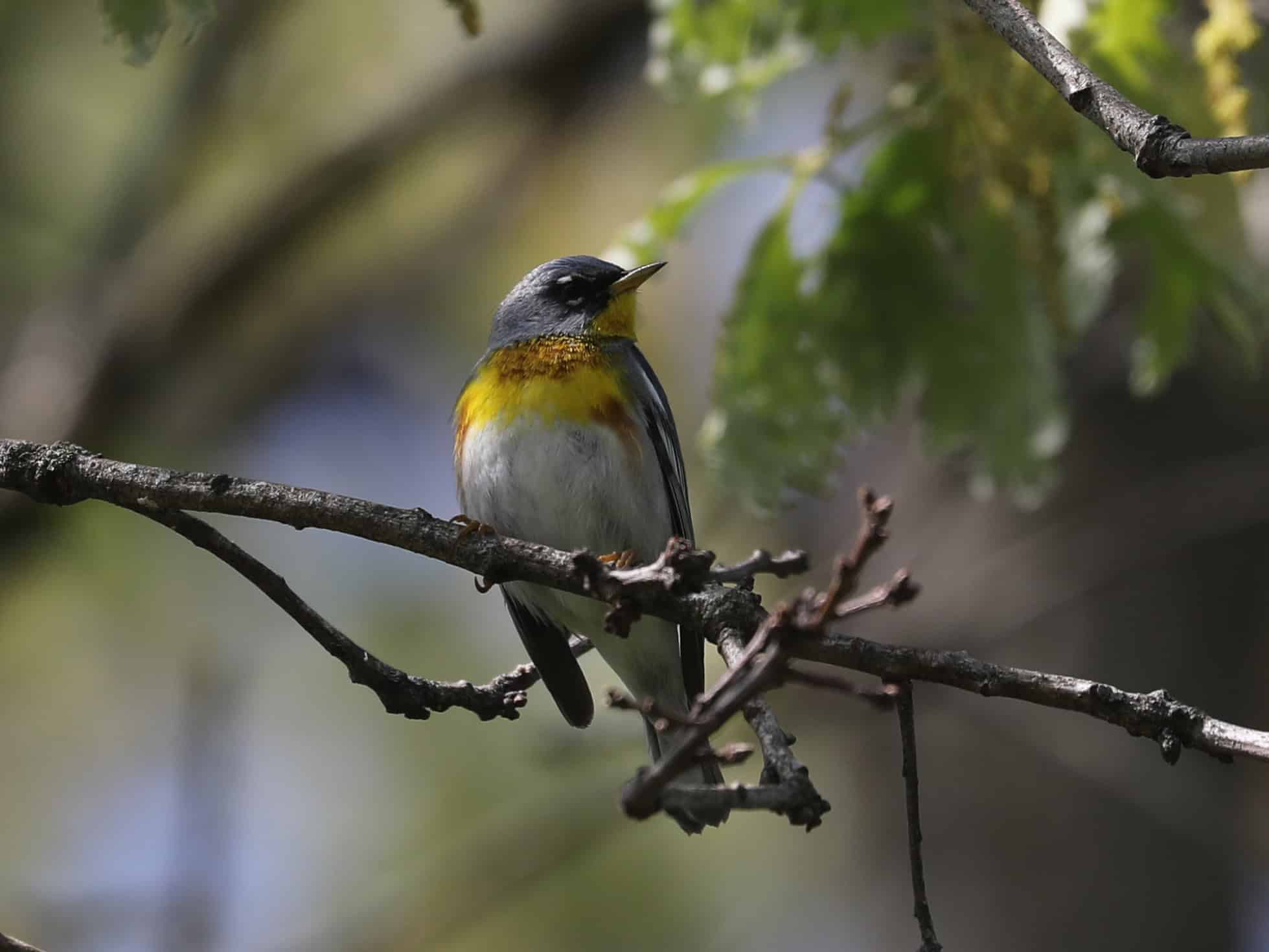
Northern Parula in Dan & Melissa’s yard (May 2025)
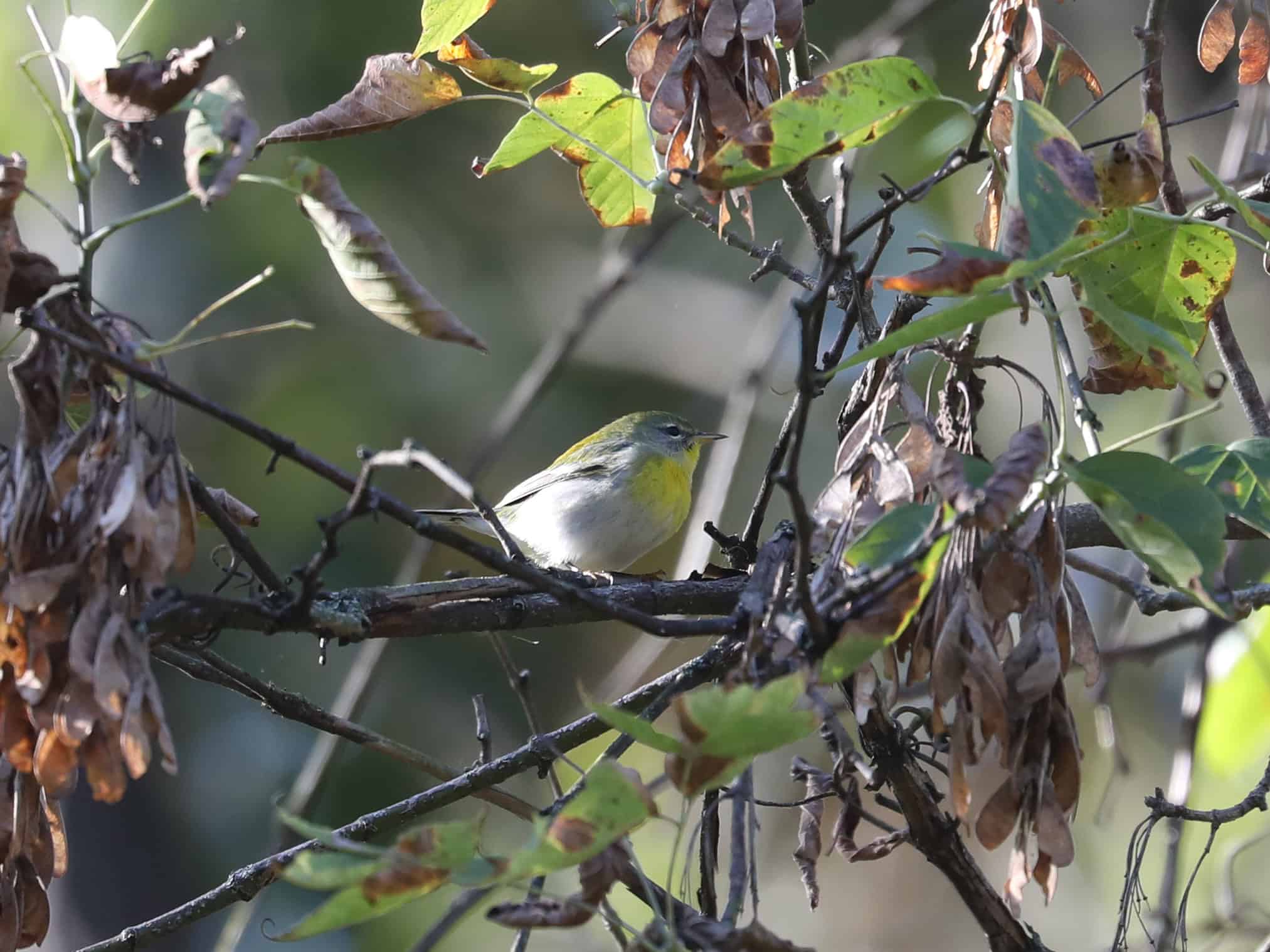
Northern Parula behind the Wild Birds Unlimited Nature Shop in Mechanicsburg (October 2024)

Northern Parula in Dan & Melissa’s yard (May 2025)
Northern Parula
I had fun last month watching a Northern Parula in my favorite tree, the large white oak in my backyard. Parulas are a type of migratory warbler. Most nest in the eastern United States and southeastern Canada. In the winter, they’re in eastern Mexico and on most Caribbean Islands, with a few sticking around on the southern tip of Florida. Most songbird migration is finished for this spring, and most warblers have passed through and flown to forests to our north. Unlike most species of warblers, some Northern Parulas stick around in our area to nest in the Susquehanna Valley.
Even for a warbler, Northern Parulas are small. They measure less than five inches from the tip of the bill to the end of the tail. They weigh only about a third of an ounce. In breeding plumage, the males have a bright yellow throat and a yellow and orange breast above a white belly. The head, wings, and tail are mostly blue, but a yellowish green back gives it one of its nicknames, the blue yellowback. White feathers line the top and bottom of the eye, a feature called a partial eye-ring.
Northern Parulas typically nest in beard moss, which is a lichen in the genus Usnea that hangs like a beard from tree branches (they often use Spanish moss in the southeastern United States). Through the first half of the Twentieth Century, the Northern Parula population decreased dramatically across Pennsylvania as air pollution killed much of the beard moss. Happily, passage of environmental regulations like the 1963 Clean Air Act have improved air quality and allowed beard moss to grow again, and the number of Northern Parulas nesting in the Keystone State has been steadily increasing since the 1970s.
Northern Parula behind the Wild Birds Unlimited Nature Shop in Mechanicsburg (October 2024)


About The Author
Dan Hinnebusch is the Ornithologist for Wild Birds Unlimited. Click to learn more.
