

Singing Juncos: Dark-Eyed Junco
One of my favorite signs of spring starting each year is the soft, faintly musical, trilling song of the Dark-eyed Junco. Juncos have the nickname “snowbird” in many parts of the country, because they are only present during the winter. In the Susquehanna Valley, they start showing up in October, then they’re mostly gone by late April. Through most of their time in our region, juncos don’t sing. A few start in late February. By late March, I hear juncos singing every morning from all around my neighborhood. The spring songs of juncos indicate that their hormones are starting to change as they prepare to migrate and start the nesting season.
Although juncos are gone during the summer, some stay close by. They are common in forests in the northern half of Pennsylvania. A few may nest in northern Dauphin County or at the highest elevations in Cumberland and Franklin counties each year. Outside our state, you can find Dark-eyed Juncos nesting in the highest parts of the Appalachian mountains as far south as Georgia.
We can enjoy juncos for a few more weeks as winter comes to an end and spring begins. They are one of the easiest birds to attract to a backyard feeding station, but they don’t often visit the bird feeders themselves. Watch for them on the ground beneath your feeders, picking up seed dropped by other birds. They eat a variety of seeds, including sunflower and safflower seeds, but their clear favorite is white proso millet.

Dark-eyed Junco (female) in Dan & Melissa’s yard (February 2026)
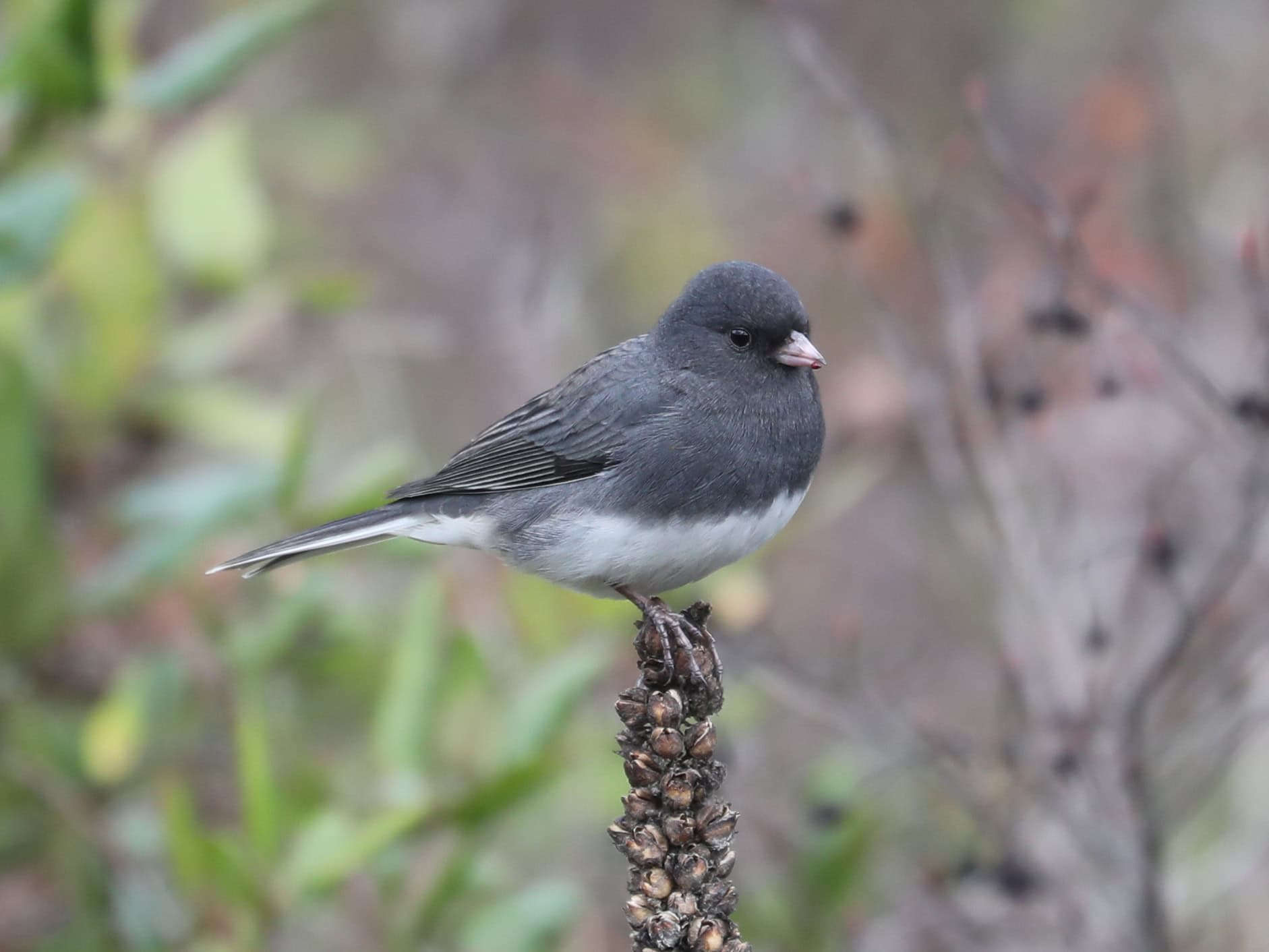
Dark-eyed Junco (male) in York County (November 2024)

Dark-eyed Junco (female) in Dan & Melissa’s yard (February 2026)
Singing Juncos: Dark-Eyed Junco
One of my favorite signs of spring starting each year is the soft, faintly musical, trilling song of the Dark-eyed Junco. Juncos have the nickname “snowbird” in many parts of the country, because they are only present during the winter. In the Susquehanna Valley, they start showing up in October, then they’re mostly gone by late April. Through most of their time in our region, juncos don’t sing. A few start in late February. By late March, I hear juncos singing every morning from all around my neighborhood. The spring songs of juncos indicate that their hormones are starting to change as they prepare to migrate and start the nesting season.
Although juncos are gone during the summer, some stay close by. They are common in forests in the northern half of Pennsylvania. A few may nest in northern Dauphin County or at the highest elevations in Cumberland and Franklin counties each year. Outside our state, you can find Dark-eyed Juncos nesting in the highest parts of the Appalachian mountains as far south as Georgia.
We can enjoy juncos for a few more weeks as winter comes to an end and spring begins. They are one of the easiest birds to attract to a backyard feeding station, but they don’t often visit the bird feeders themselves. Watch for them on the ground beneath your feeders, picking up seed dropped by other birds. They eat a variety of seeds, including sunflower and safflower seeds, but their clear favorite is white proso millet.
Dark-eyed Junco (male) in York County (November 2024)


About The Author
Dan Hinnebusch is the Ornithologist for Wild Birds Unlimited. Click to learn more.
