

Tufted Titmice and West Nile Virus
Tufted Titmice are one of our cutest and most charismatic backyard birds. Their large dark eyes and pointed crest make them seem very expressive as they actively search for food in tree branches or at your bird feeder. Watch for them to visit in small flocks of two to eight birds.
Tufted Titmouse key facts
| Scientific name | Baeolophus bicolor |
|---|---|
| Family | Paridae (Tits, Chickadees, and Titmice) |
| Order | Passeriformes |
| eBird species page | Tufted Titmouse on eBird (code tuftit) |
Fun fact: Titmice are omnivorous, eating a wide variety of insects, spiders, seeds, and fruit. They've even learned to check roads during the fall to eat pieces of acorns crushed by passing cars.
Unfortunately, these cute little birds are highly susceptible to infection by West Nile Virus, which first appeared in North America in New York in 1999. Many of our songbirds can be infected by West Nile Virus, including American Crows, Blue Jays, Northern Cardinals, and Carolina Wrens. Compared to most other species, however, titmice do not handle the virus well. An experiment in 2013 showed that about a quarter of Carolina Wrens died when exposed to the virus, but the death rate in Tufted Titmice was 100 percent.
What can you do to help Tufted Titmice? Limit West Nile Virus transmission in your yard by controlling the vector by which it spreads – mosquitoes. Eliminate standing water in buckets or other containers and make sure you fill your bird bath each day with fresh water. Avoid using pesticides to control mosquitoes, because you’ll also kill many of the bugs that your titmice rely on for food.
It’s also helpful to your titmice (and other songbirds) to keep your bird feeders filled with fresh, high-quality bird food. As winter approaches, offer foods with extra fat and calories to help them stay warm in the cold weather. Great options include Bark Butter and Bark Butter Bits, suet, sunflower chips, peanuts, and tree nuts (check out the No-Mess Plus or TreeNutty Plus blends).
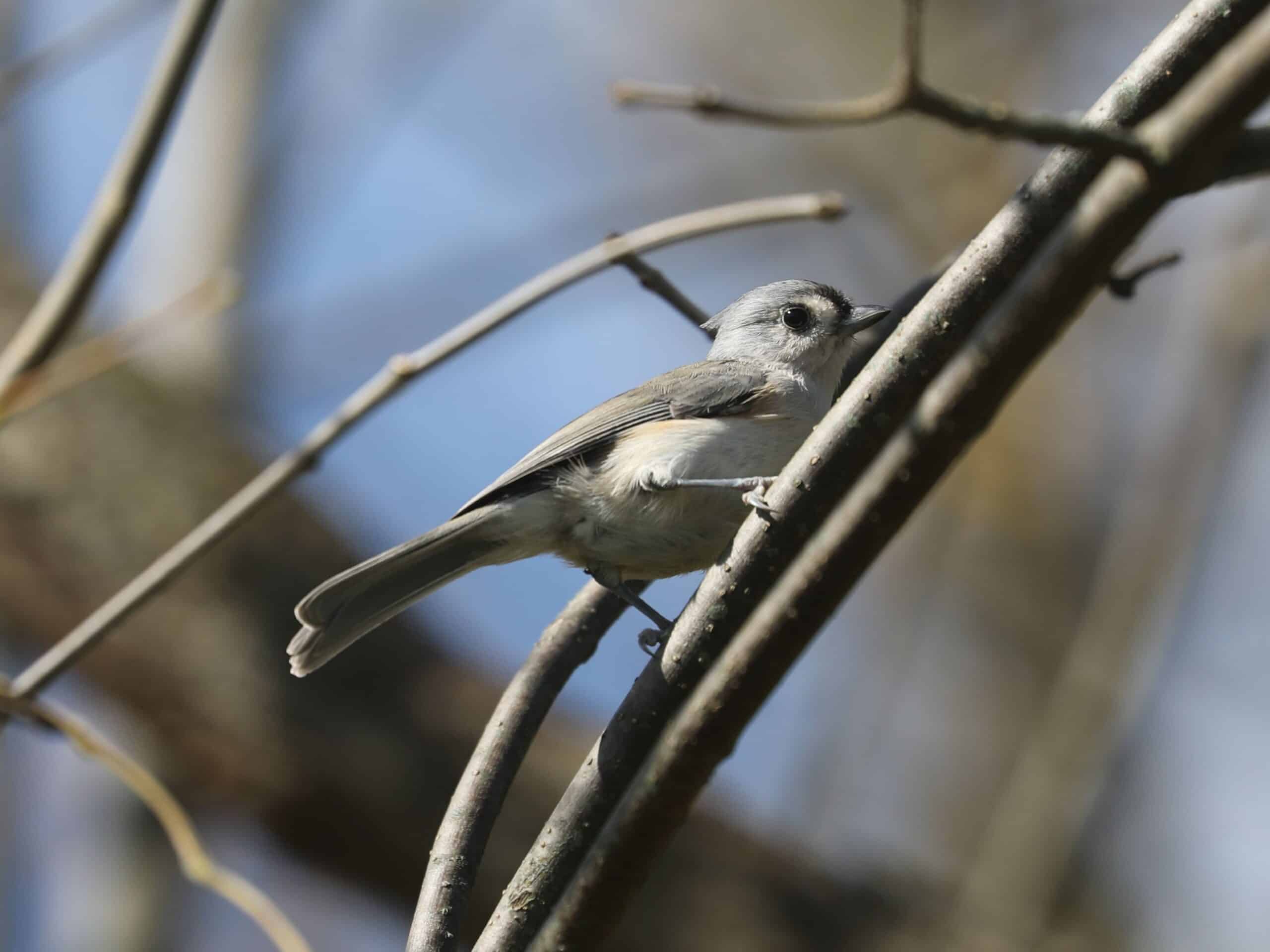
Tufted Titmouse in York County (October 2026).

Tufted Titmouse in York County (October 2026).
Tufted Titmice and West Nile Virus
Tufted Titmice are one of our cutest and most charismatic backyard birds. Their large dark eyes and pointed crest make them seem very expressive as they actively search for food in tree branches or at your bird feeder. Watch for them to visit in small flocks of two to eight birds.
Tufted Titmouse key facts
| Scientific name | Baeolophus bicolor |
|---|---|
| Family | Paridae (Tits, Chickadees, and Titmice) |
| Order | Passeriformes |
| eBird species page | Tufted Titmouse on eBird (code tuftit) |
Fun fact: Titmice are omnivorous, eating a wide variety of insects, spiders, seeds, and fruit. They've even learned to check roads during the fall to eat pieces of acorns crushed by passing cars.
Unfortunately, these cute little birds are highly susceptible to infection by West Nile Virus, which first appeared in North America in New York in 1999. Many of our songbirds can be infected by West Nile Virus, including American Crows, Blue Jays, Northern Cardinals, and Carolina Wrens. Compared to most other species, however, titmice do not handle the virus well. An experiment in 2013 showed that about a quarter of Carolina Wrens died when exposed to the virus, but the death rate in Tufted Titmice was 100 percent.
What can you do to help Tufted Titmice? Limit West Nile Virus transmission in your yard by controlling the vector by which it spreads – mosquitoes. Eliminate standing water in buckets or other containers and make sure you fill your bird bath each day with fresh water. Avoid using pesticides to control mosquitoes, because you’ll also kill many of the bugs that your titmice rely on for food.
It’s also helpful to your titmice (and other songbirds) to keep your bird feeders filled with fresh, high-quality bird food. As winter approaches, offer foods with extra fat and calories to help them stay warm in the cold weather. Great options include Bark Butter and Bark Butter Bits, suet, sunflower chips, peanuts, and tree nuts (check out the No-Mess Plus or TreeNutty Plus blends).


About The Author
Dan Hinnebusch is the Ornithologist for Wild Birds Unlimited. Click to learn more.
