

Wasted Effort: Mallard
My son Eddie noticed a well-hidden duck sitting in Ed & Grace’s native plant garden, only a few feet away from where their driveway meets the road. She blends in so well that it can take a minute to find her even if you know where to look. We soon learned that she was sitting on a nest with seven white eggs. Like most birds, Mallards don’t incubate their eggs non-stop. They average more than 22 hours per day on the nest, but they take a few breaks throughout the day to get food and water.
Unfortunately, the breeding season has not been a success for Eddie’s Mallard. We’ve reached the end of July, and she’s still incubating the same eggs on the nest next to the driveway. The incubation period for Mallard eggs is three to four weeks. Assuming she was just starting on the day Eddie found her, she should have been leading ducklings away from the nest in late June. The fact that her eggs haven’t hatched means they never will.
Eggs can fail to hatch for several reasons. Just like people, wild birds can have fertility issues. This Mallard’s eggs may not have been viable when she laid them. Additionally, an adult bird can make mistakes after the eggs are laid. They can crack eggs if they’re not careful, or leave them unattended for too long when the air temperature is too hot or too cold. I suspect that Eddie’s Mallard eggs may have failed during the heat wave we experienced in early June. Her nest didn’t fail due to a lack of effort. She persisted on her nest through some miserably hot weather, and then survived the violent wind storm on July 4th, which left the area littered with fallen trees and large branches.
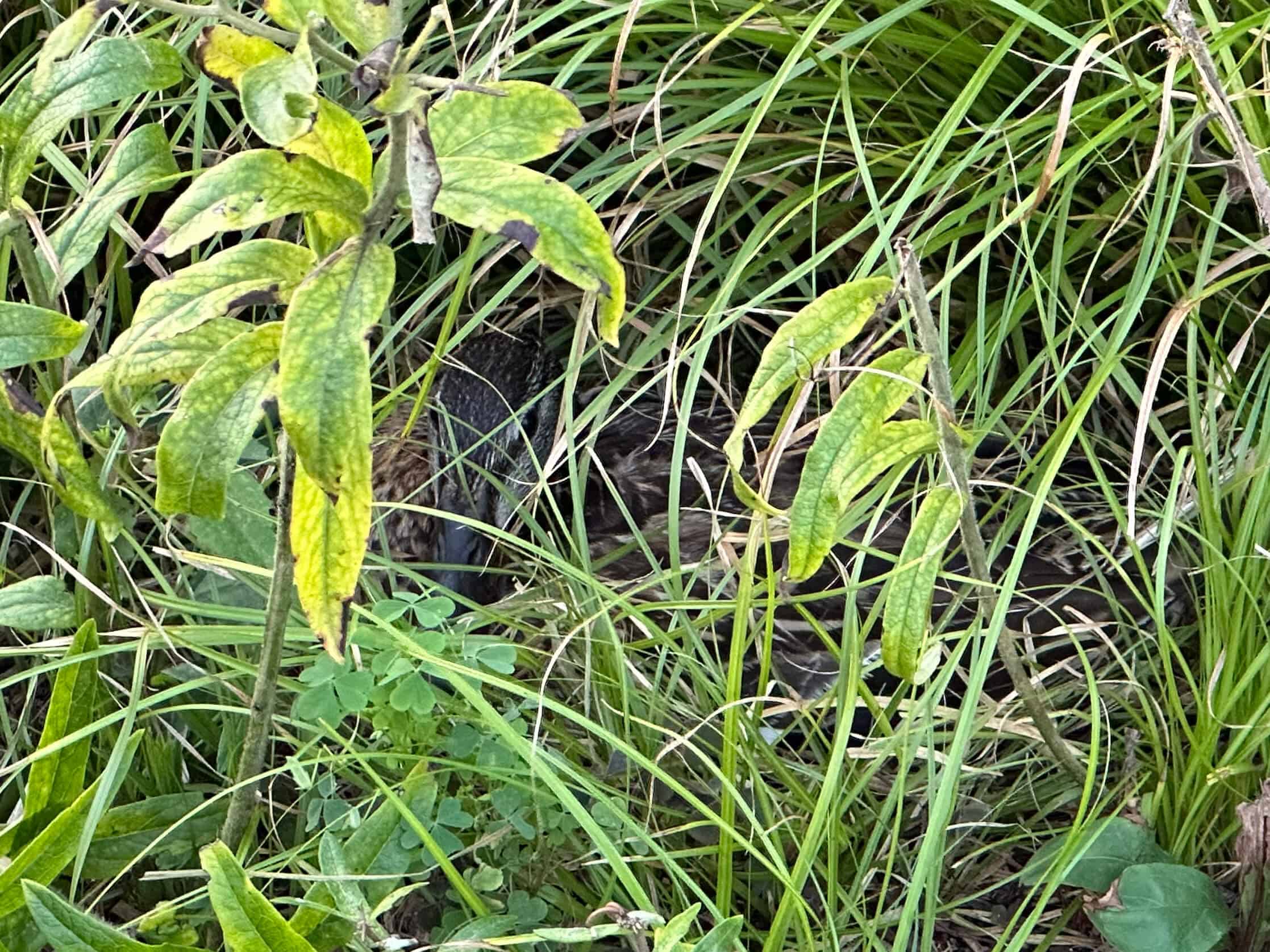
Mallard in Ed & Grace’s yard (July 2026)
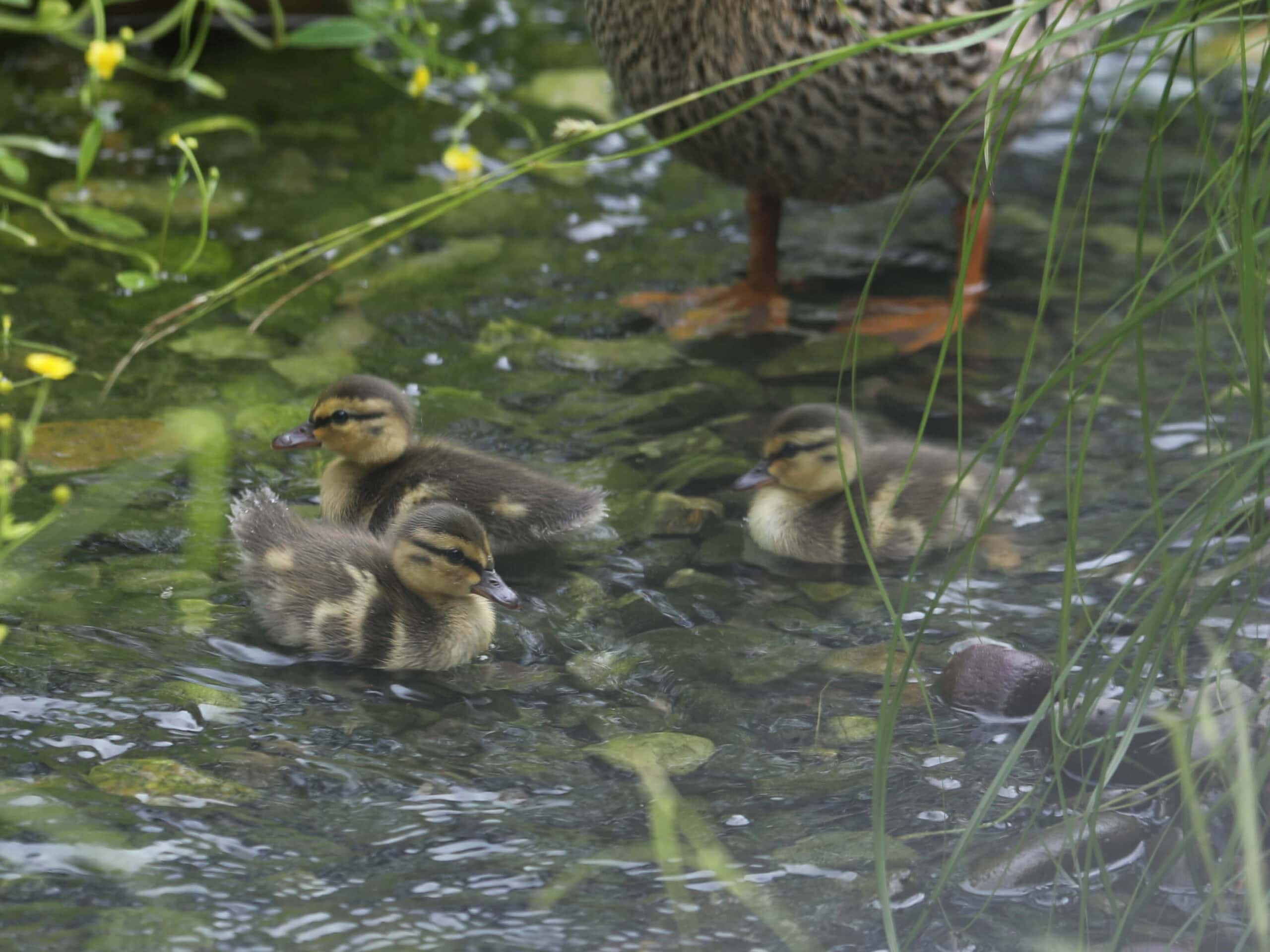
Mallard ducklings in Ed & Grace’s yard (June 2025). Last year Mallards were successful in Ed & Grace’s yard. The mother duck whose feet and belly you can see in this photo may or may not be the same bird as this year’s duck.

Mallard in Ed & Grace’s yard (July 2026)
Wasted Effort: Mallard
My son Eddie noticed a well-hidden duck sitting in Ed & Grace’s native plant garden, only a few feet away from where their driveway meets the road. She blends in so well that it can take a minute to find her even if you know where to look. We soon learned that she was sitting on a nest with seven white eggs. Like most birds, Mallards don’t incubate their eggs non-stop. They average more than 22 hours per day on the nest, but they take a few breaks throughout the day to get food and water.
Unfortunately, the breeding season has not been a success for Eddie’s Mallard. We’ve reached the end of July, and she’s still incubating the same eggs on the nest next to the driveway. The incubation period for Mallard eggs is three to four weeks. Assuming she was just starting on the day Eddie found her, she should have been leading ducklings away from the nest in late June. The fact that her eggs haven’t hatched means they never will.
Eggs can fail to hatch for several reasons. Just like people, wild birds can have fertility issues. This Mallard’s eggs may not have been viable when she laid them. Additionally, an adult bird can make mistakes after the eggs are laid. They can crack eggs if they’re not careful, or leave them unattended for too long when the air temperature is too hot or too cold. I suspect that Eddie’s Mallard eggs may have failed during the heat wave we experienced in early June. Her nest didn’t fail due to a lack of effort. She persisted on her nest through some miserably hot weather, and then survived the violent wind storm on July 4th, which left the area littered with fallen trees and large branches.
Mallard ducklings in Ed & Grace’s yard (June 2025). Last year Mallards were successful in Ed & Grace’s yard. The mother duck whose feet and belly you can see in this photo may or may not be the same bird as this year’s duck.


About The Author
Dan Hinnebusch is the Ornithologist for Wild Birds Unlimited. Click to learn more.
