

Yellow-throated Vireo
With its yellow throat and bright yellow “spectacles,” the Yellow-throated Vireo is the most colorful of the six vireo species that can be seen in Pennsylvania each year. However, you often don’t see that color because these vireos spend most of their time out of sight up in the leafy branches of trees. Most of my Yellow-throated Vireo observations are of birds that I hear but never see. They have a buzzy, lazy sounding song, but they sing persistently throughout the day, unlike most songbirds that are quiet through the warmer parts of the afternoon.
With an estimated Pennsylvania nesting population of about 96 thousand, Yellow-throated Vireos are much less common than the familiar Red-eyed Vireo, which has a statewide nesting population of about 5.6 million birds. The other Pennsylvania Vireos include the Blue-headed (540 thousand), Warbling (160 thousand), White-eyed (68 thousand), and Philadelphia (doesn’t nest in Pennsylvania, but passes through during migration) vireos.
Look for Yellow-throated Vireos along the edges of large patches of mature forest. Like most of our nesting songbirds, they rely on large numbers of caterpillars to feed to their nestlings. Those caterpillars rely on the native plants they have evolved to eat. In particular, Yellow-throated Vireos are often found in forests dominated by native oaks and maples. It’s no accident that the Yellow-throated Vireos that stop in my yard in the spring always visit my favorite tree, which a large native white oak.
Unfortunately, Yellow-throated Vireos represent a cautionary tale on what happens when they lose access to caterpillars during the nesting season. These birds were once fairly common in the tree-lined streets of small cities across eastern North America. Many cities increased use of insecticides in the early 20th century in an attempt to eliminate the beetles that spread Dutch Elm Disease, which was killing many of the trees planted in urban landscapes. Native caterpillars were killed along with the beetles, and Yellow-throated Warblers vanished from our cities.
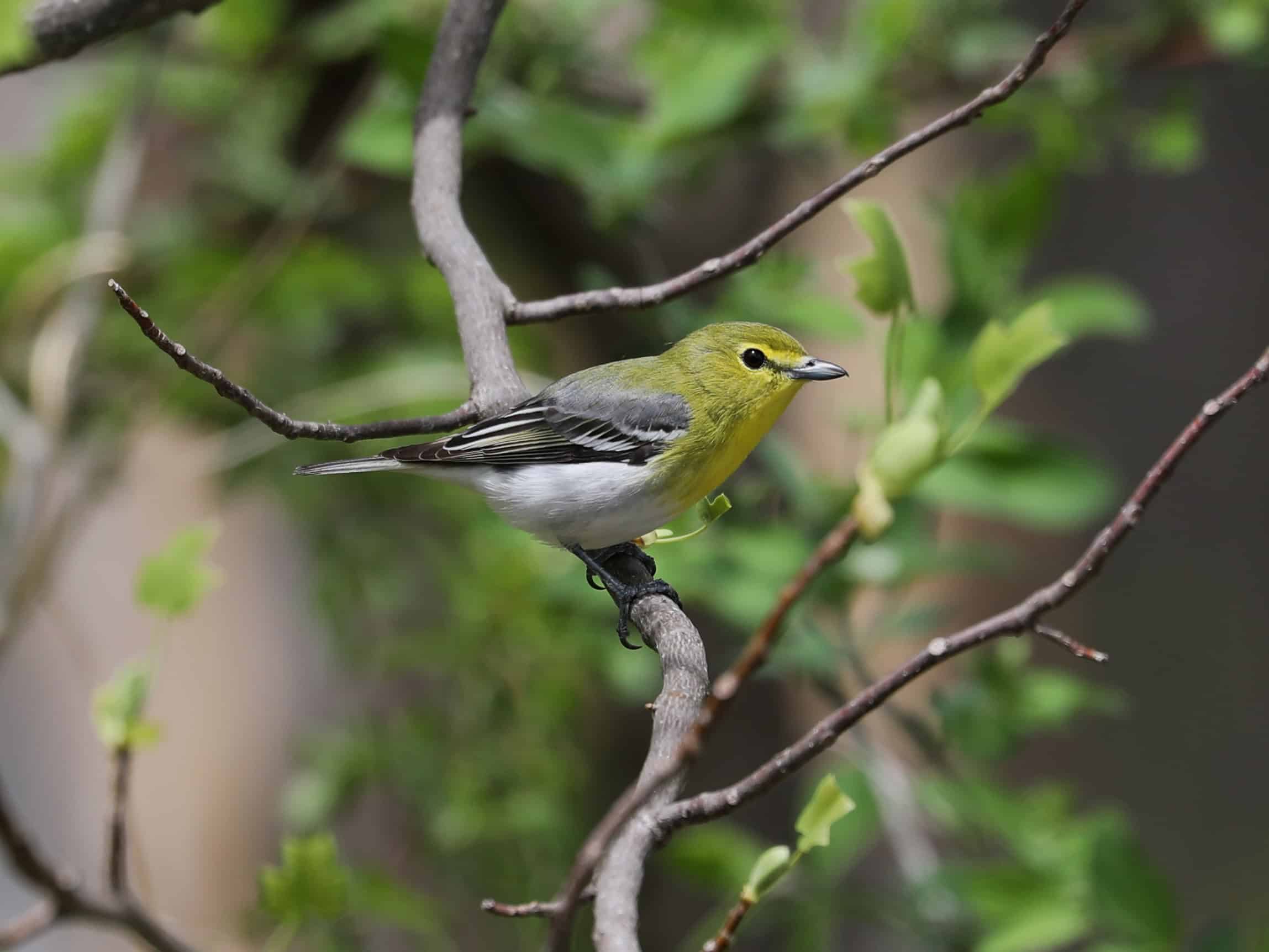
Yellow-throated Vireo in Bucks County (April 2025)
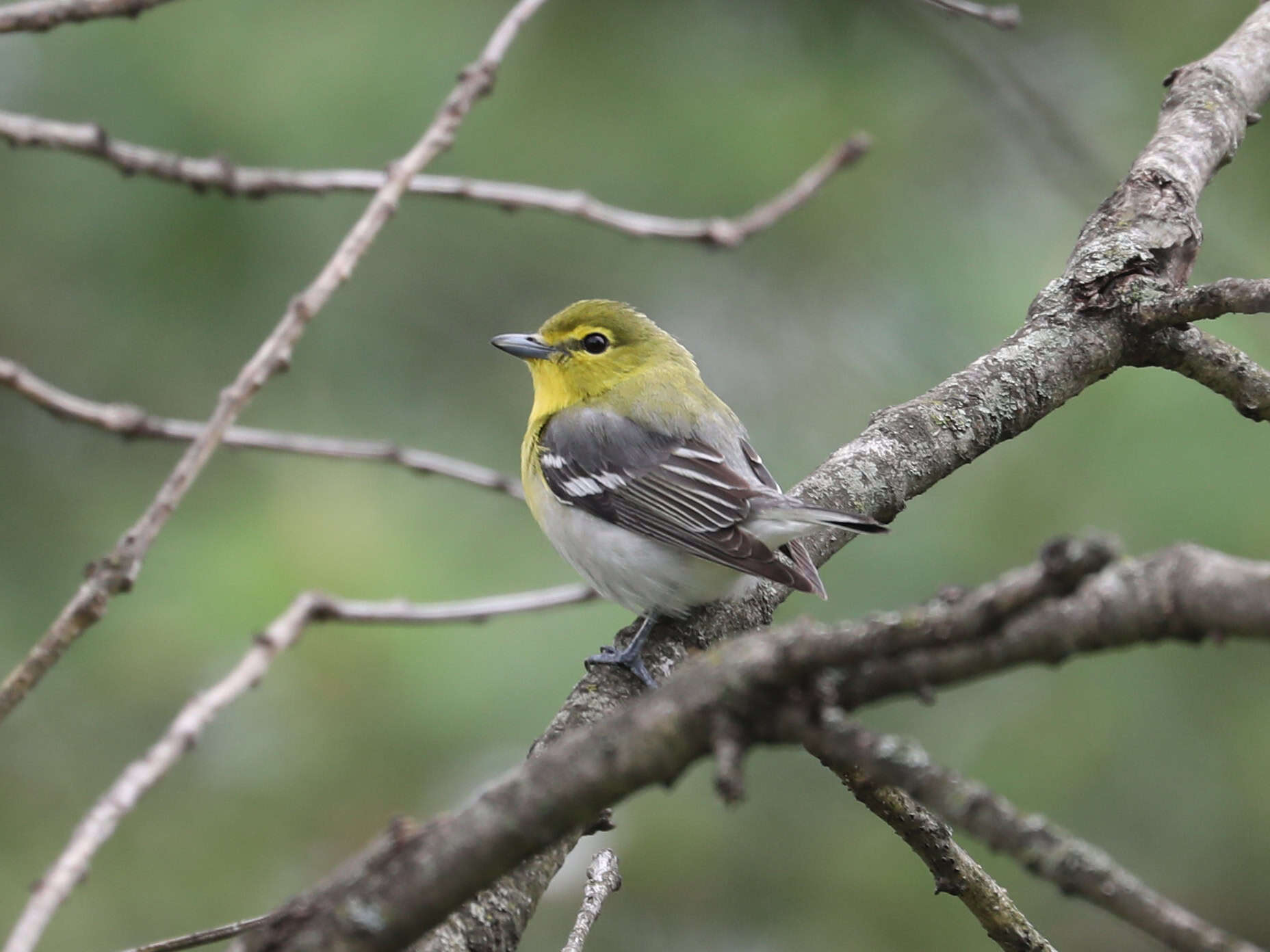
Yellow-throated Vireo in a white oak tree in Dan & Melissa’s yard (May 2022)

Yellow-throated Vireo in Bucks County (April 2025)
Yellow-throated Vireo
With its yellow throat and bright yellow “spectacles,” the Yellow-throated Vireo is the most colorful of the six vireo species that can be seen in Pennsylvania each year. However, you often don’t see that color because these vireos spend most of their time out of sight up in the leafy branches of trees. Most of my Yellow-throated Vireo observations are of birds that I hear but never see. They have a buzzy, lazy sounding song, but they sing persistently throughout the day, unlike most songbirds that are quiet through the warmer parts of the afternoon.
With an estimated Pennsylvania nesting population of about 96 thousand, Yellow-throated Vireos are much less common than the familiar Red-eyed Vireo, which has a statewide nesting population of about 5.6 million birds. The other Pennsylvania Vireos include the Blue-headed (540 thousand), Warbling (160 thousand), White-eyed (68 thousand), and Philadelphia (doesn’t nest in Pennsylvania, but passes through during migration) vireos.
Look for Yellow-throated Vireos along the edges of large patches of mature forest. Like most of our nesting songbirds, they rely on large numbers of caterpillars to feed to their nestlings. Those caterpillars rely on the native plants they have evolved to eat. In particular, Yellow-throated Vireos are often found in forests dominated by native oaks and maples. It’s no accident that the Yellow-throated Vireos that stop in my yard in the spring always visit my favorite tree, which a large native white oak.
Unfortunately, Yellow-throated Vireos represent a cautionary tale on what happens when they lose access to caterpillars during the nesting season. These birds were once fairly common in the tree-lined streets of small cities across eastern North America. Many cities increased use of insecticides in the early 20th century in an attempt to eliminate the beetles that spread Dutch Elm Disease, which was killing many of the trees planted in urban landscapes. Native caterpillars were killed along with the beetles, and Yellow-throated Warblers vanished from our cities.
Yellow-throated Vireo in a white oak tree in Dan & Melissa’s yard (May 2022)


About The Author
Dan Hinnebusch is the Ornithologist for Wild Birds Unlimited. Click to learn more.
