

Adaptations: American Robin
This week we visited Monticello, the historic site and former home of Thomas Jefferson. One of the neat things we saw was an active archaeological site where professionals were looking for artifacts prior to construction of a new walking path. We got to see “Rob,” an American Robin who was also checking out the site. According to one of the archaeologists, Rob discovered months ago that the dig site is a great place to look for earthworms. As you can see, he’s comfortable hopping right up next to people to find food.
Robins aren’t the only birds that can adapt to new food sources. A remarkable example was seen in England in the 1920s by the Blue Tit, a relative of our chickadees and titmice. Back when it was common to have milk delivered at the front door each morning, the tits learned to hang from the top of the bottle to drink the cream off the top. The milkmen countered that behavior by adding a foil lid to the milk bottles, but then the Blue Tits learned to pierce the foil. It was a classic example of social learning in birds, as some tits learned the new trick just by watching others. Unfortunately for the tits, their free meals ended with the end of daily milk deliveries, as grocery stores and modern refrigeration became more common.
Another example can be found on the other side of the world on the Galapagos Islands. One species of “Darwin’s finches” evolved the ability to use tools. No woodpeckers are found on those islands, but this finch uses small twigs and cactus spines to probe into crevices and holes in wood and bark in search of their insect prey. That behavior is especially useful during droughts, when other food is harder to find. That species has a very appropriate name – Woodpecker Finch.
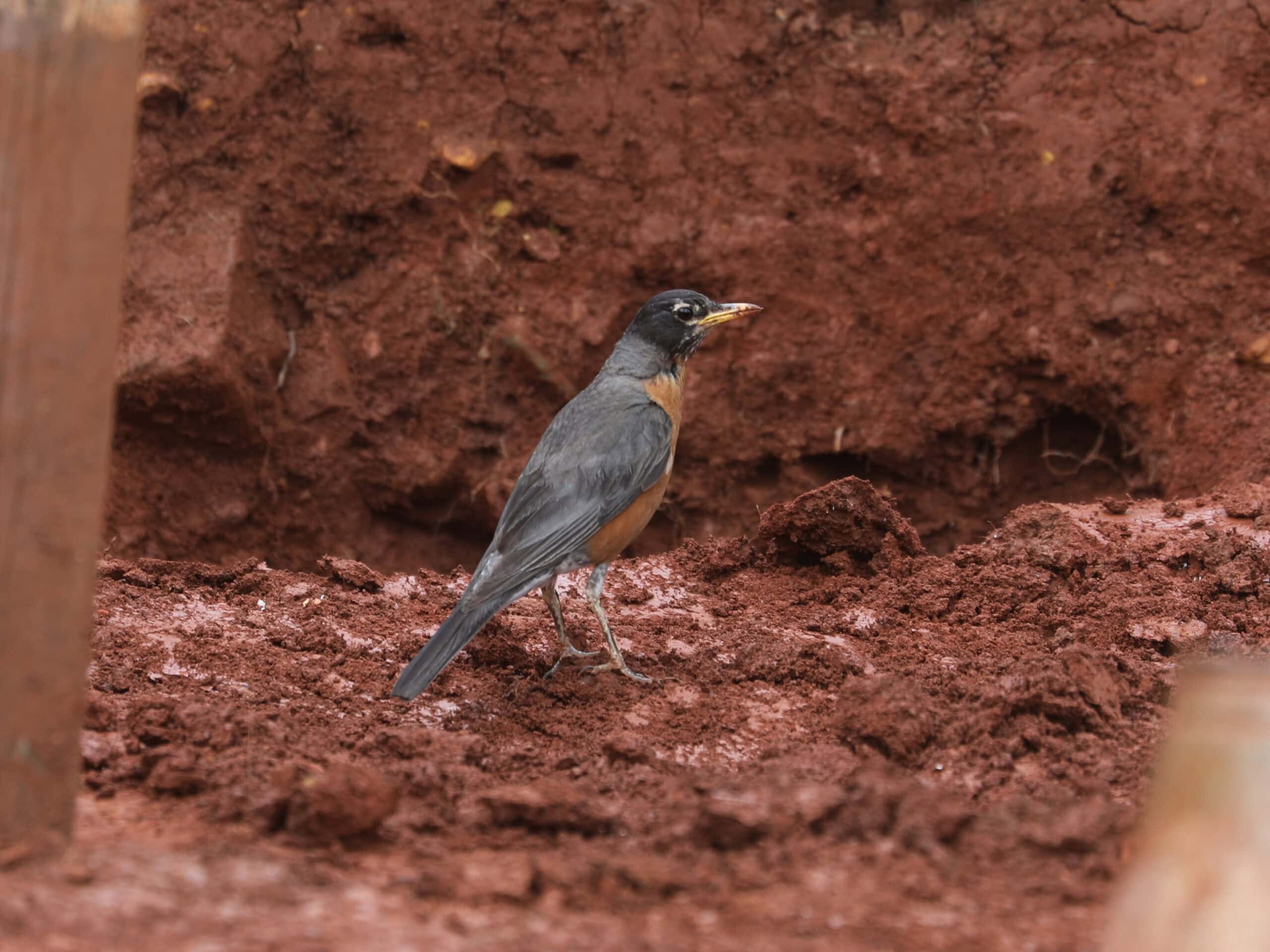
“Rob” the American Robin in Virginia (August 2025)
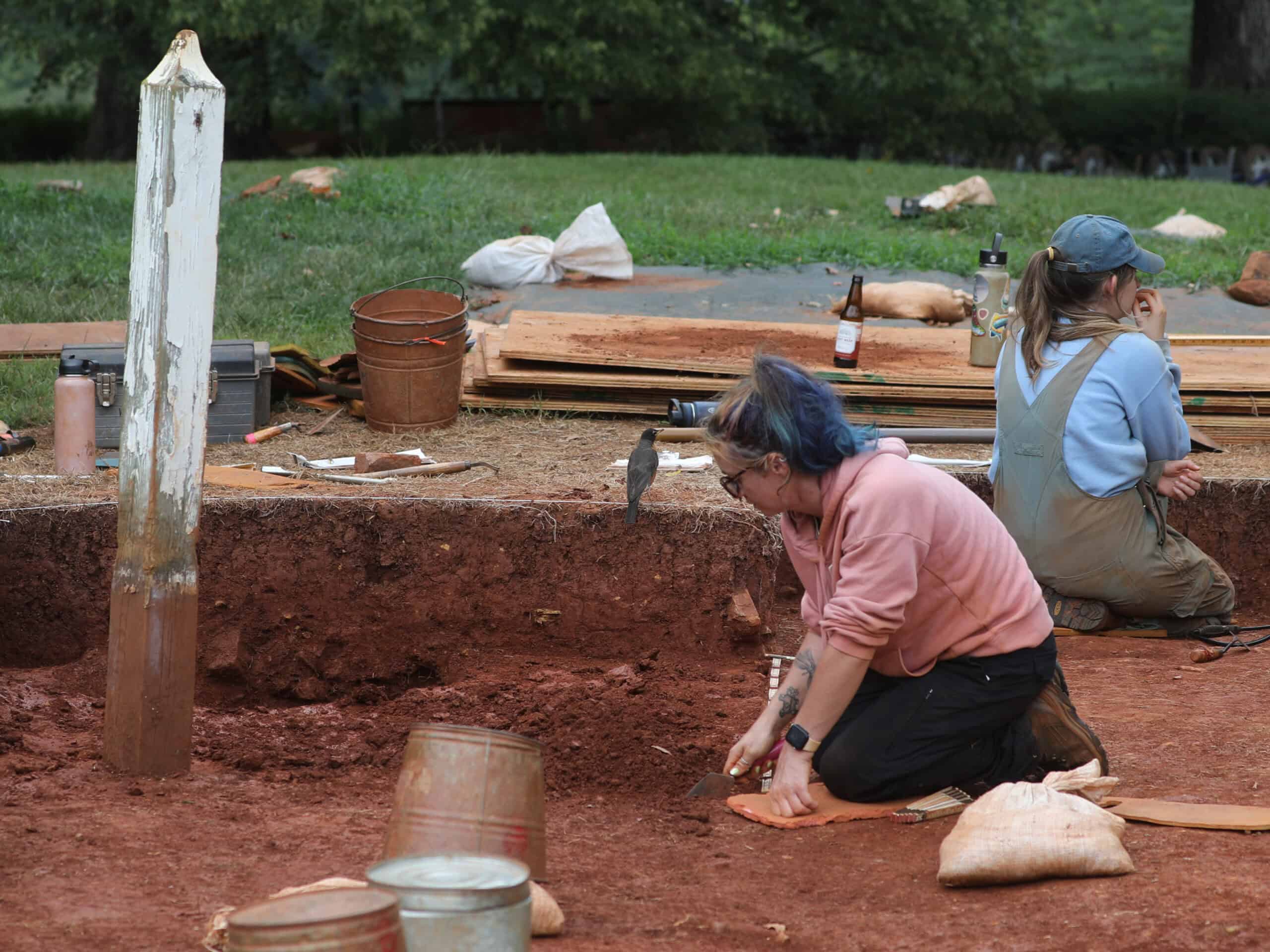
“Rob” the American Robin exploring an archaeological site in Virginia (August 2025)

“Rob” the American Robin in Virginia (August 2025)
Adaptations: American Robin
This week we visited Monticello, the historic site and former home of Thomas Jefferson. One of the neat things we saw was an active archaeological site where professionals were looking for artifacts prior to construction of a new walking path. We got to see “Rob,” an American Robin who was also checking out the site. According to one of the archaeologists, Rob discovered months ago that the dig site is a great place to look for earthworms. As you can see, he’s comfortable hopping right up next to people to find food.
Robins aren’t the only birds that can adapt to new food sources. A remarkable example was seen in England in the 1920s by the Blue Tit, a relative of our chickadees and titmice. Back when it was common to have milk delivered at the front door each morning, the tits learned to hang from the top of the bottle to drink the cream off the top. The milkmen countered that behavior by adding a foil lid to the milk bottles, but then the Blue Tits learned to pierce the foil. It was a classic example of social learning in birds, as some tits learned the new trick just by watching others. Unfortunately for the tits, their free meals ended with the end of daily milk deliveries, as grocery stores and modern refrigeration became more common.
Another example can be found on the other side of the world on the Galapagos Islands. One species of “Darwin’s finches” evolved the ability to use tools. No woodpeckers are found on those islands, but this finch uses small twigs and cactus spines to probe into crevices and holes in wood and bark in search of their insect prey. That behavior is especially useful during droughts, when other food is harder to find. That species has a very appropriate name – Woodpecker Finch.
“Rob” the American Robin exploring an archaeological site in Virginia (August 2025)


About The Author
Dan Hinnebusch is the Ornithologist for Wild Birds Unlimited. Click to learn more.
