

Carolina Chickadee vs Black-capped Chickadee
I often hear all of our local chickadees referred to as “Black-capped.” However, we have two species of chickadees in Pennsylvania, and the Carolina Chickadee is actually far more common in our Susquehanna Valley region than the Black-capped Chickadee. Carolina Chickadees are common across the southeastern United States, including south-central and southeastern Pennsylvania at the northern edge of their range. Black-capped Chickadees are found across a larger area, including the northern half of the contiguous United States, the southern half of Canada, and parts of Alaska. Black-capped Chickadees are also found in the highest elevations of the Appalachian Mountains as far south as Georgia.
So which chickadee is visiting your feeders? Unless you live north of Harrisburg, the vast majority of your chickadees will be Carolinas. Black-capped Chickadees visit in small numbers during harsh winters. For example, in the fourteen years I’ve been keeping records of the birds in my yard, I’ve hosted a Black-cap in only four years.
The easiest way to identify chickadees is by sound, with the Carolina Chickadee giving a higher-pitched, longer, and more variable call. If you get a good look, watch for a bolder white “hockey-stick” pattern on each wing of the Black-capped Chickadee. Black-caps also have a sharper, more contrasting transition in color where the white cheek meets the gray back. Black-capped Chickadees are very slightly larger and subtly more colorful.
Chickadee identification is a challenge, but the good news is that you can enjoy your chickadees without knowing which is which. Both are regular visitors at bird feeders, especially in cold weather. Attract them with their favorites, like sunflower chips, Bark Butter, Bark Butter Bits, peanuts, and suet.
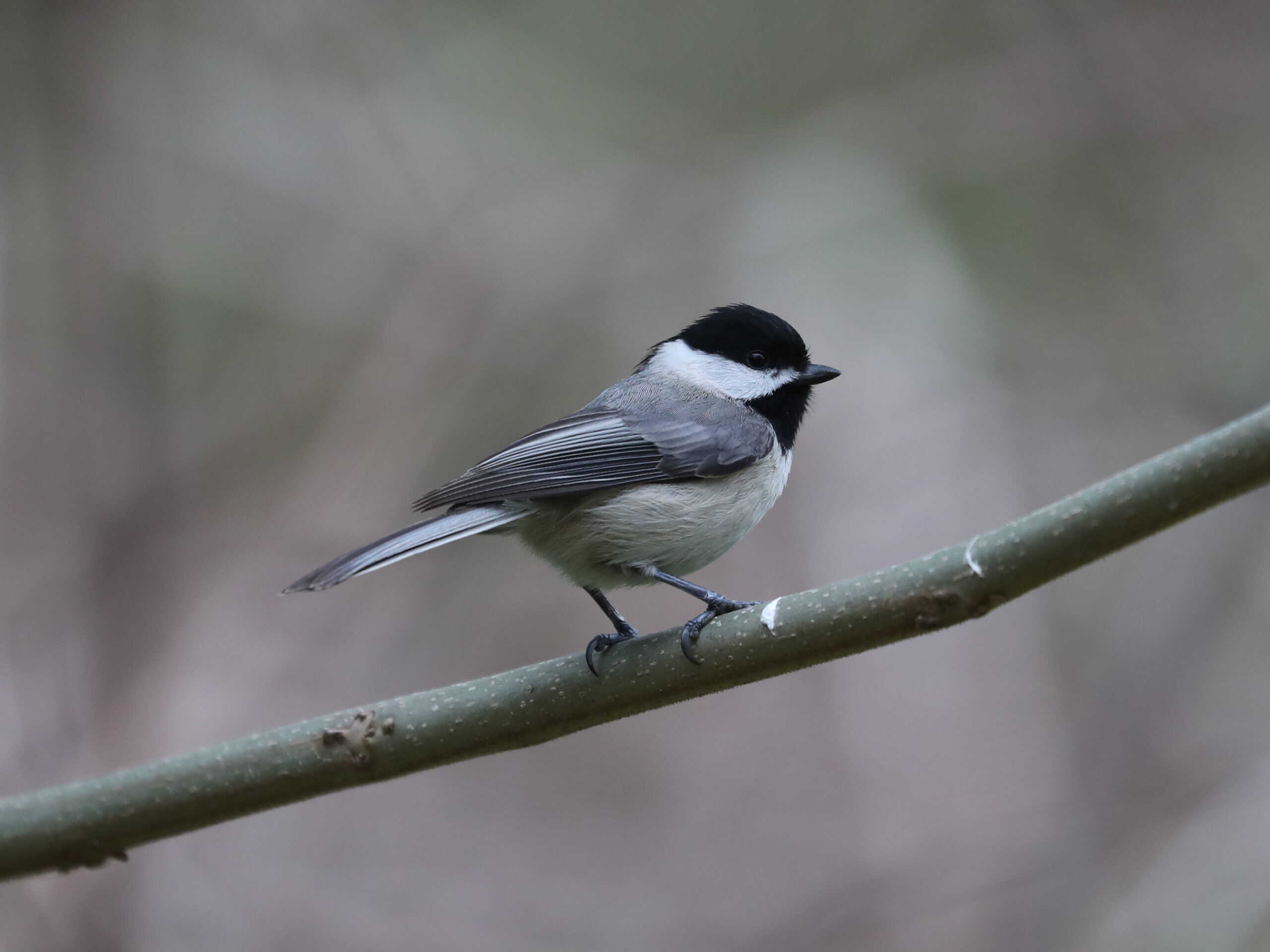
Carolina Chickadee in Lancaster County (April 2024)
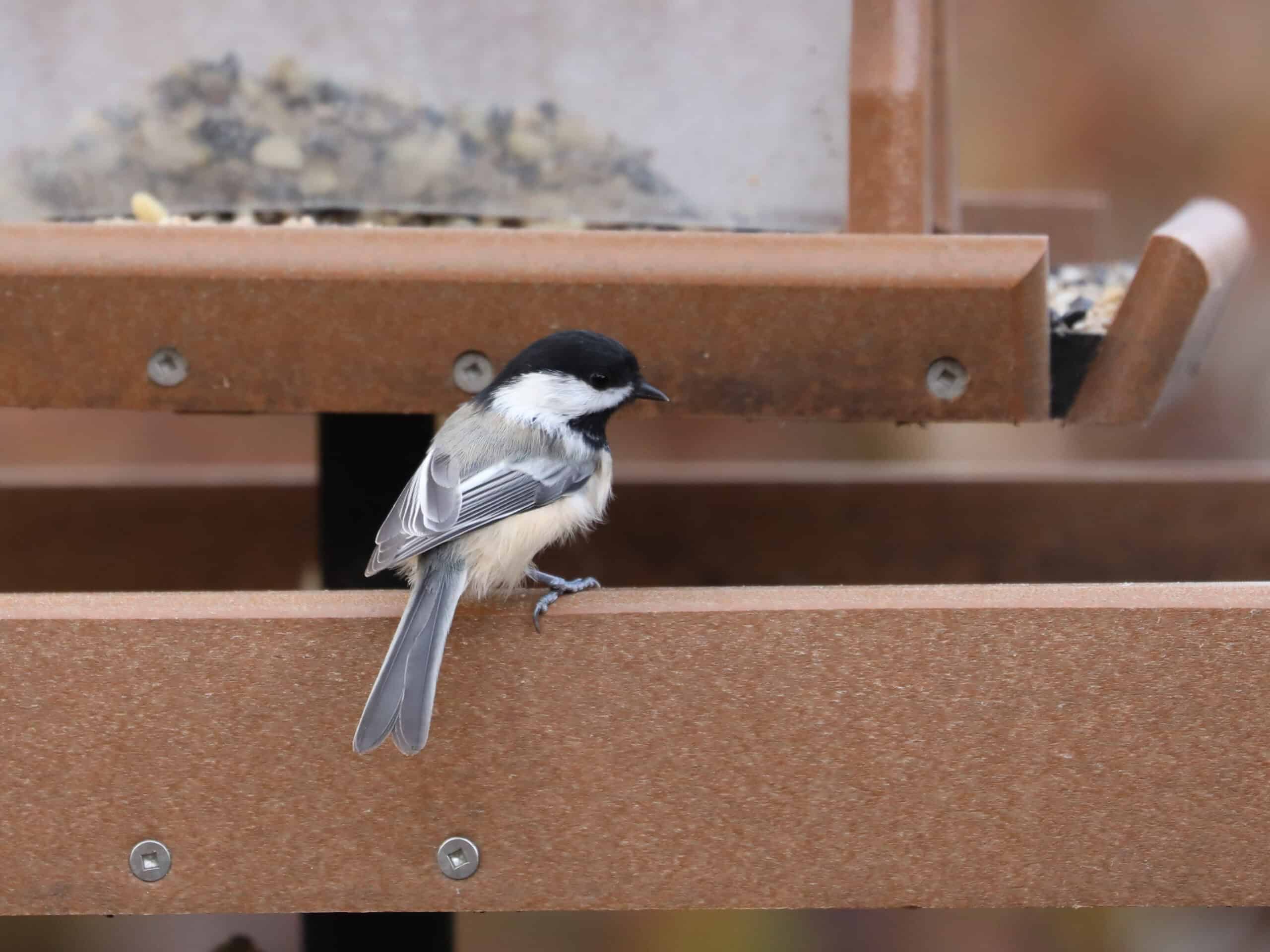
Black-capped Chickadee enjoying TreeNutty Plus Blend in Dan and Melissa’s yard (November 2020)

Carolina Chickadee in Lancaster County (April 2024)
Carolina Chickadee vs Black-capped Chickadee
I often hear all of our local chickadees referred to as “Black-capped.” However, we have two species of chickadees in Pennsylvania, and the Carolina Chickadee is actually far more common in our Susquehanna Valley region than the Black-capped Chickadee. Carolina Chickadees are common across the southeastern United States, including south-central and southeastern Pennsylvania at the northern edge of their range. Black-capped Chickadees are found across a larger area, including the northern half of the contiguous United States, the southern half of Canada, and parts of Alaska. Black-capped Chickadees are also found in the highest elevations of the Appalachian Mountains as far south as Georgia.
So which chickadee is visiting your feeders? Unless you live north of Harrisburg, the vast majority of your chickadees will be Carolinas. Black-capped Chickadees visit in small numbers during harsh winters. For example, in the fourteen years I’ve been keeping records of the birds in my yard, I’ve hosted a Black-cap in only four years.
The easiest way to identify chickadees is by sound, with the Carolina Chickadee giving a higher-pitched, longer, and more variable call. If you get a good look, watch for a bolder white “hockey-stick” pattern on each wing of the Black-capped Chickadee. Black-caps also have a sharper, more contrasting transition in color where the white cheek meets the gray back. Black-capped Chickadees are very slightly larger and subtly more colorful.
Chickadee identification is a challenge, but the good news is that you can enjoy your chickadees without knowing which is which. Both are regular visitors at bird feeders, especially in cold weather. Attract them with their favorites, like sunflower chips, Bark Butter, Bark Butter Bits, peanuts, and suet.
Black-capped Chickadee enjoying TreeNutty Plus Blend in Dan and Melissa’s yard (November 2020)


About The Author
Dan Hinnebusch is the Ornithologist for Wild Birds Unlimited. Click to learn more.
