

Helping Your Birds in the Coldest Part of Winter
Bird feeding is beneficial to your birds year-round, but the coldest part of winter is your opportunity to help them when they need it the most. Birds have very little fat on their bodies so that they can remain lightweight for flight. They rely on their feathers for insulation and their lightning-fast metabolism to generate the heat they need to survive. Keep them warm by providing Food, Water, and Cover.
Food
Birds spend most of their time eating or looking for food during the winter. They need to eat enough to fuel their metabolism, plus some extra to build a small fat reserve. That small amount of fat will keep their heart beating and blood pumping at night while they wait for sunrise. Focus on food rich in fat and calories, including suet, Bark Butter, Bark Butter Bits, sunflower seeds, peanuts, and tree nuts. You can find all of those ingredients together in some Wild Birds Unlimited blends like No-Mess Plus and TreeNutty Plus. Add a weather guard to your feeder so snow doesn’t block your birds’ access to the food.
Water
Many people are surprised to see birds bathe on a cold winter day. Despite the low temperatures, it is essential that they keep their feathers in good condition. Try using a bird bath deicer or providing a heated bird bath. Offering open water during the coldest part of winter can be a lot of fun, because you have the potential to see a wide variety of birds that may not have access to water elsewhere.
Cover
When they’re not eating, and especially at night, birds seek shelter from wind and precipitation. Some will roost in nest boxes, so keep your boxes up even though it’s not nesting season. Provide some extra insulation on the bottom of your nest boxes with some pine needles, straw, or leaves. Other birds like to use a dense bush or tree, especially conifers like cedar or pine. They may even use brush piles or discarded Christmas trees.

American Goldfinches & House Finches in Dan & Melissa’s yard (January 2024)
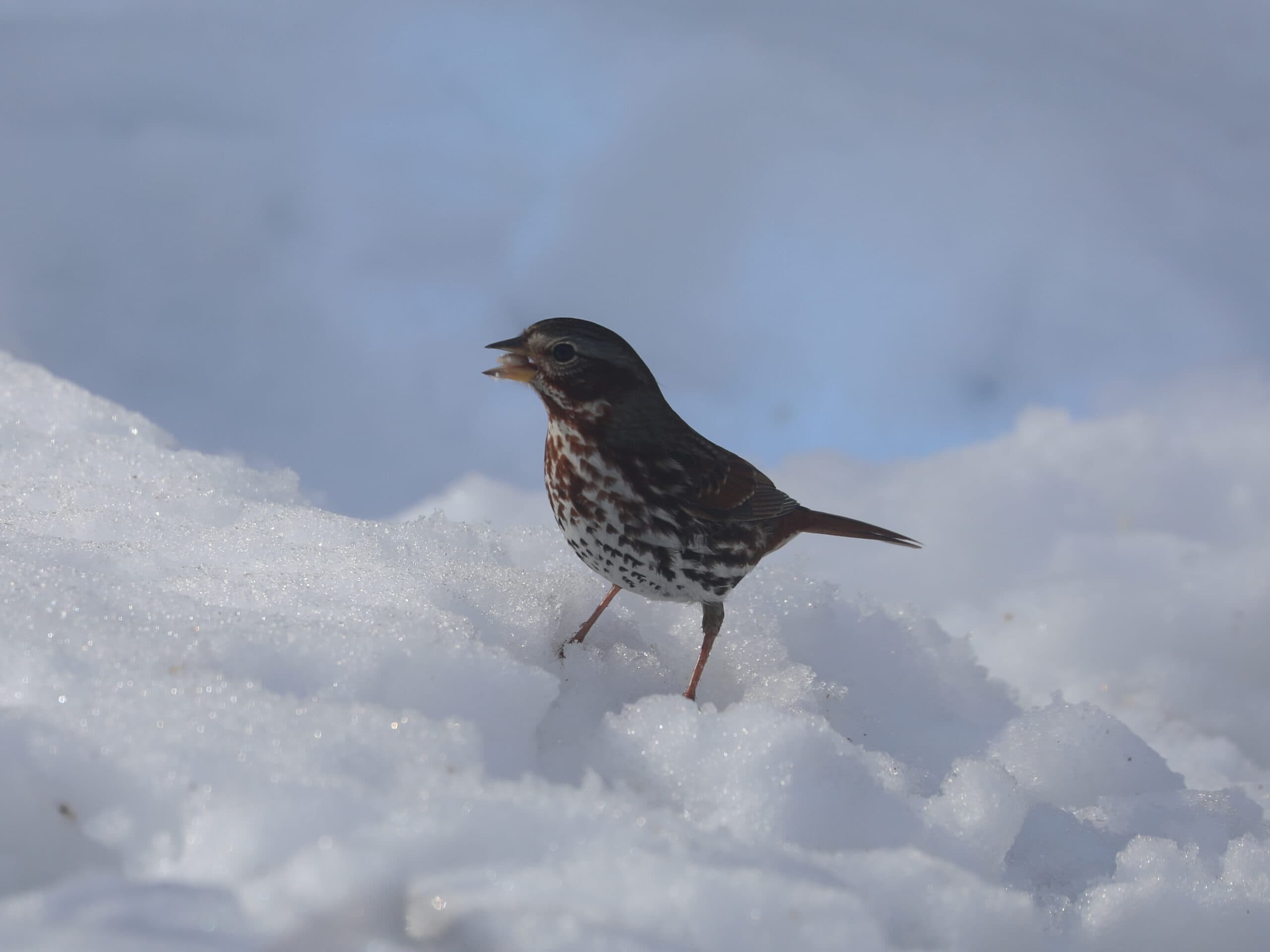
Fox Sparrow in Dan & Melissa’s yard (February 2021)

American Goldfinches & House Finches in Dan & Melissa’s yard (January 2024)
Helping Your Birds in the Coldest Part of Winter
Bird feeding is beneficial to your birds year-round, but the coldest part of winter is your opportunity to help them when they need it the most. Birds have very little fat on their bodies so that they can remain lightweight for flight. They rely on their feathers for insulation and their lightning-fast metabolism to generate the heat they need to survive. Keep them warm by providing Food, Water, and Cover.
Food
Birds spend most of their time eating or looking for food during the winter. They need to eat enough to fuel their metabolism, plus some extra to build a small fat reserve. That small amount of fat will keep their heart beating and blood pumping at night while they wait for sunrise. Focus on food rich in fat and calories, including suet, Bark Butter, Bark Butter Bits, sunflower seeds, peanuts, and tree nuts. You can find all of those ingredients together in some Wild Birds Unlimited blends like No-Mess Plus and TreeNutty Plus. Add a weather guard to your feeder so snow doesn’t block your birds’ access to the food.
Water
Many people are surprised to see birds bathe on a cold winter day. Despite the low temperatures, it is essential that they keep their feathers in good condition. Try using a bird bath deicer or providing a heated bird bath. Offering open water during the coldest part of winter can be a lot of fun, because you have the potential to see a wide variety of birds that may not have access to water elsewhere.
Cover
When they’re not eating, and especially at night, birds seek shelter from wind and precipitation. Some will roost in nest boxes, so keep your boxes up even though it’s not nesting season. Provide some extra insulation on the bottom of your nest boxes with some pine needles, straw, or leaves. Other birds like to use a dense bush or tree, especially conifers like cedar or pine. They may even use brush piles or discarded Christmas trees.
Fox Sparrow in Dan & Melissa’s yard (February 2021)


About The Author
Dan Hinnebusch is the Ornithologist for Wild Birds Unlimited. Click to learn more.
