

Chimney Swifts
Chimney Swifts spend almost every waking moment airborne, zipping around in the sky to capture flying insects. They’re quite common in the Susquehanna Valley, but they’re among our most overlooked birds. I often hear their chattering calls before I see swifts. When you see them, you can recognize them by their distinct shape – they look like a cigar strapped to a boomerang.
Chimney Swift key facts
| Scientific name | Chaetura pelagica |
|---|---|
| Family | Apodidae (Swifts) |
| Order | Apodiformes |
| eBird species page | Chimney Swift on eBird (code chiswi) |
Fun fact: Both male and female swifts use their sticky saliva to hold sticks together in a cup shape against the inside of the chimney.
As their name suggests, Chimney Swifts often nest in large chimneys. Both male and female swifts use their sticky saliva to hold sticks together in a cup shape against the inside of the chimney. The easiest places to find swifts are in large towns and small cities, where there are many chimneys and plenty of insects to eat. The total population of swifts likely increased over past centuries as more and more buildings were constructed. Unfortunately, swift populations have been consistently declining since the early 2000s, likely due to a decline in their insect prey.
Swifts will be leaving soon. They can be found in the Susquehanna Valley between mid-April and early October. They show up in the spring about a week before hummingbirds, then depart about one week later than hummingbirds in the fall. After nesting across the eastern United States and parts of southeastern Canada, swifts migrate to northwestern South America for the winter, where they capture insects flying over the Amazon Rainforest.
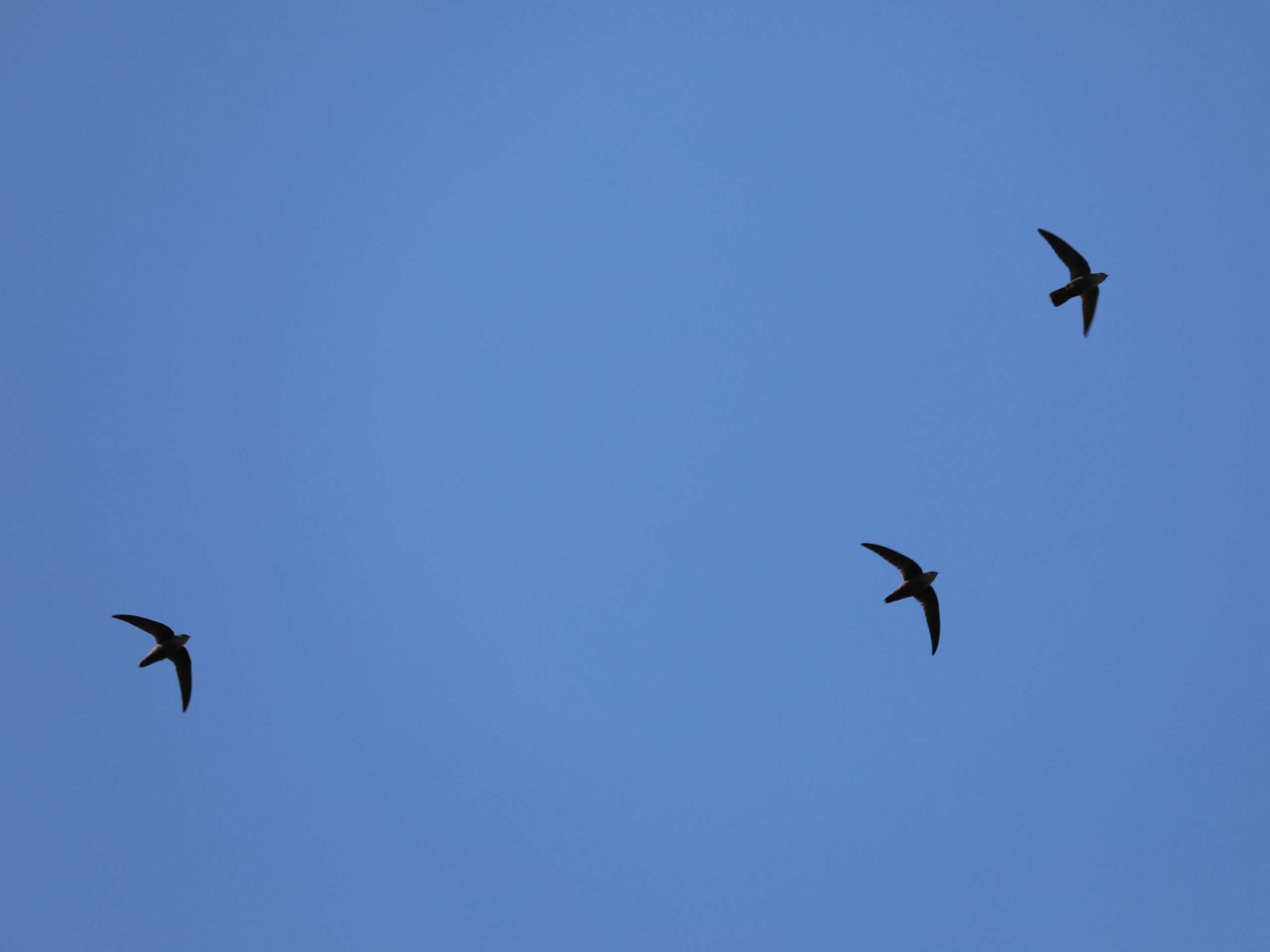
Chimney Swifts flying above Dan & Melissa’s yard (May 2021).

Chimney Swifts flying above Dan & Melissa’s yard (May 2021).
Chimney Swifts
Chimney Swifts spend almost every waking moment airborne, zipping around in the sky to capture flying insects. They’re quite common in the Susquehanna Valley, but they’re among our most overlooked birds. I often hear their chattering calls before I see swifts. When you see them, you can recognize them by their distinct shape – they look like a cigar strapped to a boomerang.
Chimney Swift key facts
| Scientific name | Chaetura pelagica |
|---|---|
| Family | Apodidae (Swifts) |
| Order | Apodiformes |
| eBird species page | Chimney Swift on eBird (code chiswi) |
Fun fact: Both male and female swifts use their sticky saliva to hold sticks together in a cup shape against the inside of the chimney.
As their name suggests, Chimney Swifts often nest in large chimneys. Both male and female swifts use their sticky saliva to hold sticks together in a cup shape against the inside of the chimney. The easiest places to find swifts are in large towns and small cities, where there are many chimneys and plenty of insects to eat. The total population of swifts likely increased over past centuries as more and more buildings were constructed. Unfortunately, swift populations have been consistently declining since the early 2000s, likely due to a decline in their insect prey.
Swifts will be leaving soon. They can be found in the Susquehanna Valley between mid-April and early October. They show up in the spring about a week before hummingbirds, then depart about one week later than hummingbirds in the fall. After nesting across the eastern United States and parts of southeastern Canada, swifts migrate to northwestern South America for the winter, where they capture insects flying over the Amazon Rainforest.


About The Author
Dan Hinnebusch is the Ornithologist for Wild Birds Unlimited. Click to learn more.
