

Goodbye for Now: Ruby-throated Hummingbird
September is the best month to see Ruby-throated Hummingbirds here in the Susquehanna Valley. Our hummingbirds are moving around a lot and searching for extra calories as they prepare for their long migration. Right now, we have hummingbirds that nested in our area this year, plus the young that hatched from their eggs, plus some early migrants from farther north. There are more hummingbirds here right now than at any time of year.
Ruby-throated Hummingbird key facts
| Scientific name | Archilochus colubris |
|---|---|
| Family | Trochilidae (Hummingbirds) |
| Order | Apodiformes |
| eBird species page | Ruby-throated Hummingbird on eBird (code rthhum) |
Fun fact: Before crossing about 500 miles of the Gulf of Mexico, a Ruby-throated Hummingbird nearly doubles its weight, from about 3.25 grams to over 6 grams, by gorging on insects and spiders. Source
Get ready for that to change. By the end of the month, almost all Ruby-throated Hummingbirds will leave our state. If you’re lucky, you might see one during the first week of October. Keep your feeder out and filled with fresh nectar to help your hummingbirds find the food they need. In fact, it’s best to leave your feeder out for at least two weeks after your last hummingbird sighting. Keeping your feeder out late can be a great help to a struggling hummingbird that is migrating late.
By the end of October, they’ll reach their winter range in Mexico and Central America, except for a small number that spend the winter in southern Florida. Many will make a daring, non-stop flight across the Gulf of Mexico. Be ready to put your feeders back out in the middle of April so the hummingbirds will find them when they return in the spring.
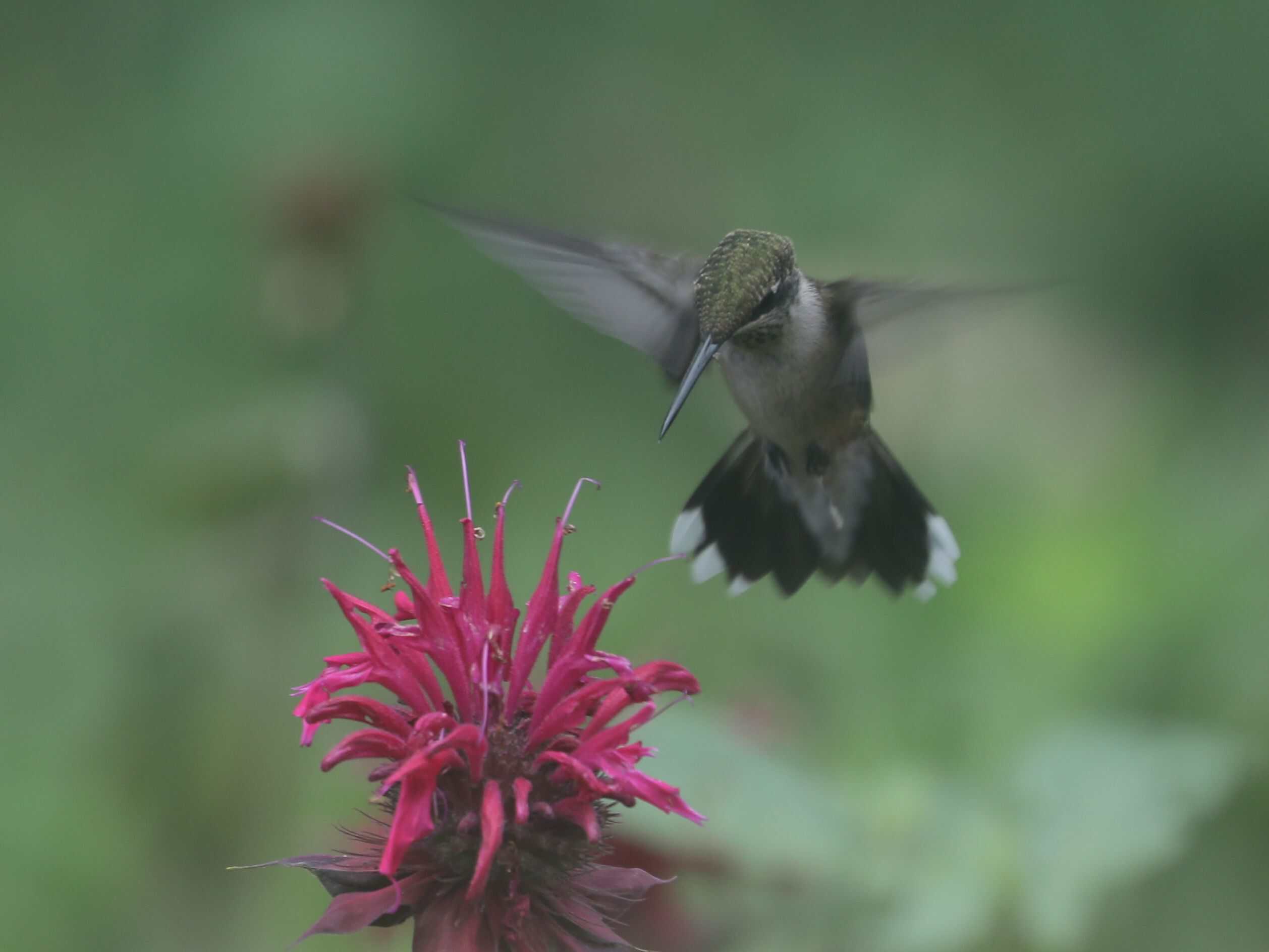
Ruby-throated Hummingbird in Dan & Melissa’s yard (July 2023).

Ruby-throated Hummingbird in Dan & Melissa’s yard (July 2023).
Goodbye for Now: Ruby-throated Hummingbird
September is the best month to see Ruby-throated Hummingbirds here in the Susquehanna Valley. Our hummingbirds are moving around a lot and searching for extra calories as they prepare for their long migration. Right now, we have hummingbirds that nested in our area this year, plus the young that hatched from their eggs, plus some early migrants from farther north. There are more hummingbirds here right now than at any time of year.
Ruby-throated Hummingbird key facts
| Scientific name | Archilochus colubris |
|---|---|
| Family | Trochilidae (Hummingbirds) |
| Order | Apodiformes |
| eBird species page | Ruby-throated Hummingbird on eBird (code rthhum) |
Fun fact: Before crossing about 500 miles of the Gulf of Mexico, a Ruby-throated Hummingbird nearly doubles its weight, from about 3.25 grams to over 6 grams, by gorging on insects and spiders. Source
Get ready for that to change. By the end of the month, almost all Ruby-throated Hummingbirds will leave our state. If you’re lucky, you might see one during the first week of October. Keep your feeder out and filled with fresh nectar to help your hummingbirds find the food they need. In fact, it’s best to leave your feeder out for at least two weeks after your last hummingbird sighting. Keeping your feeder out late can be a great help to a struggling hummingbird that is migrating late.
By the end of October, they’ll reach their winter range in Mexico and Central America, except for a small number that spend the winter in southern Florida. Many will make a daring, non-stop flight across the Gulf of Mexico. Be ready to put your feeders back out in the middle of April so the hummingbirds will find them when they return in the spring.


About The Author
Dan Hinnebusch is the Ornithologist for Wild Birds Unlimited. Learn more about Dan Hinnebusch.
