

Primary Cavity Nesters: Nuthatch, Northern Flicker, and More
Many species nest in cavities, which can occur naturally as holes excavated in trees. Cavity nesting provides many benefits, including protection from cold weather and precipitation, concealment from predators, and a single opening from which adult birds can defend their eggs or nestlings. One of the only disadvantages of relying on cavities for nesting is that there are often many birds competing for a limited number of cavities. Most of our local cavity nesters are classified as secondary cavity nesters, meaning that they use cavities, but don’t have the ability to make them.
That’s where primary cavity nesters come in. They not only use cavities, but they also create them. In Pennsylvania, primary cavity nesters include all seven of our woodpecker species. At one end of the scale, the small cavities created by Downy Woodpeckers benefit small songbirds like chickadees and wrens. Our largest woodpecker, the Pileated Woodpecker, provides nesting sites for Eastern Screech-Owls and Wood Ducks.
Three other birds can be considered primary cavity nesters in Pennsylvania. One is the tiny Red-breasted Nuthatch. Its larger cousin, the White-breasted Nuthatch, relies on other birds to excavate its nest sites, but the Red-breasted sometimes makes its own. The other primary cavity nesters are Bank Swallows and Belted Kingfishers, which dig tunnels in exposed dirt along the banks of streams and rivers. They might be more accurately called primary burrow nesters.
Encourage cavity nesting in your yard by retaining dead or dying trees. Dead wood is softer, so it’s preferred by most primary cavity nesters. You can also supplement your backyard habitat by maintaining bird houses, which are essentially artificial nest cavities.
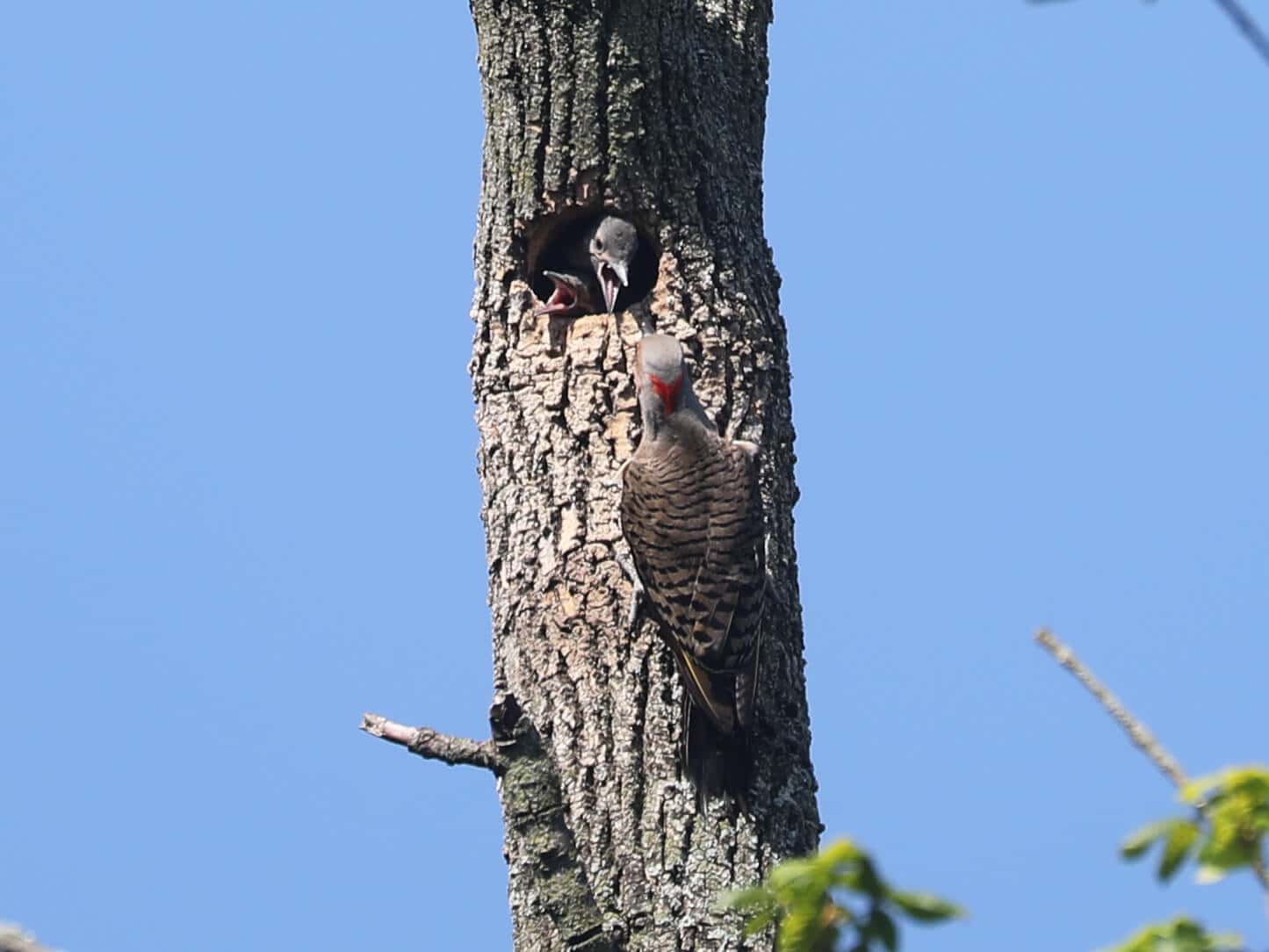
Northern Flicker nest in Lancaster County (July 2026)
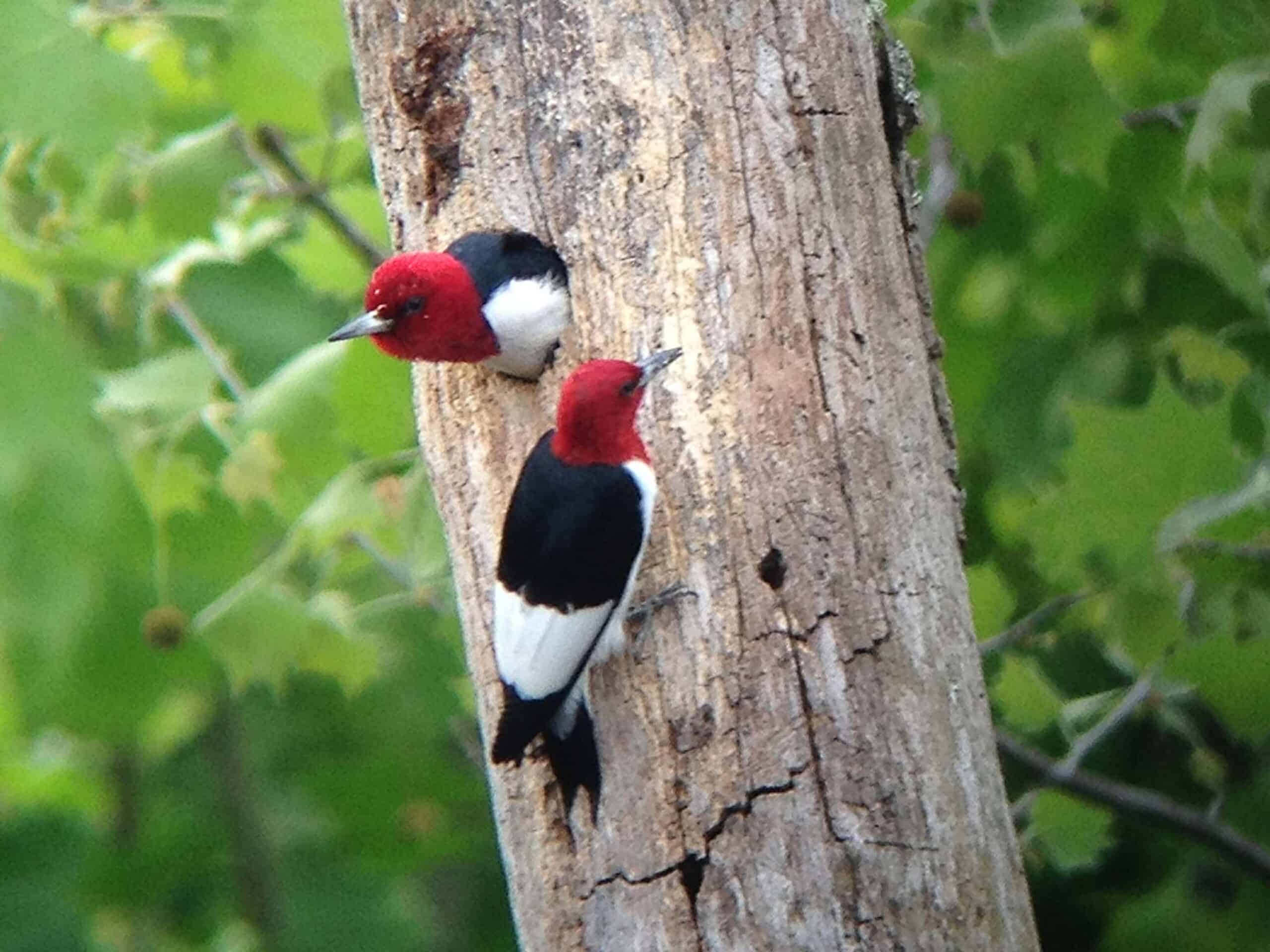
Red-headed Woodpecker nest in West Virginia (May 2015)

Northern Flicker nest in Lancaster County (July 2026)
Primary Cavity Nesters: Nuthatch, Northern Flicker, and More
Many species nest in cavities, which can occur naturally as holes excavated in trees. Cavity nesting provides many benefits, including protection from cold weather and precipitation, concealment from predators, and a single opening from which adult birds can defend their eggs or nestlings. One of the only disadvantages of relying on cavities for nesting is that there are often many birds competing for a limited number of cavities. Most of our local cavity nesters are classified as secondary cavity nesters, meaning that they use cavities, but don’t have the ability to make them.
That’s where primary cavity nesters come in. They not only use cavities, but they also create them. In Pennsylvania, primary cavity nesters include all seven of our woodpecker species. At one end of the scale, the small cavities created by Downy Woodpeckers benefit small songbirds like chickadees and wrens. Our largest woodpecker, the Pileated Woodpecker, provides nesting sites for Eastern Screech-Owls and Wood Ducks.
Three other birds can be considered primary cavity nesters in Pennsylvania. One is the tiny Red-breasted Nuthatch. Its larger cousin, the White-breasted Nuthatch, relies on other birds to excavate its nest sites, but the Red-breasted sometimes makes its own. The other primary cavity nesters are Bank Swallows and Belted Kingfishers, which dig tunnels in exposed dirt along the banks of streams and rivers. They might be more accurately called primary burrow nesters.
Encourage cavity nesting in your yard by retaining dead or dying trees. Dead wood is softer, so it’s preferred by most primary cavity nesters. You can also supplement your backyard habitat by maintaining bird houses, which are essentially artificial nest cavities.
Red-headed Woodpecker nest in West Virginia (May 2015)


About The Author
Dan Hinnebusch is the Ornithologist for Wild Birds Unlimited. Click to learn more.
