

Yellow-rumped Warblers
There are 27 species of warblers that nest in Pennsylvania, plus another 9 species that breed farther north but pass through our state during spring and fall migration. Almost all of those warblers fly far to the south in winter. Some stay in the southern United States, but many fly to Mexico, Central or South America, or islands in the Caribbean Sea. The lone exception is the Yellow-rumped Warbler, and winter is actually the best time of year to see them in the Susquehanna Valley.
The reason most warblers depart when it gets cold is that they rely on insects and other arthropods for the majority of their diet. Insects are also important to Yellow-rumped Warblers while they are nesting during the summer, but they have adapted to eat mostly fruit when insects become unavailable. They are the only warblers that are able to digest the natural waxes in berries like bayberries or myrtles. Thanks to that adaptation, some Yellow-rumps spend the winter as far north as coastal areas in eastern Canada.
Yellow-rumped Warblers can be found nesting across the northern half of North America, plus as far south as Mexico in the West. With an estimated population of about 170 million, it is likely the most abundant of the world’s 116 warbler species. Pennsylvania has a breeding population of about 90 thousand, mostly concentrated in the northern half of the state. The breeding population in the state has doubled since the 1980s.
Yellow-rumped Warblers visit bird feeders occasionally. Their favorite foods include Bark Butter, sunflower chips, and suet. You can also make your yard attractive by planting native bushes to provide fruit during the winter. Some of the best plants for Yellow-rumped Warblers include red cedar, viburnums like arrowwood, and dogwoods. Like your other birds, they benefit from access to open water during the winter, so you may see them bathing in or drinking from a heated bird bath when natural sources of water freeze.
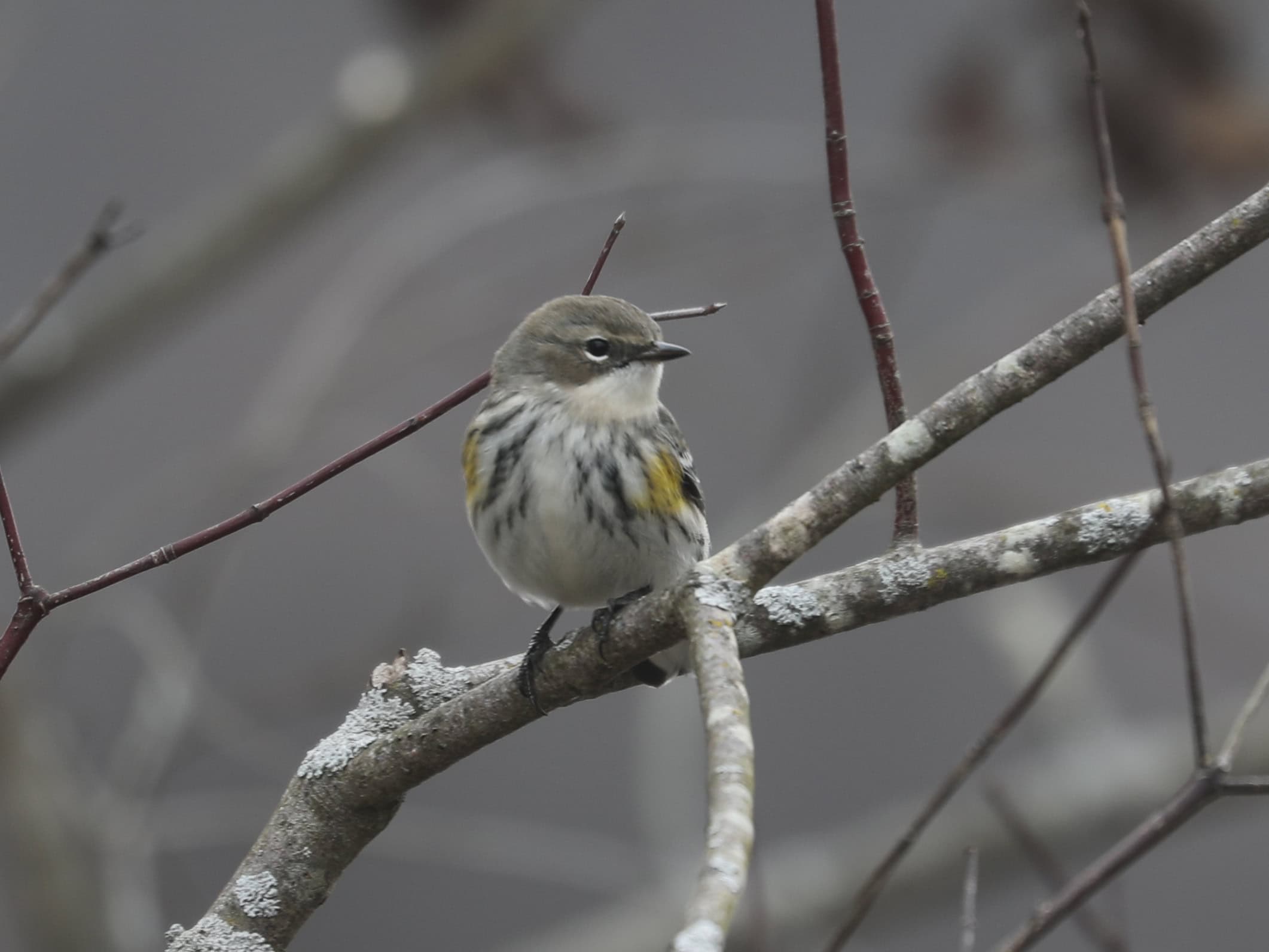
Yellow-rumped Warbler in York County (December 2025)
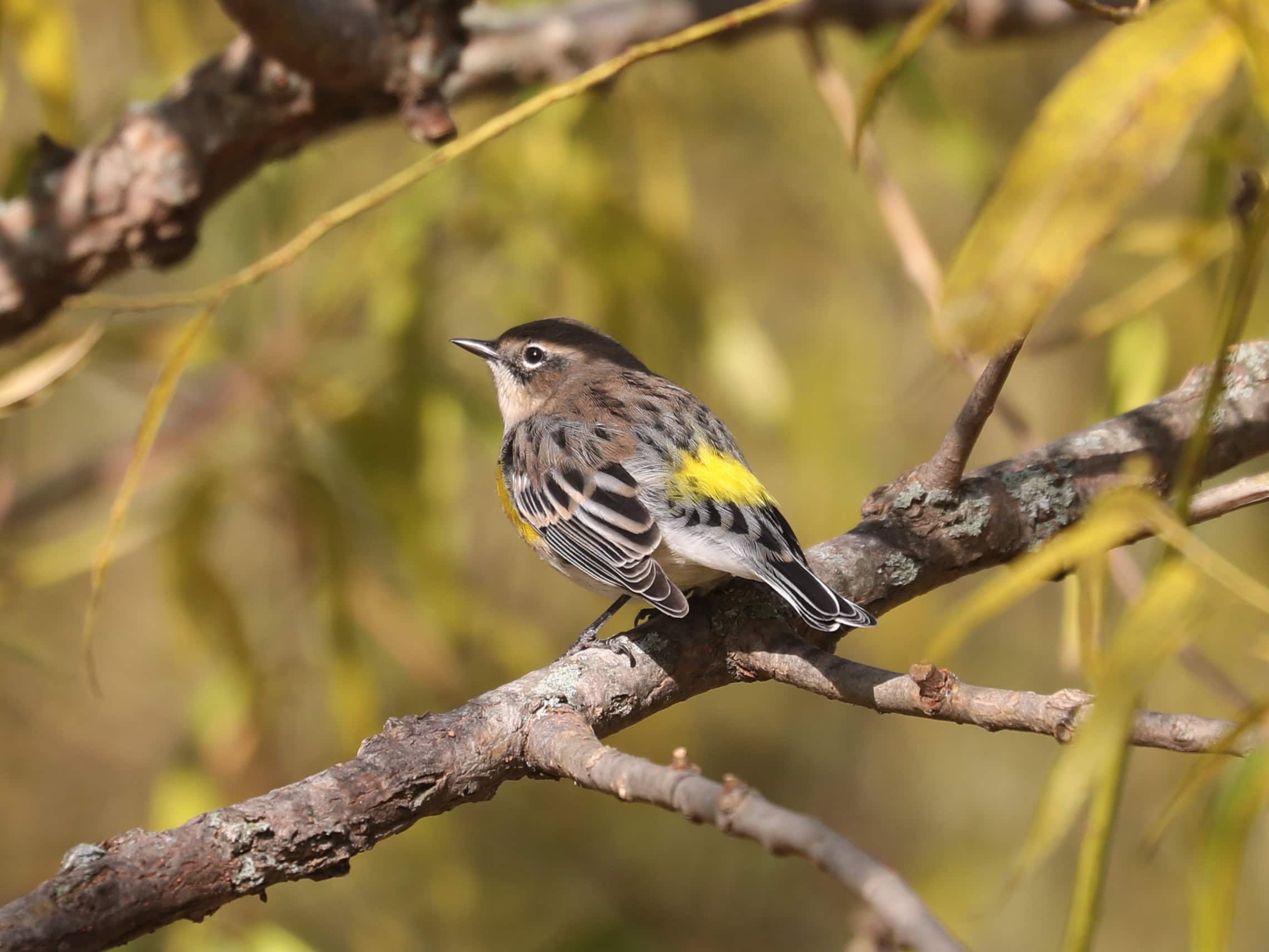
Yellow-rumped Warbler in Lancaster County (October 2024)

Yellow-rumped Warbler in York County (December 2025)
Yellow-rumped Warblers
There are 27 species of warblers that nest in Pennsylvania, plus another 9 species that breed farther north but pass through our state during spring and fall migration. Almost all of those warblers fly far to the south in winter. Some stay in the southern United States, but many fly to Mexico, Central or South America, or islands in the Caribbean Sea. The lone exception is the Yellow-rumped Warbler, and winter is actually the best time of year to see them in the Susquehanna Valley.
The reason most warblers depart when it gets cold is that they rely on insects and other arthropods for the majority of their diet. Insects are also important to Yellow-rumped Warblers while they are nesting during the summer, but they have adapted to eat mostly fruit when insects become unavailable. They are the only warblers that are able to digest the natural waxes in berries like bayberries or myrtles. Thanks to that adaptation, some Yellow-rumps spend the winter as far north as coastal areas in eastern Canada.
Yellow-rumped Warblers can be found nesting across the northern half of North America, plus as far south as Mexico in the West. With an estimated population of about 170 million, it is likely the most abundant of the world’s 116 warbler species. Pennsylvania has a breeding population of about 90 thousand, mostly concentrated in the northern half of the state. The breeding population in the state has doubled since the 1980s.
Yellow-rumped Warblers visit bird feeders occasionally. Their favorite foods include Bark Butter, sunflower chips, and suet. You can also make your yard attractive by planting native bushes to provide fruit during the winter. Some of the best plants for Yellow-rumped Warblers include red cedar, viburnums like arrowwood, and dogwoods. Like your other birds, they benefit from access to open water during the winter, so you may see them bathing in or drinking from a heated bird bath when natural sources of water freeze.
Yellow-rumped Warbler in Lancaster County (October 2024)


About The Author
Dan Hinnebusch is the Ornithologist for Wild Birds Unlimited. Click to learn more.
