

How to Clean Bird Feeders and Bird Baths
Providing food and water for your backyard birds can be a great help to them, giving them easy access to additional calories and nutrients so that they can focus on finding enough food for their fast-growing nestlings. Keep feeders and baths clean. Follow these simple steps to keep your birds safe this summer. The following recommendations are based on information provided by experts at the Cornell Lab of Ornithology.
How often should you clean bird seed feeders?
Seed Feeders should be cleaned every two weeks. Start by removing any old seed or loose debris, then wash the feeder with warm water and dish soap. Scrub the feeder with a brush, because there should be no remaining residue of old food. Well-designed bird feeders can be disassembled so that all parts of the feeder can be cleaned. After rinsing off the soap, rinse the feeder with a 10% bleach solution. Thoroughly rinse off the bleach, then let your feeder dry completely before reassembling the feeder and adding new seed. I like to have two of each feeder I use. That allows me to hang one immediately while I wash the other.
How to clean EcoClean bird feeders
EcoClean Feeders include silver ion that impedes the growth of mold, bacteria, mildew, and fungus. Clean EcoClean feeders using the method described for seed feeders, but you can skip the bleach step. EcoClean feeders are only available at Wild Birds Unlimited.
Cleaning hummingbird and oriole nectar feeders
Nectar & Jelly Feeders are great options to attract hummingbirds and orioles. Those foods go bad more quickly than seed, so the food should be replaced every two days, or every day if the high temperature is above 80 degrees Fahrenheit. Rinse the feeder well with hot water to remove any residues of old food. Use a feeder port brush to clean the narrow ports through which birds drink the nectar. At least once per month, clean the feeder with a 10% vinegar solution. Rinse off the vinegar before use. Be careful when selecting a new hummingbird feeder – many hummingbird feeders are not designed to be easy to clean. You should be able to easily access all inner parts of the feeder.
How often should you clean bird baths and fountains?
Bird Baths & Fountains should be scrubbed and refreshed with new water every three to five days, or more frequently during hot weather. Clean your bath with a 10% vinegar solution once per month. Cleaning with very hot water and a scrubber brush can help control algae. Fountains can be powered by your home’s electricity or by a built-in solar panel. The moving water in fountains is attractive to birds, prevents mosquito larvae from living in the water, and slows the growth of algae. You can also limit the growth of algae in baths or fountains by adding a disc of pure copper and by positioning the bath in a location where it doesn’t get a lot of direct sunlight.
Frequently asked questions about cleaning bird feeders and bird baths
How often should bird feeders be cleaned?
Seed feeders should be cleaned every two weeks. Nectar and jelly feeders need more frequent attention, with food replaced every two days or every day when temperatures are above 80 degrees Fahrenheit.
Can dirty bird feeders make birds sick?
Dirty feeders can allow old food, residue, mold, bacteria, mildew, and fungus to build up. Cleaning feeders regularly helps keep your backyard birds safer.
Is vinegar safe for cleaning bird baths?
Yes. A 10% vinegar solution can be used to clean bird baths once per month. Rinse the bath before adding fresh water.
Should hummingbird feeders be cleaned every day?
The food in hummingbird feeders should be replaced every two days, or every day when the high temperature is above 80 degrees Fahrenheit. Rinse the feeder well with hot water and clean the feeding ports carefully.

Ruby-throated Hummingbird in Dan & Melissa’s yard (August 2021)
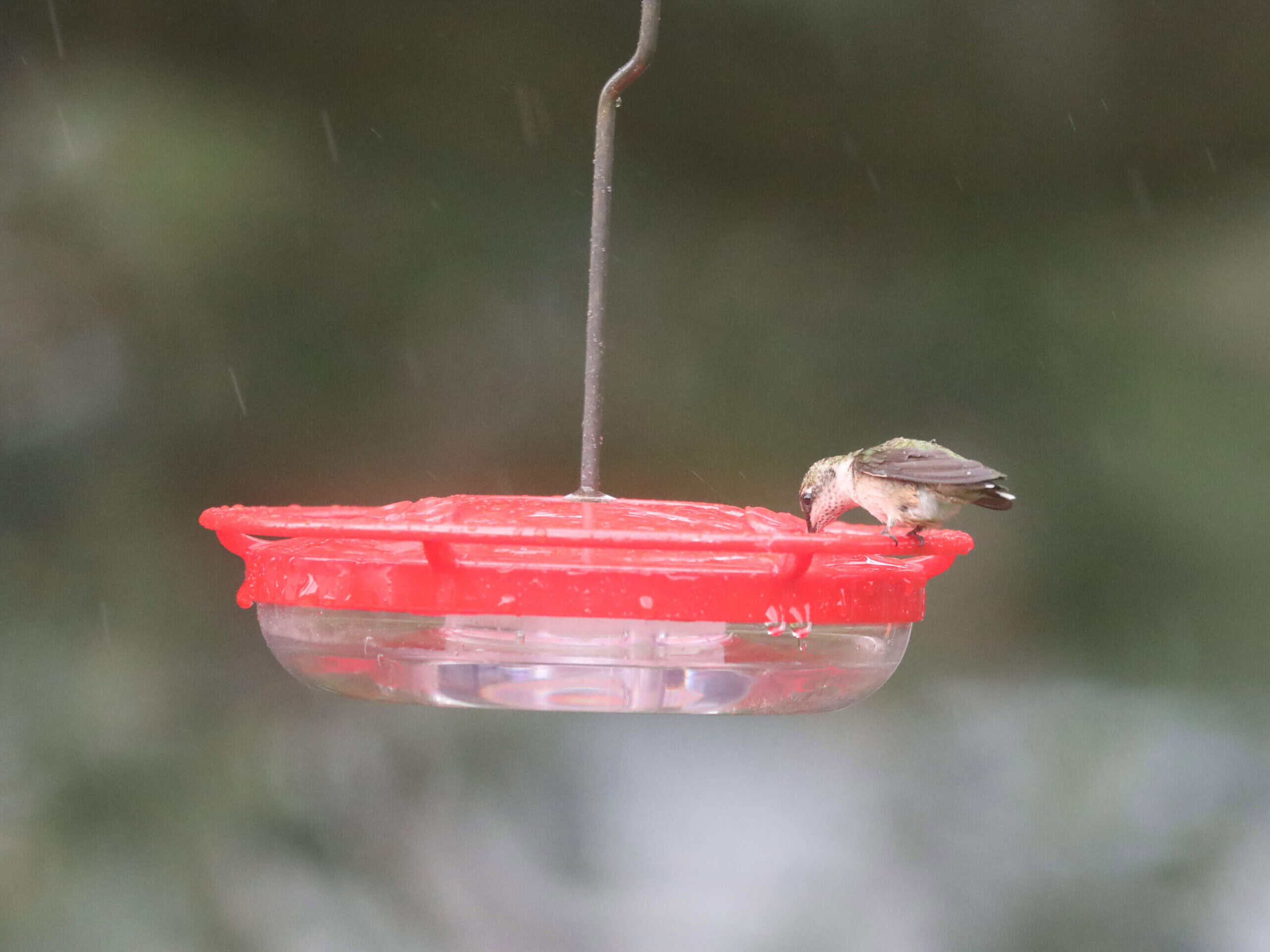
Ruby-throated Hummingbird in Dan & Melissa’s yard (August 2021)

Ruby-throated Hummingbird in Dan & Melissa’s yard (August 2021)
How to Clean Bird Feeders and Bird Baths
Providing food and water for your backyard birds can be a great help to them, giving them easy access to additional calories and nutrients so that they can focus on finding enough food for their fast-growing nestlings. Keep feeders and baths clean. Follow these simple steps to keep your birds safe this summer. The following recommendations are based on information provided by experts at the Cornell Lab of Ornithology.
How often should you clean bird seed feeders?
Seed Feeders should be cleaned every two weeks. Start by removing any old seed or loose debris, then wash the feeder with warm water and dish soap. Scrub the feeder with a brush, because there should be no remaining residue of old food. Well-designed bird feeders can be disassembled so that all parts of the feeder can be cleaned. After rinsing off the soap, rinse the feeder with a 10% bleach solution. Thoroughly rinse off the bleach, then let your feeder dry completely before reassembling the feeder and adding new seed. I like to have two of each feeder I use. That allows me to hang one immediately while I wash the other.
How to clean EcoClean bird feeders
EcoClean Feeders include silver ion that impedes the growth of mold, bacteria, mildew, and fungus. Clean EcoClean feeders using the method described for seed feeders, but you can skip the bleach step. EcoClean feeders are only available at Wild Birds Unlimited.
Cleaning hummingbird and oriole nectar feeders
Nectar & Jelly Feeders are great options to attract hummingbirds and orioles. Those foods go bad more quickly than seed, so the food should be replaced every two days, or every day if the high temperature is above 80 degrees Fahrenheit. Rinse the feeder well with hot water to remove any residues of old food. Use a feeder port brush to clean the narrow ports through which birds drink the nectar. At least once per month, clean the feeder with a 10% vinegar solution. Rinse off the vinegar before use. Be careful when selecting a new hummingbird feeder – many hummingbird feeders are not designed to be easy to clean. You should be able to easily access all inner parts of the feeder.
How often should you clean bird baths and fountains?
Bird Baths & Fountains should be scrubbed and refreshed with new water every three to five days, or more frequently during hot weather. Clean your bath with a 10% vinegar solution once per month. Cleaning with very hot water and a scrubber brush can help control algae. Fountains can be powered by your home’s electricity or by a built-in solar panel. The moving water in fountains is attractive to birds, prevents mosquito larvae from living in the water, and slows the growth of algae. You can also limit the growth of algae in baths or fountains by adding a disc of pure copper and by positioning the bath in a location where it doesn’t get a lot of direct sunlight.
Frequently asked questions about cleaning bird feeders and bird baths
How often should bird feeders be cleaned?
Seed feeders should be cleaned every two weeks. Nectar and jelly feeders need more frequent attention, with food replaced every two days or every day when temperatures are above 80 degrees Fahrenheit.
Can dirty bird feeders make birds sick?
Dirty feeders can allow old food, residue, mold, bacteria, mildew, and fungus to build up. Cleaning feeders regularly helps keep your backyard birds safer.
Is vinegar safe for cleaning bird baths?
Yes. A 10% vinegar solution can be used to clean bird baths once per month. Rinse the bath before adding fresh water.
Should hummingbird feeders be cleaned every day?
The food in hummingbird feeders should be replaced every two days, or every day when the high temperature is above 80 degrees Fahrenheit. Rinse the feeder well with hot water and clean the feeding ports carefully.
Ruby-throated Hummingbird in Dan & Melissa’s yard (August 2021)


About The Author
Dan Hinnebusch is the Ornithologist for Wild Birds Unlimited. Click to learn more.
