

Eastern Bluebird Fledglings
Three Eastern Bluebird fledglings have been visiting my bird feeders regularly during the past week. Fledglings are young birds that have left the nest, but are still being cared for by their parents. My fledglings have frequently been accompanied by an adult male, almost certainly their father. Unlike the brightly colored adults, young bluebirds are primarily brown birds with whitish spots. You can usually distinguish males from females by more bright blue color in their wing and tail feathers. By fall, these young birds will molt most of their brown feathers and replace them with new feathers. After molting, they’ll look more like adults.
A few weeks after these bluebird fledglings have left the nest, they’ll be off on their own. Their parents will likely start over with a new nest to raise another brood of offspring. That process usually starts with the male adding a bit of grass to a nest box while displaying for the female. She’ll then finish making the nest, lay 2 to 7 eggs, and incubate the eggs herself. A successful pair of bluebirds can raise three broods in a single breeding season.
Although the nestlings visiting my yard in June will soon be independent, that’s not always the case with young from broods later in the nesting season. Juvenile bluebirds that hatch in July or August will often spend the entire winter with their parents before finding their own territories in the spring. I like reflecting on that in the middle of the winter when a half dozen bluebirds visit my feeders. It’s neat to think about that family connection across seasons as my bluebirds prepare for spring.
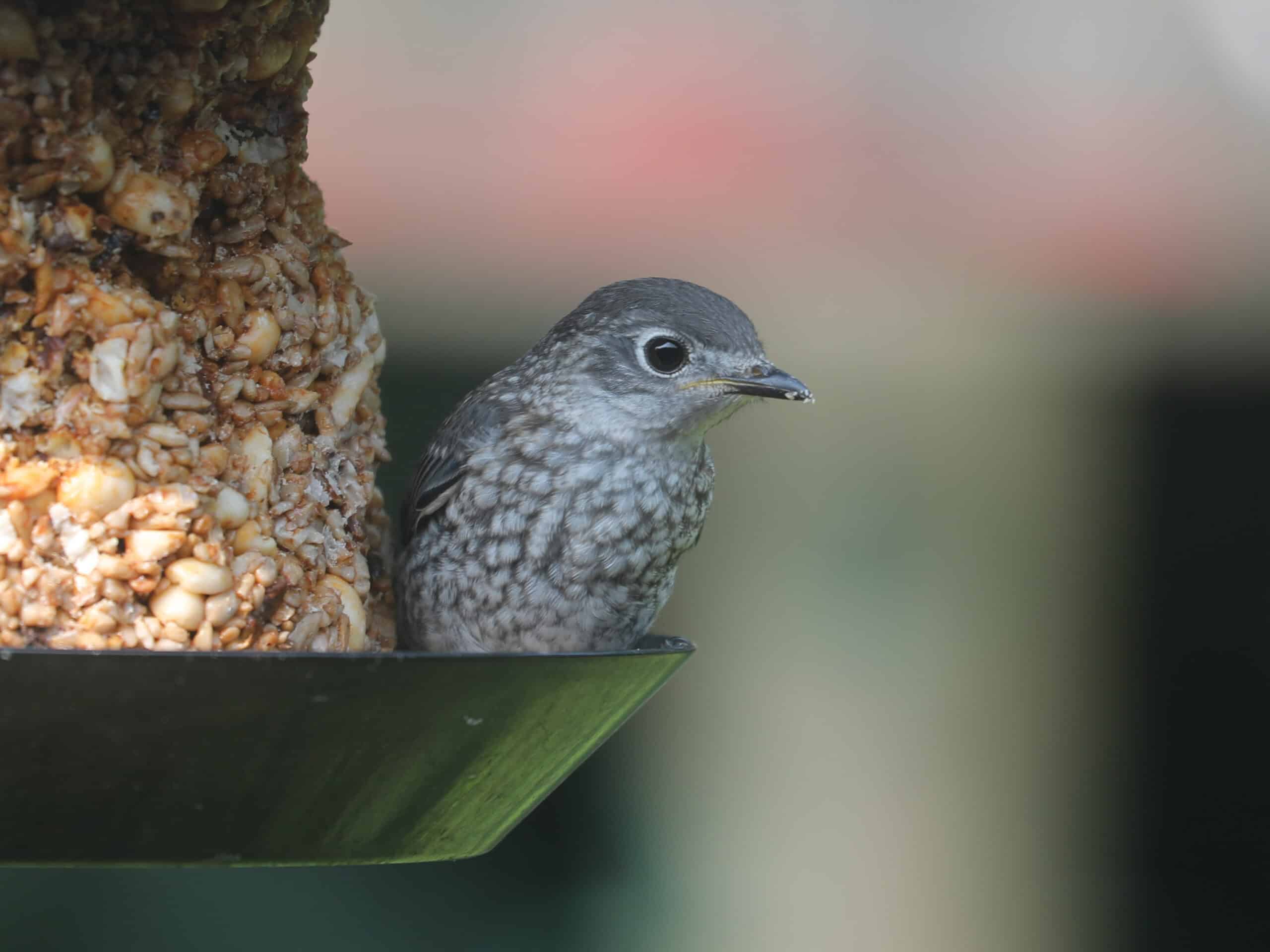
Eastern Bluebirds (fledglings, male in front, female in back) in Dan & Melissa’s yard (June 2025)
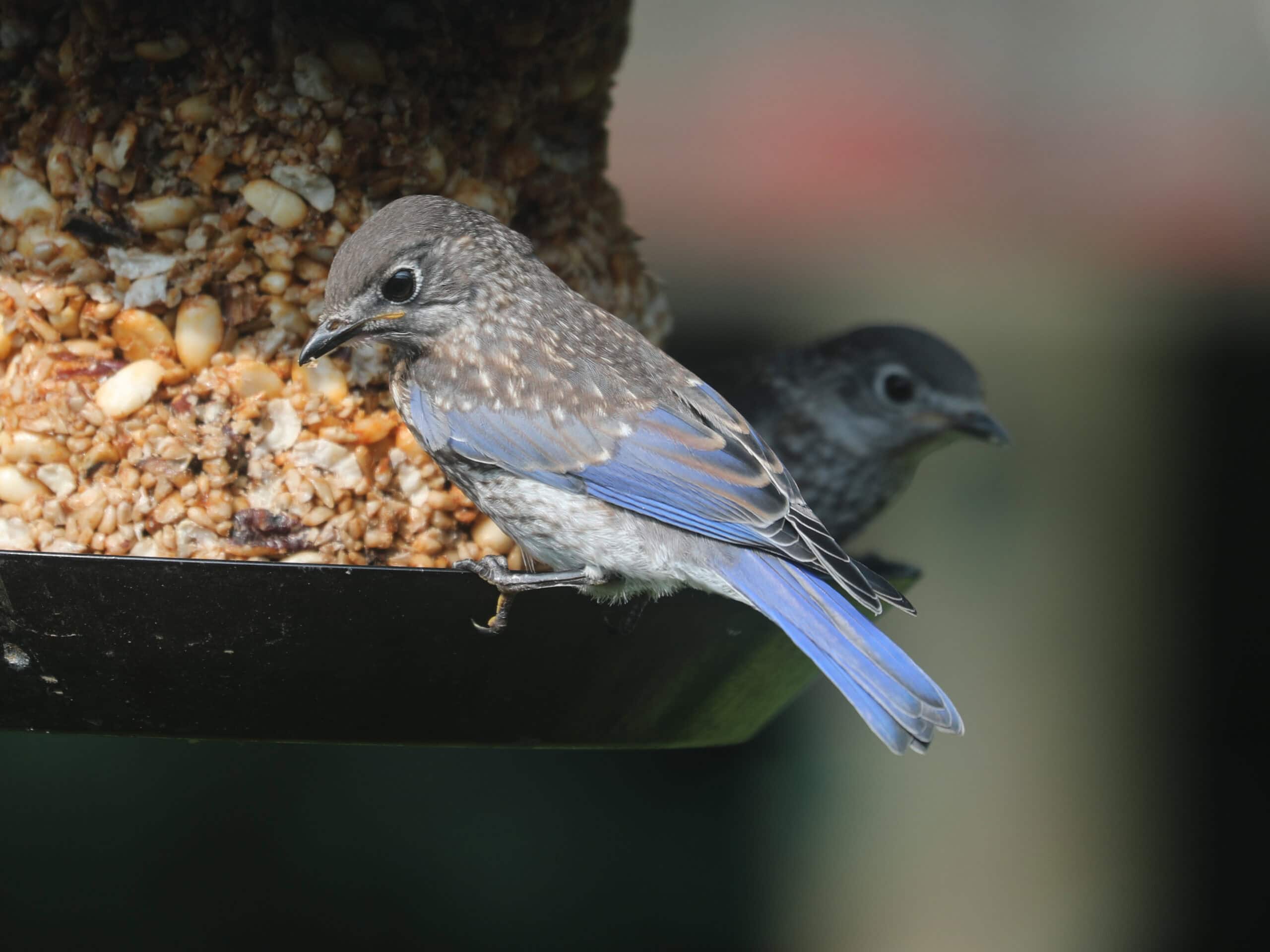
Eastern Bluebird (female fledgling) in Dan & Melissa’s yard (June 2025)

Eastern Bluebirds (fledglings, male in front, female in back) in Dan & Melissa’s yard (June 2025)
Eastern Bluebird Fledglings
Three Eastern Bluebird fledglings have been visiting my bird feeders regularly during the past week. Fledglings are young birds that have left the nest, but are still being cared for by their parents. My fledglings have frequently been accompanied by an adult male, almost certainly their father. Unlike the brightly colored adults, young bluebirds are primarily brown birds with whitish spots. You can usually distinguish males from females by more bright blue color in their wing and tail feathers. By fall, these young birds will molt most of their brown feathers and replace them with new feathers. After molting, they’ll look more like adults.
A few weeks after these bluebird fledglings have left the nest, they’ll be off on their own. Their parents will likely start over with a new nest to raise another brood of offspring. That process usually starts with the male adding a bit of grass to a nest box while displaying for the female. She’ll then finish making the nest, lay 2 to 7 eggs, and incubate the eggs herself. A successful pair of bluebirds can raise three broods in a single breeding season.
Although the nestlings visiting my yard in June will soon be independent, that’s not always the case with young from broods later in the nesting season. Juvenile bluebirds that hatch in July or August will often spend the entire winter with their parents before finding their own territories in the spring. I like reflecting on that in the middle of the winter when a half dozen bluebirds visit my feeders. It’s neat to think about that family connection across seasons as my bluebirds prepare for spring.
Eastern Bluebird (female fledgling) in Dan & Melissa’s yard (June 2025)


About The Author
Dan Hinnebusch is the Ornithologist for Wild Birds Unlimited. Click to learn more.