


Finding Fledglings
A baby songbird, called a nestling, typically lives for a few weeks in its nest after hatching from its egg. When it’s ready, the nestling leaves the nest, and is now called a fledgling. It’s considered a fledgling as long as it still receives food and protection from its parents, which usually lasts another one or two weeks. Fledglings are usually close to adults in overall size, but with underdeveloped wing and tail feathers, small tufts of downy feathers, and pale coloration near the base of the bill.
The best way to get a look at a fledgling is to watch the behavior of its parents. I first found this adult Gray Catbird on the edge of patch of forest. It was clearly agitated, raising its tail in the air and persistently calling. It came much closer to me than I would expect for a catbird. It was trying to distract me so that I wouldn’t notice its fledgling sitting a few bushes to the right. As you can see, this catbird fledgling was so young and inexperienced that it didn’t seem to realize how to hide properly. It was sitting even closer to me than the adult and barely seemed to notice my presence.
It’s understandable that the adult catbird gets agitated when it sees a potential threat to its fledgling. These weeks as a fledgling will likely be the most dangerous part of this young catbird’s life. Its lack of experience in avoiding predators and finding food, plus the physical limitations presented by its still developing muscles and feathers, make it particularly vulnerable.
There are a few things you can do to help fledglings. First, give them space. My total time watching these catbirds lasted less than two minutes. Rather than try to get closer for more photographs, I moved away to give them space and limit the stress I was causing. You may be able to pick up a very young fledgling, but you should only do so if you need to move it a short distance from a dangerous location like a road.
In addition to giving them space, many fledglings benefit from easily accessible food at bird feeders. They especially love foods high in protein to help them grow feathers. Feathers are mostly composed of a protein called keratin, the same protein that makes up your hair and fingernails. High-protein foods include mealworms, peanuts, suet, Bark Butter, and the new FeatherPro Superblend.
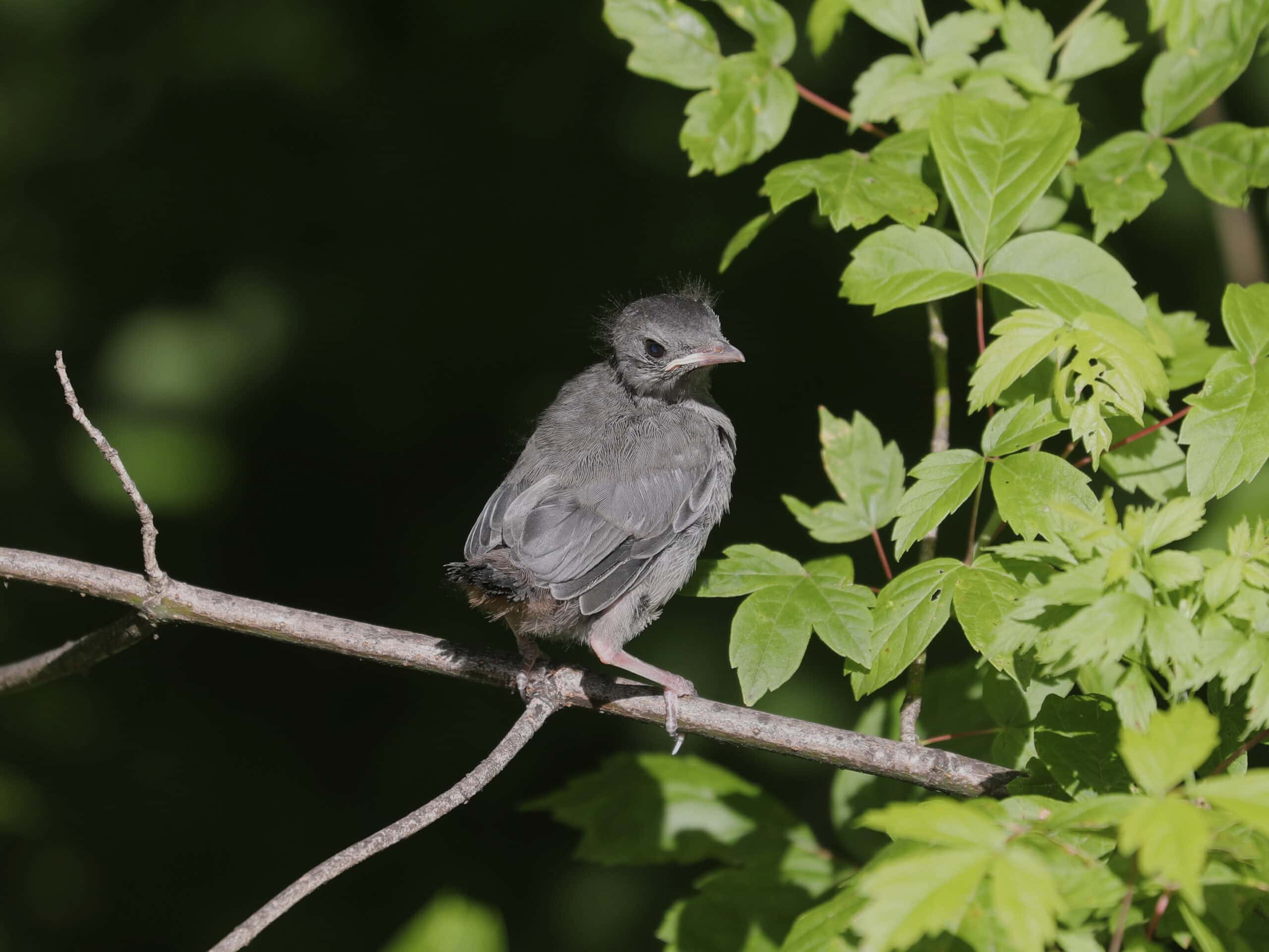
Gray Catbird (fledgling) in Dauphin County (June 2026). This Gray Catbird was likely still a nestling less than 24 hours before the photo was taken. Compared to the adult, check out its short wings and tail feathers, tufts of down feathers on its head, and the pale gape (at the base of its bill).
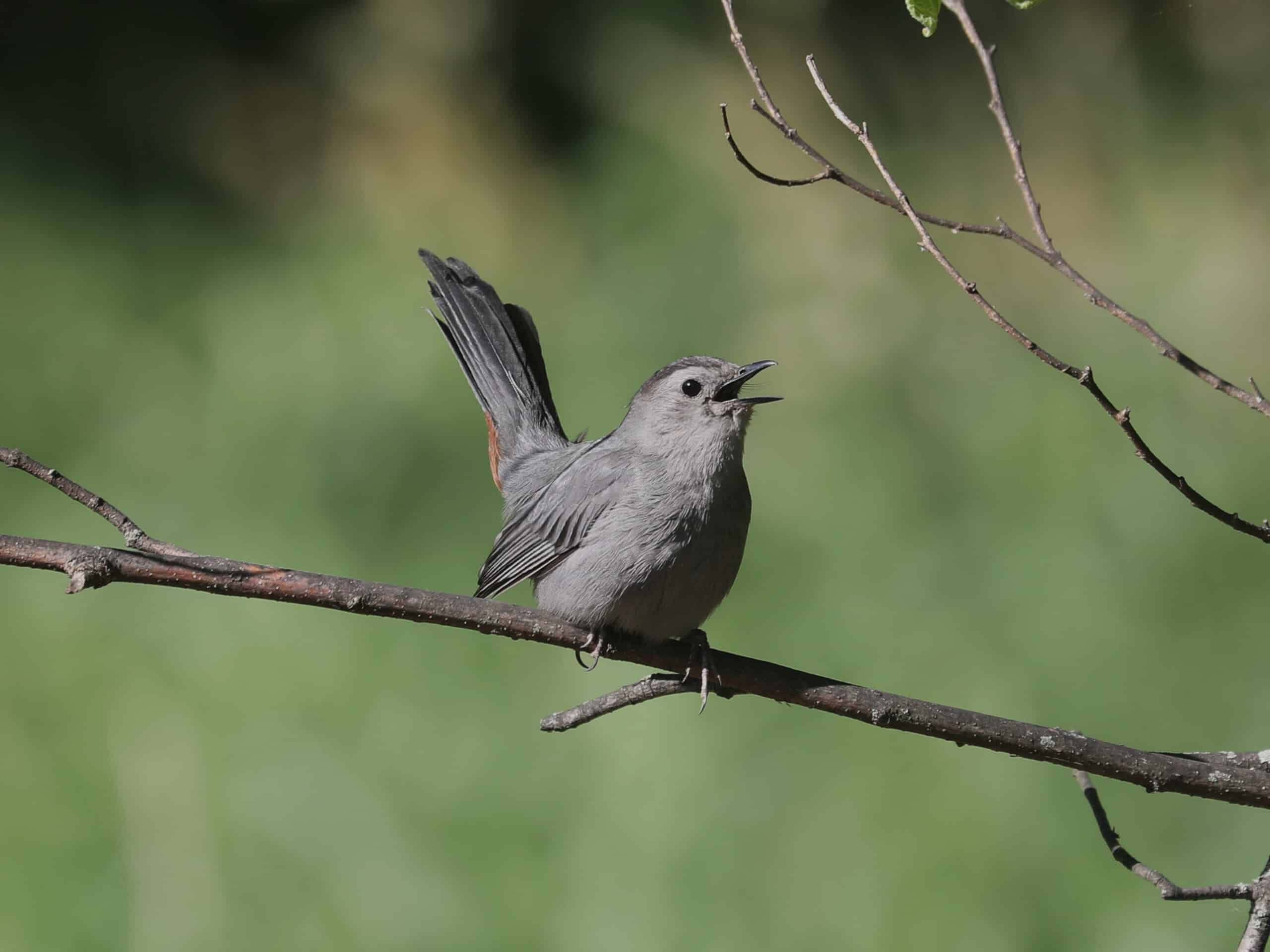
Gray Catbird (adult) in Dauphin County (June 2026).

Gray Catbird (fledgling) in Dauphin County (June 2026). This Gray Catbird was likely still a nestling less than 24 hours before the photo was taken. Compared to the adult, check out its short wings and tail feathers, tufts of down feathers on its head, and the pale gape (at the base of its bill).
Finding Fledglings
A baby songbird, called a nestling, typically lives for a few weeks in its nest after hatching from its egg. When it’s ready, the nestling leaves the nest, and is now called a fledgling. It’s considered a fledgling as long as it still receives food and protection from its parents, which usually lasts another one or two weeks. Fledglings are usually close to adults in overall size, but with underdeveloped wing and tail feathers, small tufts of downy feathers, and pale coloration near the base of the bill.
The best way to get a look at a fledgling is to watch the behavior of its parents. I first found this adult Gray Catbird on the edge of patch of forest. It was clearly agitated, raising its tail in the air and persistently calling. It came much closer to me than I would expect for a catbird. It was trying to distract me so that I wouldn’t notice its fledgling sitting a few bushes to the right. As you can see, this catbird fledgling was so young and inexperienced that it didn’t seem to realize how to hide properly. It was sitting even closer to me than the adult and barely seemed to notice my presence.
It’s understandable that the adult catbird gets agitated when it sees a potential threat to its fledgling. These weeks as a fledgling will likely be the most dangerous part of this young catbird’s life. Its lack of experience in avoiding predators and finding food, plus the physical limitations presented by its still developing muscles and feathers, make it particularly vulnerable.
There are a few things you can do to help fledglings. First, give them space. My total time watching these catbirds lasted less than two minutes. Rather than try to get closer for more photographs, I moved away to give them space and limit the stress I was causing. You may be able to pick up a very young fledgling, but you should only do so if you need to move it a short distance from a dangerous location like a road.
In addition to giving them space, many fledglings benefit from easily accessible food at bird feeders. They especially love foods high in protein to help them grow feathers. Feathers are mostly composed of a protein called keratin, the same protein that makes up your hair and fingernails. High-protein foods include mealworms, peanuts, suet, Bark Butter, and the new FeatherPro Superblend.
Gray Catbird (adult) in Dauphin County (June 2026).


About The Author
Dan Hinnebusch is the Ornithologist for Wild Birds Unlimited. Click to learn more.