

Forest Thrushes
Pennsylvania’s two most abundant thrushes, American Robin and Eastern Bluebird, are common backyard birds that live in our state year-round. Both species prefer open habitats and frequently visit bird feeders. Other thrushes prefer forests, where they are much more difficult to see. As a group, they’re famous for their beautiful whistled songs. Two forest thrushes nest in the Susquehanna Valley – Wood Thrush and Veery.
Veery key facts
| Scientific name | Catharus fuscescens |
|---|---|
| Family | Turdidae (Thrushes and Allies) |
| Order | Passeriformes |
| eBird species page | Veery on eBird (code veery) |
Fun fact: Songbirds create sound with a syrinx, a two-chambered structure connected to both lungs. Veeries sing a higher-pitched song with one side of their syrinx and a lower pitch with the other.
Wood Thrush key facts
| Scientific name | Hylocichla mustelina |
|---|---|
| Family | Turdidae (Thrushes and Allies) |
| Order | Passeriformes |
| eBird species page | Wood Thrush on eBird (code woothr) |
Fun fact: Wood Thrushes nest throughout the eastern United States and southeastern Canada, then fly south to Mexico and Central America for the winter. Pennsylvania and West Virginia are at the heart of their breeding range.
The sweet whistles of Wood Thrushes can be heard in most large, mature forests in our area. The Veery looks similar to a Wood Thrush, but lacks the bold, dark spots that cover the latter’s breast. Instead, the Veery has much finer and more lightly colored spots on the upper breast and throat. It doesn’t sing with the same clear whistles as the Wood Thrush, but instead gives a spiraling, ethereal melody that echoes through the forest. Amazingly, each Veery can sing a duet with itself. Songbirds create sound with a syrinx, a two-chambered structure connected to both lungs. Veeries sing a higher-pitched song with one side of their syrinx and a lower pitch with the other.
Wood Thrushes nest throughout the eastern United States and southeastern Canada, then fly south to Mexico and Central America for the winter. Pennsylvania and West Virginia are at the heart of their breeding range. We’re closer to the edge of the breeding range for Veeries. They’re mostly found north of us in New England and southern Canada. Smaller numbers get as far west as Vancouver. Veeries migrate a much longer distance than Wood Thrushes, flying 4 to 6 thousand miles each fall to winter in southern Brazil.
In addition to the four thrushes that nest in the Susquehanna Valley, you can see four more at other times of the year. Three of those thrushes, Swainson’s, Gray-cheeked, and Bicknell’s thrushes, pass through on migration in spring and fall. Hermit Thrushes are here during migration too, but many of them stay here all winter as well.
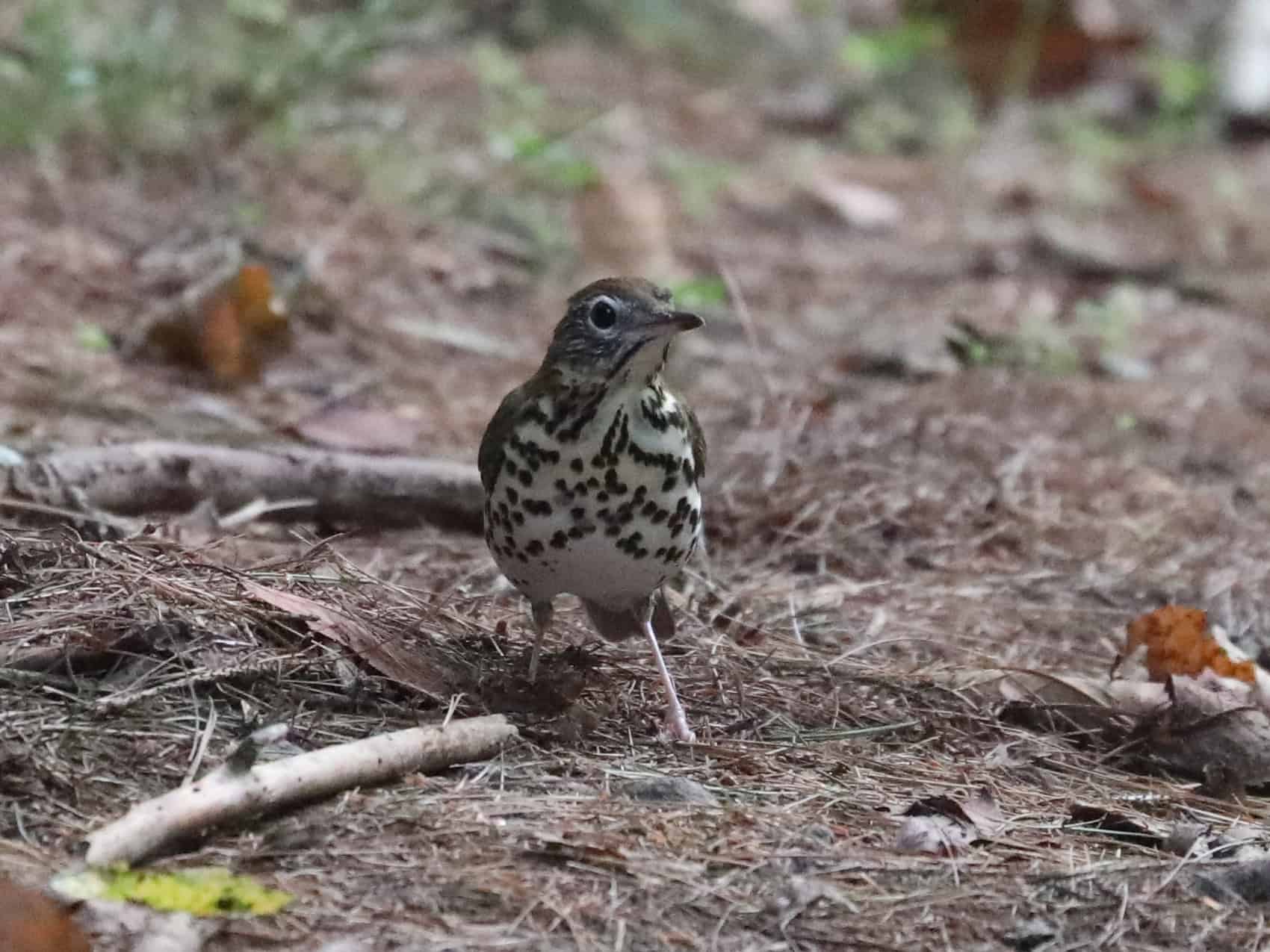
Wood Thrush in Lancaster County (September 2021)
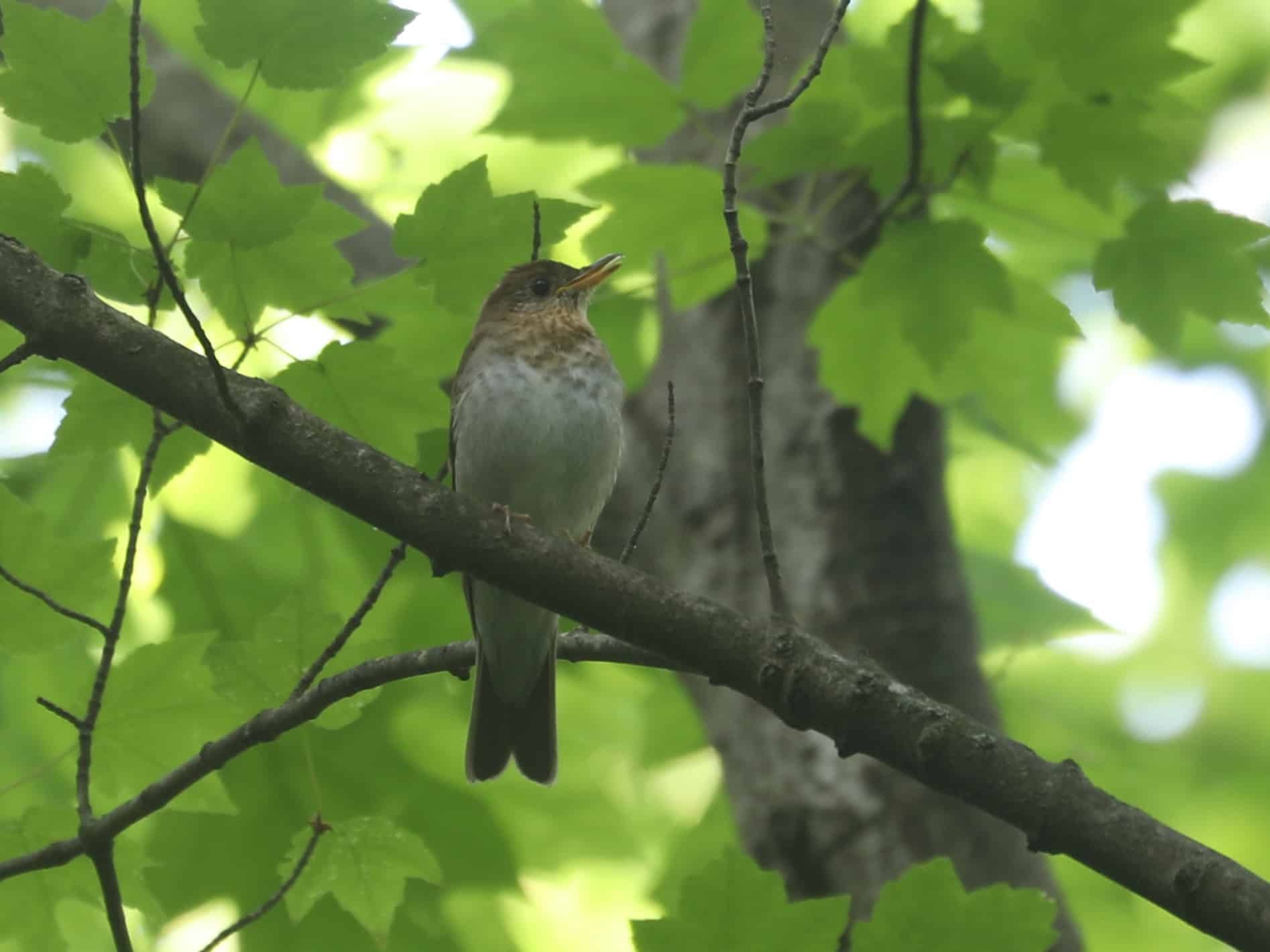
Veery in Lancaster County (May 2026)

Wood Thrush in Lancaster County (September 2021)
Forest Thrushes
Pennsylvania’s two most abundant thrushes, American Robin and Eastern Bluebird, are common backyard birds that live in our state year-round. Both species prefer open habitats and frequently visit bird feeders. Other thrushes prefer forests, where they are much more difficult to see. As a group, they’re famous for their beautiful whistled songs. Two forest thrushes nest in the Susquehanna Valley – Wood Thrush and Veery.
Veery key facts
| Scientific name | Catharus fuscescens |
|---|---|
| Family | Turdidae (Thrushes and Allies) |
| Order | Passeriformes |
| eBird species page | Veery on eBird (code veery) |
Fun fact: Songbirds create sound with a syrinx, a two-chambered structure connected to both lungs. Veeries sing a higher-pitched song with one side of their syrinx and a lower pitch with the other.
Wood Thrush key facts
| Scientific name | Hylocichla mustelina |
|---|---|
| Family | Turdidae (Thrushes and Allies) |
| Order | Passeriformes |
| eBird species page | Wood Thrush on eBird (code woothr) |
Fun fact: Wood Thrushes nest throughout the eastern United States and southeastern Canada, then fly south to Mexico and Central America for the winter. Pennsylvania and West Virginia are at the heart of their breeding range.
The sweet whistles of Wood Thrushes can be heard in most large, mature forests in our area. The Veery looks similar to a Wood Thrush, but lacks the bold, dark spots that cover the latter’s breast. Instead, the Veery has much finer and more lightly colored spots on the upper breast and throat. It doesn’t sing with the same clear whistles as the Wood Thrush, but instead gives a spiraling, ethereal melody that echoes through the forest. Amazingly, each Veery can sing a duet with itself. Songbirds create sound with a syrinx, a two-chambered structure connected to both lungs. Veeries sing a higher-pitched song with one side of their syrinx and a lower pitch with the other.
Wood Thrushes nest throughout the eastern United States and southeastern Canada, then fly south to Mexico and Central America for the winter. Pennsylvania and West Virginia are at the heart of their breeding range. We’re closer to the edge of the breeding range for Veeries. They’re mostly found north of us in New England and southern Canada. Smaller numbers get as far west as Vancouver. Veeries migrate a much longer distance than Wood Thrushes, flying 4 to 6 thousand miles each fall to winter in southern Brazil.
In addition to the four thrushes that nest in the Susquehanna Valley, you can see four more at other times of the year. Three of those thrushes, Swainson’s, Gray-cheeked, and Bicknell’s thrushes, pass through on migration in spring and fall. Hermit Thrushes are here during migration too, but many of them stay here all winter as well.
Veery in Lancaster County (May 2026)


About The Author
Dan Hinnebusch is the Ornithologist for Wild Birds Unlimited. Click to learn more.
