

House Finches
You’re likely seeing many House Finches visiting your bird feeders this time of year. They’re gregarious, so you often see them in flocks of four to twenty birds. According to Project FeederWatch, a program that tracks birds at feeders during the winter, House Finch is the ninth most commonly reported species in our region. The only bird species reported more frequently are chickadees (Carolina and Black-capped are counted together in Project FeederWatch), Dark-eyed Junco, Northern Cardinal, Downy Woodpecker, Blue Jay, Mourning Dove, White-breasted Nuthatch, and American Goldfinch.
House Finches were not always so common in the Susquehanna Valley. As their scientific name mexicanus suggests, they are native to most of northern Mexico as well as the desert southwest of the United States. A small number were released on Long Island in 1939, and that population eventually grew and spread across most of North America. A big part of their successful spread is due to how they thrive around people, nesting in suburban habitats and eating at bird feeders. There are now more than 800 thousand House Finches nesting in Pennsylvania each summer, compared to only about 100 thousand of the closely related, and native, Purple Finch. House Finches were also introduced in Hawaii all the way back in 1870. They’re now found on all of Hawaii’s major islands, and in some areas they make up more than 10% of all birds.
Female House Finches are relatively plain looking brown birds with faint streaks of darker brown on the breast and belly. The males are a bit more colorful, with a splash of strawberry-colored feathers on the face, breast, and rump. Female House Finches are attracted to males with larger and brighter patches of colorful feathers. At the feeders, House Finches dominate American Goldfinches, choosing the best food and perches. In turn, House Finches are dominated by House Sparrows.
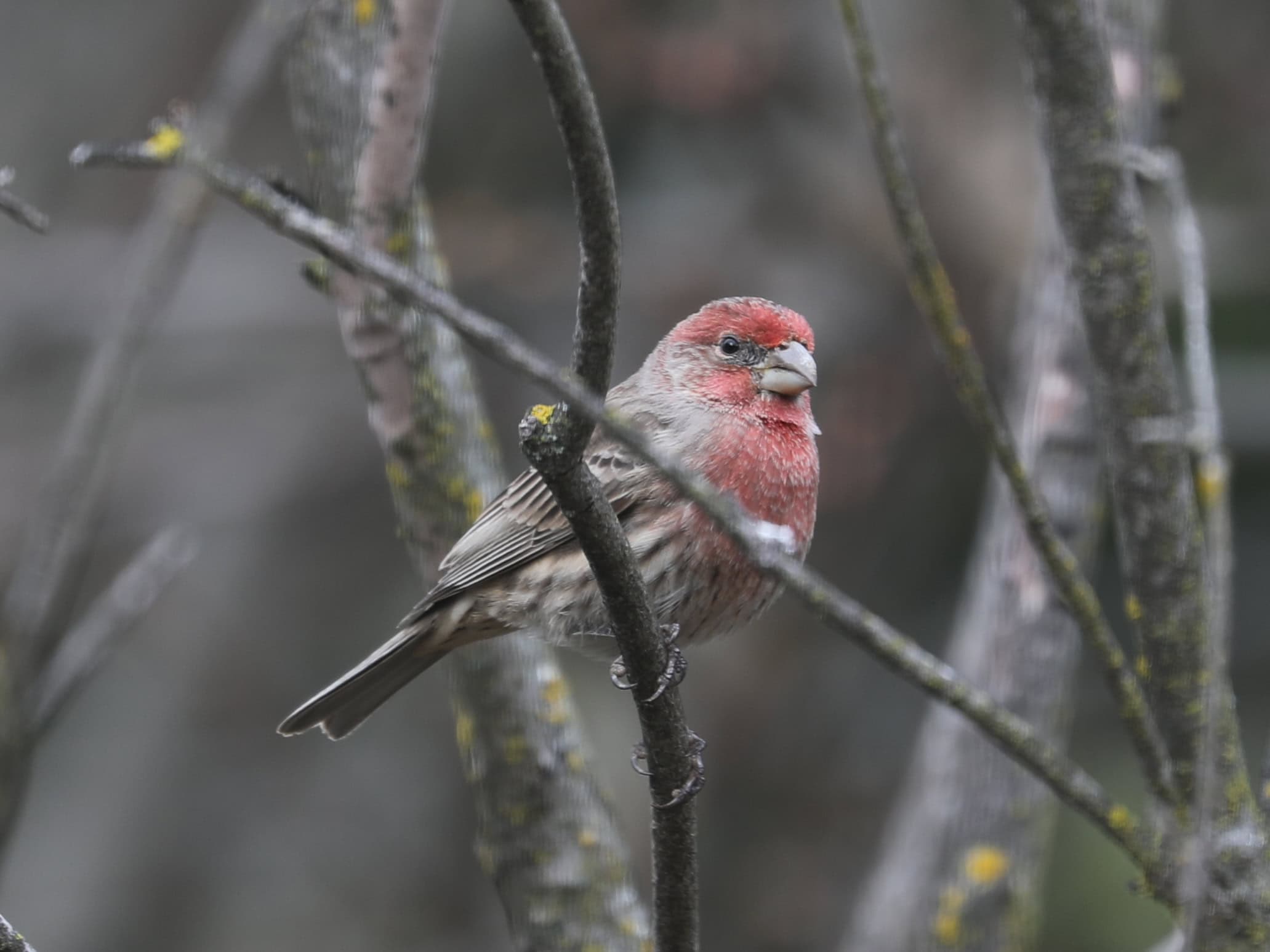
House Finch (male) in Ed & Grace’s yard (November 2025)
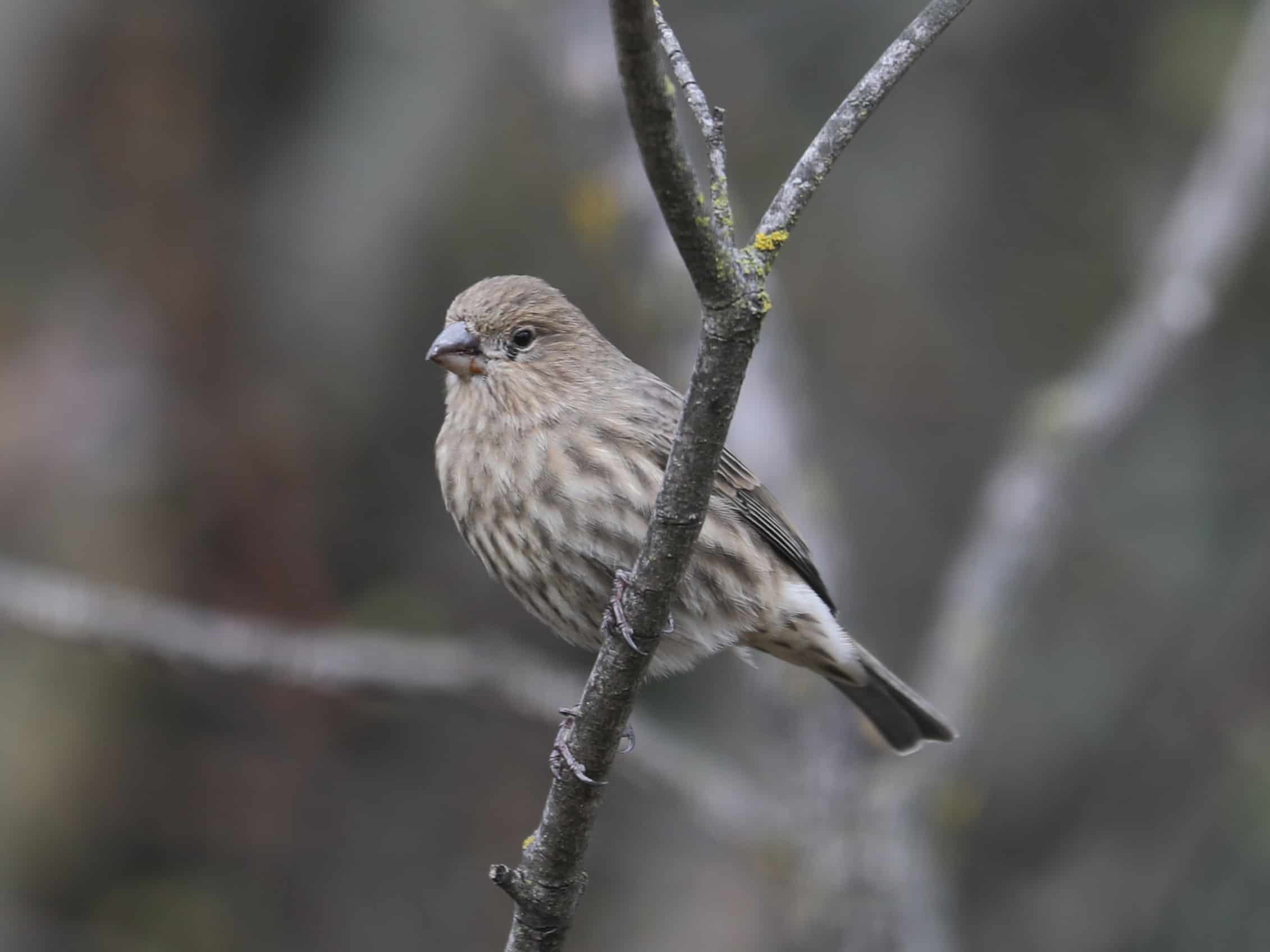
House Finch (female) in Ed & Grace’s yard (November 2025)

House Finch (male) in Ed & Grace’s yard (November 2025)
House Finches
You’re likely seeing many House Finches visiting your bird feeders this time of year. They’re gregarious, so you often see them in flocks of four to twenty birds. According to Project FeederWatch, a program that tracks birds at feeders during the winter, House Finch is the ninth most commonly reported species in our region. The only bird species reported more frequently are chickadees (Carolina and Black-capped are counted together in Project FeederWatch), Dark-eyed Junco, Northern Cardinal, Downy Woodpecker, Blue Jay, Mourning Dove, White-breasted Nuthatch, and American Goldfinch.
House Finches were not always so common in the Susquehanna Valley. As their scientific name mexicanus suggests, they are native to most of northern Mexico as well as the desert southwest of the United States. A small number were released on Long Island in 1939, and that population eventually grew and spread across most of North America. A big part of their successful spread is due to how they thrive around people, nesting in suburban habitats and eating at bird feeders. There are now more than 800 thousand House Finches nesting in Pennsylvania each summer, compared to only about 100 thousand of the closely related, and native, Purple Finch. House Finches were also introduced in Hawaii all the way back in 1870. They’re now found on all of Hawaii’s major islands, and in some areas they make up more than 10% of all birds.
Female House Finches are relatively plain looking brown birds with faint streaks of darker brown on the breast and belly. The males are a bit more colorful, with a splash of strawberry-colored feathers on the face, breast, and rump. Female House Finches are attracted to males with larger and brighter patches of colorful feathers. At the feeders, House Finches dominate American Goldfinches, choosing the best food and perches. In turn, House Finches are dominated by House Sparrows.
House Finch (female) in Ed & Grace’s yard (November 2025)


About The Author
Dan Hinnebusch is the Ornithologist for Wild Birds Unlimited. Click to learn more.
