

Feeding Mealworms to Your Birds
Not all of your birds are seed-eaters. Some birds, like bluebirds, catbirds, wrens, robins, warblers, and many others, are more likely to visit if you offer insects. The easiest insect food to offer to your birds are mealworms. Mealworms are not true worms, but the larva of a flightless insect called the darkling beetle (sometime it’s just called the mealworm beetle). Insects like mealworms are an excellent source of protein and calcium, the two nutrients birds need the most during the nesting season.
You can attract birds with live or dry mealworms. Live mealworms will always be your birds preference, but they are more costly and need to be stored in the refrigerator. Any live mealworms not used within a month should be given something to eat. To feed them, take them out of the refrigerator, remove the lid of their container, and add a piece of a vegetable (I usually use a chunk of carrot or sweet potato). Give your mealworms about 12 hours to eat, then remove any remaining vegetable pieces, replace the lid, and put them back in the refrigerator.
Dried mealworms are much easier to use. They cost quite a bit less and have a shelf life of a few years, if stored in a cool, dry place. The lack of moisture in the mealworms is not an issue for adult birds. They can easily supplement the missing water with a visit to your bird bath or a nearby stream. However, young birds that have not yet left the nest only get water from the food brought by their parents. Provide that water during the nesting season by soaking your dried mealworms before putting them out for your birds. The songbird nesting season in our area typically runs from late March through early August.
You can use a variety of feeders for mealworms, including tray feeders, cup feeders, or mesh feeders designed for peanuts. You can even used specialized bluebird feeders that prevent larger birds from accessing the food. If you want to offer mealworms to your birds, but don’t have space for a new feeder, consider mixing mealworms with your seed blend in an existing feeder. When I add mealworms to my No-Mess Plus blend, I call it my “nesting blend.” Mealworms are already included in some blends like Bluebird Bugberry Blend and Cardinal Confetti Blend. They’re also an ingredient in some seed cylinders and suet cakes.

Eastern Bluebirds in Dan & Melissa’s yard (January 2022). A mesh peanut feeder is a great option for offering dried mealworms to your birds.
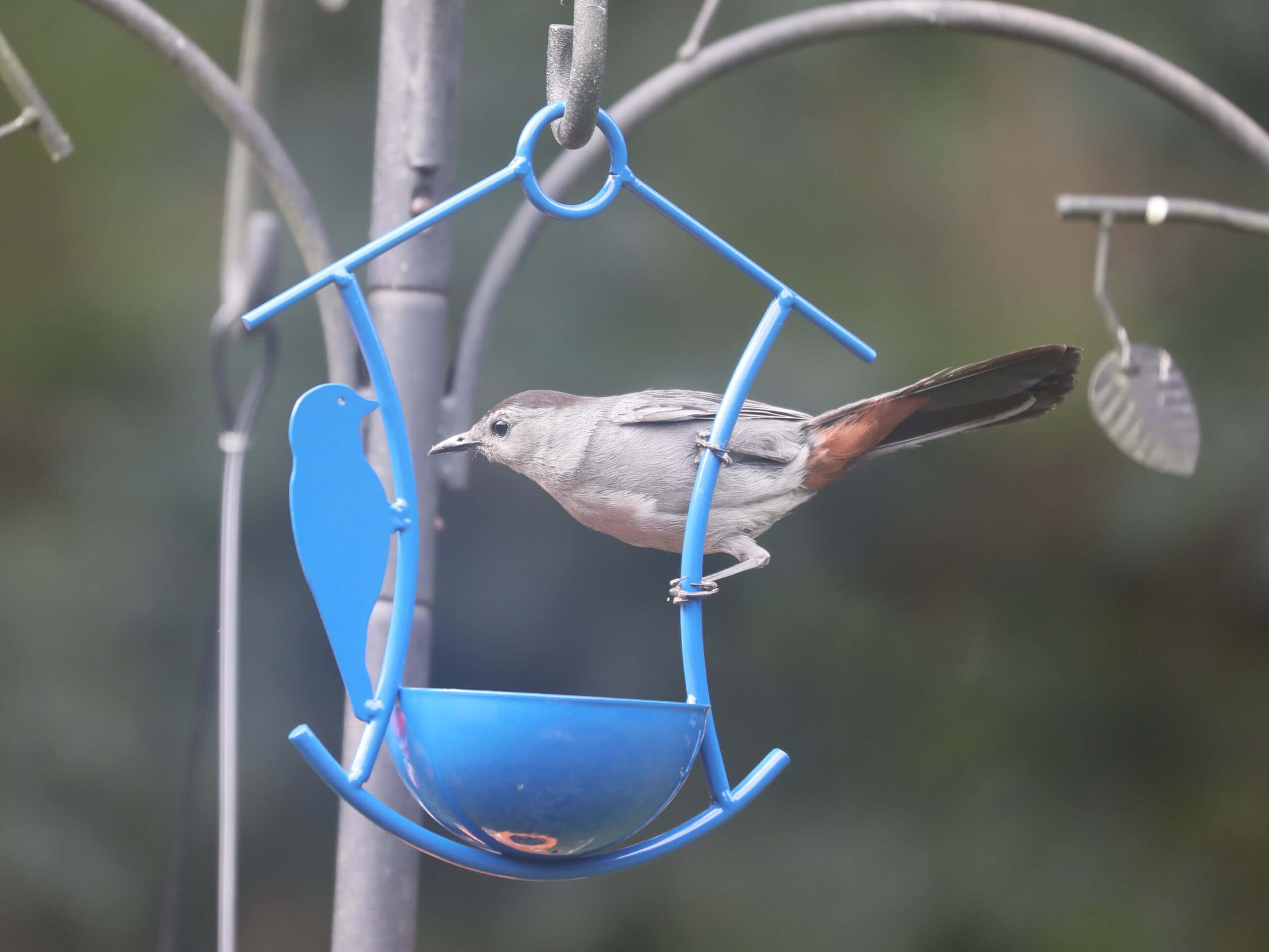
Gray Catbird in Dan & Melissa’s yard (July 2022)

Eastern Bluebirds in Dan & Melissa’s yard (January 2022). A mesh peanut feeder is a great option for offering dried mealworms to your birds.
Feeding Mealworms to Your Birds
Not all of your birds are seed-eaters. Some birds, like bluebirds, catbirds, wrens, robins, warblers, and many others, are more likely to visit if you offer insects. The easiest insect food to offer to your birds are mealworms. Mealworms are not true worms, but the larva of a flightless insect called the darkling beetle (sometime it’s just called the mealworm beetle). Insects like mealworms are an excellent source of protein and calcium, the two nutrients birds need the most during the nesting season.
You can attract birds with live or dry mealworms. Live mealworms will always be your birds preference, but they are more costly and need to be stored in the refrigerator. Any live mealworms not used within a month should be given something to eat. To feed them, take them out of the refrigerator, remove the lid of their container, and add a piece of a vegetable (I usually use a chunk of carrot or sweet potato). Give your mealworms about 12 hours to eat, then remove any remaining vegetable pieces, replace the lid, and put them back in the refrigerator.
Dried mealworms are much easier to use. They cost quite a bit less and have a shelf life of a few years, if stored in a cool, dry place. The lack of moisture in the mealworms is not an issue for adult birds. They can easily supplement the missing water with a visit to your bird bath or a nearby stream. However, young birds that have not yet left the nest only get water from the food brought by their parents. Provide that water during the nesting season by soaking your dried mealworms before putting them out for your birds. The songbird nesting season in our area typically runs from late March through early August.
You can use a variety of feeders for mealworms, including tray feeders, cup feeders, or mesh feeders designed for peanuts. You can even used specialized bluebird feeders that prevent larger birds from accessing the food. If you want to offer mealworms to your birds, but don’t have space for a new feeder, consider mixing mealworms with your seed blend in an existing feeder. When I add mealworms to my No-Mess Plus blend, I call it my “nesting blend.” Mealworms are already included in some blends like Bluebird Bugberry Blend and Cardinal Confetti Blend. They’re also an ingredient in some seed cylinders and suet cakes.
Gray Catbird in Dan & Melissa’s yard (July 2022)


About The Author
Dan Hinnebusch is the Ornithologist for Wild Birds Unlimited. Click to learn more.
