

Surviving Winter: Golden-crowned Kinglets
There’s a reason many species of birds fly south and leave Pennsylvania after summer ends. Despite the dangers of a long journey, it’s worthwhile for those birds to migrate so they can avoid the challenges of our winters. Birds don’t store a lot of fat on their bodies, so our local songbirds need to eat as much food as they can to maintain their fast metabolism to keep their bodies from freezing. Winter is especially challenging for small birds like Carolina Chickadees, which each weigh less than half an ounce, and Golden-crowned Kinglets, which weigh about half as much as a chickadee. During a rough winter, we may lose half or more of our chickadees and kinglets.
Birds have some interesting adaptations that allow them to survive cold weather. First and foremost, feathers are remarkably good at insulation. When a bird looks fat during the winter, it’s actually just fluffing up its feathers to create a thicker layer of protection. Most birds have feet and legs that are not protected by feathers. The feet of birds can be as cold as 30 degrees Fahrenheit, compared to their body temperature of about 105 degrees. To prevent heat loss, blood flowing towards the bird’s feet heats the blood returning to its body from the feet. Without that adaptation for cold feet, most birds would lose so much heat that they wouldn’t survive the winter.
Chickadees and kinglets live in flocks during the winter, and that behavior may help them find enough food. They are inquisitive and persistently check for any source of food. When one bird finds some caterpillars, clusters of insect eggs, or sunflower seeds in a bird feeder, the whole flock may benefit. At night, chickadees avoid the wind and precipitation by roosting in tree cavities, nest boxes, or winter roosting boxes. Kinglets don’t often use cavities, but the flock will roost together in a thick coniferous tree, usually pressed up against each other on one branch to trap more heat.
Chickadees greatly benefit from well-stocked bird feeders during cold weather. Their favorite foods include sunflower seeds (especially without shells), Bark Butter, suet, and peanuts. Kinglets rarely visit feeders, but when they do they’re most likely to come for Bark Butter. Both birds need water to bathe and keep those insulating feathers in good condition, so consider adding a heated bird bath.
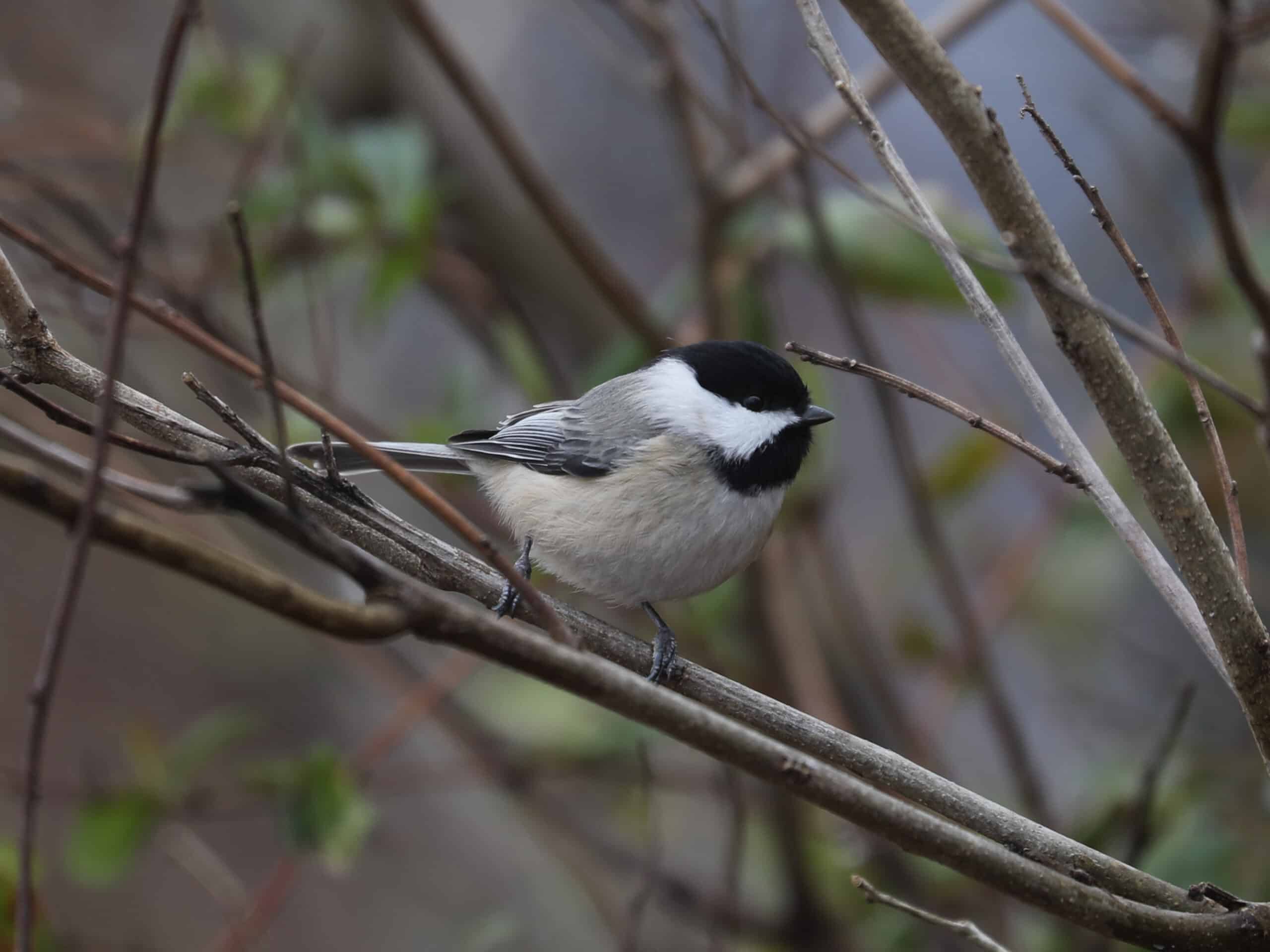
Carolina Chickadee in York County (December 2025)
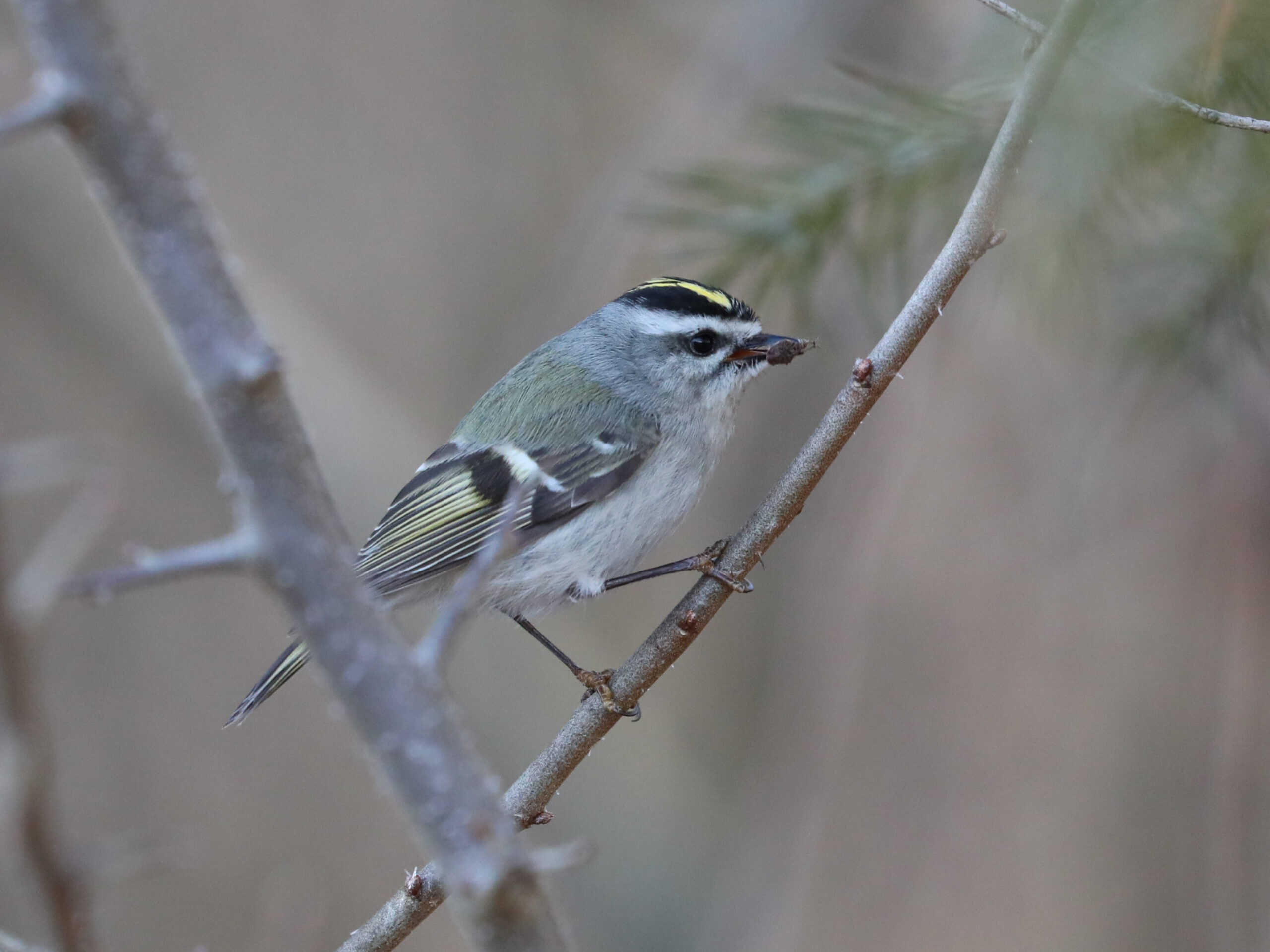
Golden-crowned Kinglet in Schuylkill County (March 2023)

Carolina Chickadee in York County (December 2025)
Surviving Winter: Golden-crowned Kinglets
There’s a reason many species of birds fly south and leave Pennsylvania after summer ends. Despite the dangers of a long journey, it’s worthwhile for those birds to migrate so they can avoid the challenges of our winters. Birds don’t store a lot of fat on their bodies, so our local songbirds need to eat as much food as they can to maintain their fast metabolism to keep their bodies from freezing. Winter is especially challenging for small birds like Carolina Chickadees, which each weigh less than half an ounce, and Golden-crowned Kinglets, which weigh about half as much as a chickadee. During a rough winter, we may lose half or more of our chickadees and kinglets.
Birds have some interesting adaptations that allow them to survive cold weather. First and foremost, feathers are remarkably good at insulation. When a bird looks fat during the winter, it’s actually just fluffing up its feathers to create a thicker layer of protection. Most birds have feet and legs that are not protected by feathers. The feet of birds can be as cold as 30 degrees Fahrenheit, compared to their body temperature of about 105 degrees. To prevent heat loss, blood flowing towards the bird’s feet heats the blood returning to its body from the feet. Without that adaptation for cold feet, most birds would lose so much heat that they wouldn’t survive the winter.
Chickadees and kinglets live in flocks during the winter, and that behavior may help them find enough food. They are inquisitive and persistently check for any source of food. When one bird finds some caterpillars, clusters of insect eggs, or sunflower seeds in a bird feeder, the whole flock may benefit. At night, chickadees avoid the wind and precipitation by roosting in tree cavities, nest boxes, or winter roosting boxes. Kinglets don’t often use cavities, but the flock will roost together in a thick coniferous tree, usually pressed up against each other on one branch to trap more heat.
Chickadees greatly benefit from well-stocked bird feeders during cold weather. Their favorite foods include sunflower seeds (especially without shells), Bark Butter, suet, and peanuts. Kinglets rarely visit feeders, but when they do they’re most likely to come for Bark Butter. Both birds need water to bathe and keep those insulating feathers in good condition, so consider adding a heated bird bath.
Golden-crowned Kinglet in Schuylkill County (March 2023)


About The Author
Dan Hinnebusch is the Ornithologist for Wild Birds Unlimited. Click to learn more.
