

How to Attract Cardinals
Northern Cardinals are one of our most recognizable and charismatic backyard birds. Here are some tips to follow if you want to see them visit more often.
Northern Cardinal key facts
| Scientific name | Cardinalis cardinalis |
|---|---|
| Family | Cardinalidae (Cardinals and Allies) |
| Order | Passeriformes |
| eBird species page | Northern Cardinal on eBird (code norcar) |
Fun fact: Cardinals were named for the males' red color, the same color as the robes of a select group of bishops in the Roman Catholic church.
- Offer the right food. Your cardinals’ favorites are sunflower and safflower seeds, especially sunflower chips. They also enjoy peanuts, mealworms, berries, and Bark Butter.
- Use a cardinal-friendly feeder. Cardinals are larger than many of your other feeder birds, and they’re not good at clinging like nuthatches and woodpeckers. Try putting seed in a tray or hopper feeder with an easy perch. If cardinals aren’t comfortable on your feeders, they may still visit your yard. However, they’ll spend more time searching for food on the ground and you won’t see them as well.
- Provide cover. Because cardinals spend most of their time close to the ground, they benefit from low shrubs or dense flower beds where they can hide from predators. Bushes are also a great place for your cardinals to build a nest. They construct a cup-shaped nest out of thin twigs, grass, pine needles, and other plant material. They don’t use nest boxes.
- Fill your bird bath with clean, fresh water. All birds benefit from easy access to water. Consider making your water even more attractive by adding a solar or electric fountain.
- Plant native vegetation. Even though the majority of a cardinal’s diet consists of seeds and berries, nearly a third of their diet is insects and other arthropods. Native plants host a wide variety of native insects, especially the caterpillars that are a crucial source of fat and calories for cardinal nestlings.
Cardinals are non-migratory, so you can see them in your yard at any time of year but fall and winter are the best times to see flocks of cardinals. During the nesting season (late April through early August), you’re likely to see only a single pair of cardinals visiting your feeders. Like most songbirds, cardinals are territorial and won’t allow other cardinals in their territory. Defending a territory is necessary for many birds so they can ensure that they have enough food for their nestlings within an easy flying distance. Now that the nesting season has ended, watch for flocks to form.
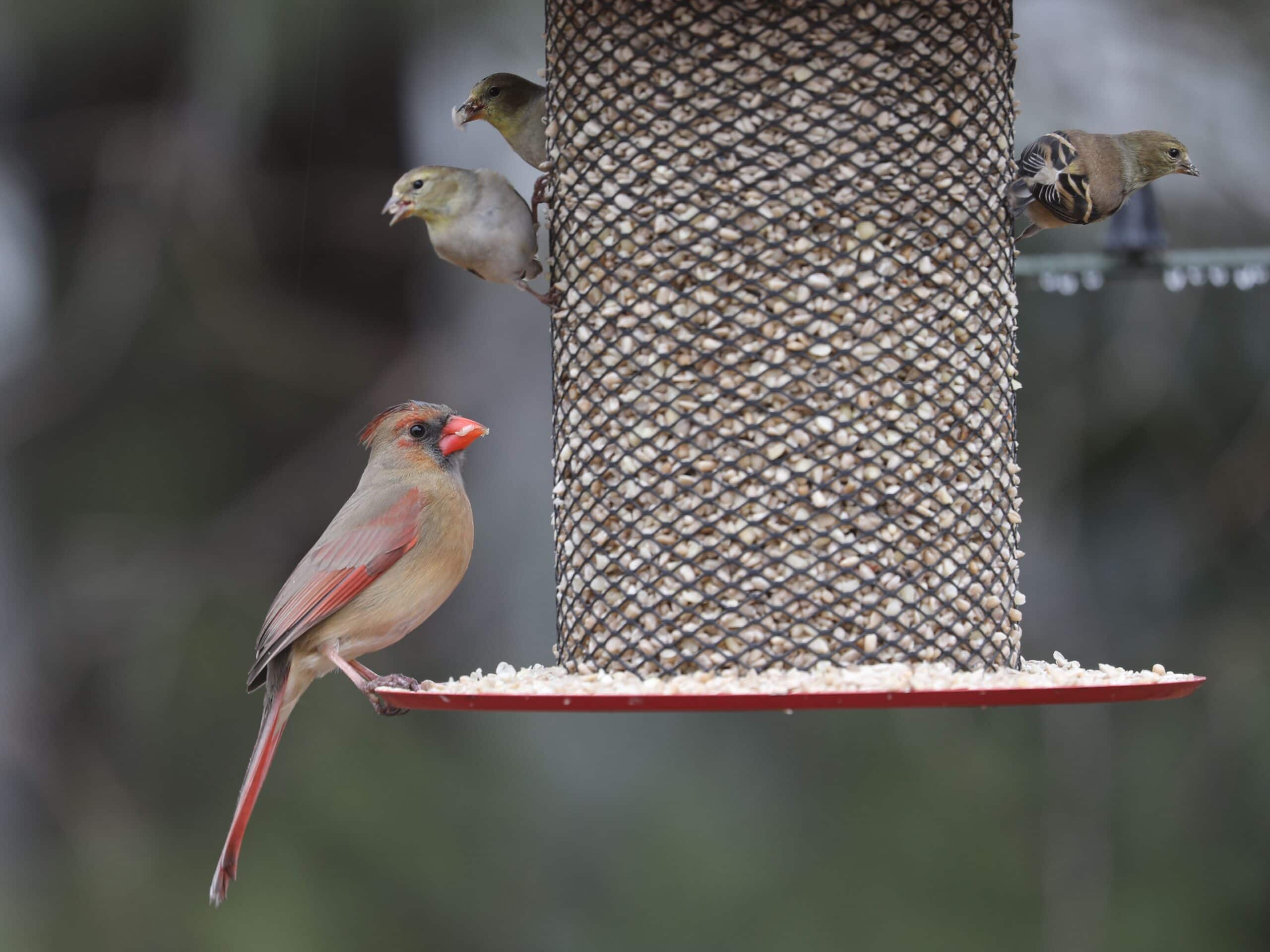
Northern Cardinal (female) with American Goldfinches in Dan & Melissa’s yard (February 2026).

Northern Cardinal (female) with American Goldfinches in Dan & Melissa’s yard (February 2026).
How to Attract Cardinals
Northern Cardinals are one of our most recognizable and charismatic backyard birds. Here are some tips to follow if you want to see them visit more often.
Northern Cardinal key facts
| Scientific name | Cardinalis cardinalis |
|---|---|
| Family | Cardinalidae (Cardinals and Allies) |
| Order | Passeriformes |
| eBird species page | Northern Cardinal on eBird (code norcar) |
Fun fact: Cardinals were named for the males' red color, the same color as the robes of a select group of bishops in the Roman Catholic church.
- Offer the right food. Your cardinals’ favorites are sunflower and safflower seeds, especially sunflower chips. They also enjoy peanuts, mealworms, berries, and Bark Butter.
- Use a cardinal-friendly feeder. Cardinals are larger than many of your other feeder birds, and they’re not good at clinging like nuthatches and woodpeckers. Try putting seed in a tray or hopper feeder with an easy perch. If cardinals aren’t comfortable on your feeders, they may still visit your yard. However, they’ll spend more time searching for food on the ground and you won’t see them as well.
- Provide cover. Because cardinals spend most of their time close to the ground, they benefit from low shrubs or dense flower beds where they can hide from predators. Bushes are also a great place for your cardinals to build a nest. They construct a cup-shaped nest out of thin twigs, grass, pine needles, and other plant material. They don’t use nest boxes.
- Fill your bird bath with clean, fresh water. All birds benefit from easy access to water. Consider making your water even more attractive by adding a solar or electric fountain.
- Plant native vegetation. Even though the majority of a cardinal’s diet consists of seeds and berries, nearly a third of their diet is insects and other arthropods. Native plants host a wide variety of native insects, especially the caterpillars that are a crucial source of fat and calories for cardinal nestlings.
Cardinals are non-migratory, so you can see them in your yard at any time of year but fall and winter are the best times to see flocks of cardinals. During the nesting season (late April through early August), you’re likely to see only a single pair of cardinals visiting your feeders. Like most songbirds, cardinals are territorial and won’t allow other cardinals in their territory. Defending a territory is necessary for many birds so they can ensure that they have enough food for their nestlings within an easy flying distance. Now that the nesting season has ended, watch for flocks to form.


About The Author
Dan Hinnebusch is the Ornithologist for Wild Birds Unlimited. Learn more about Dan Hinnebusch.
